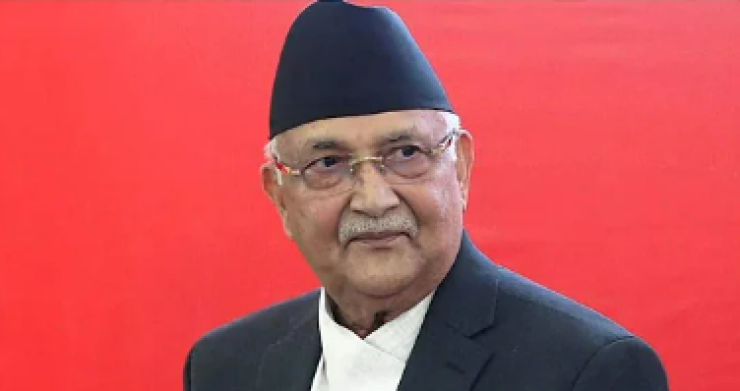
Nepal’s police detained former Prime Minister KP Sharma Oli and Nepali Congress leader and former home minister Ramesh Lekhak on Saturday morning, March 28, in connection with a culpable homicide case arising from the deaths of 77 people during the youth-led protests of September 2025.
The arrests came just 24 hours after Balendra Shah, the 35-year-old structural engineer and former rapper who leads the Rastriya Swatantra Party, was sworn in as the country’s youngest-ever prime minister. A Cabinet meeting led by Shah on Friday had decided to implement the recommendations of a commission that investigated the crackdown, paving the way for the arrests.
Oli, 74, was taken from his home in the Gundu locality of Bhaktapur district. Lekhak, 62, was picked up earlier, at around 5 a.m., from his residence in Katunje, Suryabinayak, where he had been living after his previous home was damaged in an arson attack during the September unrest, his personal secretary Janak Bhatta told journalists. Officers escorted both men to the Kathmandu Police Office for questioning.
Oli was subsequently admitted to Tribhuvan University Teaching Hospital in Maharajgunj for medical observation. A two-time kidney transplant recipient, he has a dedicated team of cardiologists and nephrologists overseeing his care. On arrival he complained of abdominal pain and an increased heart rate. Preliminary X-rays revealed a stone in his abdomen. Doctors are also conducting echocardiograms and renal function tests. Given his history of immunosuppressive medication and a previous angioplasty, he has been kept in a hospital cabin to reduce the risk of infection. Doctors will determine whether he can be discharged once all test results are in hand. Lekhak is being held at the Nepal Police No. 2 Battalion in Maharajgunj.
Police confirmed they had acted on the recommendations of a commission chaired by Gauri Bahadur Karki, a former judge of Nepal’s Special Court. A formal complaint by the home ministry set the investigation in motion, and warrants were issued accordingly. The commission identified Sections 181 and 182 of Nepal’s National Penal Code, covering criminal negligence and carrying a maximum sentence of ten years, as the applicable provisions. The panel held that the crackdown stemmed from negligent and reckless conduct, with officials having ignored advance intelligence warnings that the situation could turn deadly.
The commission called for legal proceedings against then-home secretary Gokarna Mani Dawadi, Armed Police Force chief Raju Aryal, former National Investigation Department head Hutaraj Thapa, Kathmandu’s then-chief district officer Chhabi Rijal, and then-Inspector General of Police Chandra Kuber Khapung. The panel recommended institutional reprimands for current Inspector General Dan Bahadur Karki and Armed Police Force official Narayan Dutta Poudel, a step legal experts say could affect their promotion prospects.
The September 2025 protests began after Oli’s government blocked access to social media platforms, driving thousands of young Nepalis into the streets. Unemployment, a stagnant economy, and widespread public frustration with the political establishment had been building for years. Within days, protesters had set fire to legislative premises and police stations, with property losses running into the billions of rupees. Oli stepped down on September 9, the day after the deadliest violence. Nepal’s president subsequently dissolved parliament and appointed former Chief Justice Sushila Karki as interim head of government. The families of those killed have continued to press for accountability in the months since.
Oli rejected the commission’s findings, calling them politically motivated. His legal team contested the basis for his detention at the police office. Lawyer Tikaram Bhattarai told reporters the arrest was improper, arguing there was no risk of Oli fleeing or evading questioning. Attempts to reach legal representatives for Lekhak were unsuccessful on Saturday.
Oli’s Communist Party of Nepal (Unified Marxist-Leninist), known as CPN-UML, directed its supporters across the country to take to the streets in protest.
Security personnel were placed on heightened alert across the Kathmandu Valley ahead of the arrests, with police from both the Bhaktapur District Police Range and the Kathmandu Valley Police Office deployed in support. Home Secretary Raj Kumar Shrestha and Law Secretary Parashwor Dhungana visited Police Headquarters late Friday after police sought a written order to proceed. Home Minister Sudan Gurung convened a midnight meeting with security chiefs on Friday before the operation got underway.
Both Oli and Lekhak remain formally uncharged as of now. Police said they would produce both men before a court on Sunday, March 29, to seek remand for further investigation. Sunday is a working day in Nepal.