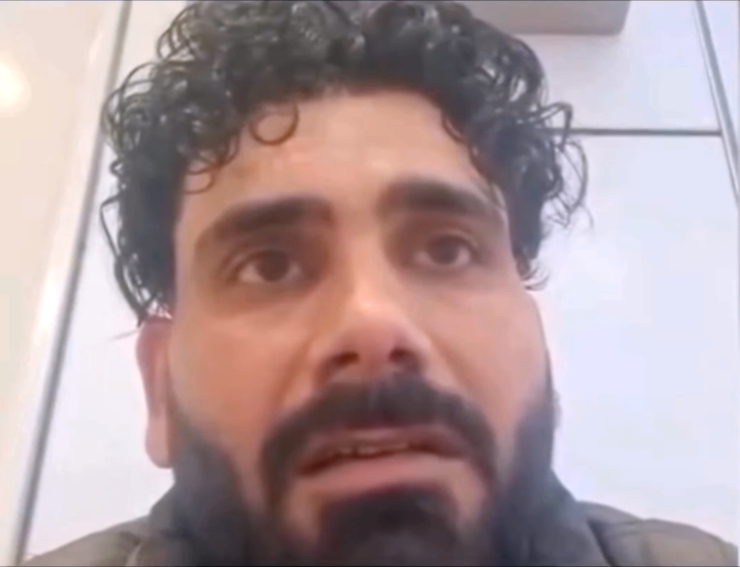
A man claiming to be from Jalandhar, Punjab, who spent nearly two weeks at Kuala Lumpur International Airport, caught in a bureaucratic deadlock between India and New Zealand, is finally headed home. The High Commission of India in Kuala Lumpur confirmed on May 10 via its official X account that it had been in touch with the passenger, identified as Akash Pushkarna, and that after completing the necessary formalities in Malaysia and New Zealand, he had been issued an appropriate travel document to facilitate his return to India.
The resolution came after Pushkarna’s ordeal gained public attention when a video of him appealing from the airport was circulated online by True Scoop, a North India-based digital news channel. In it he appealed directly to Indian authorities. “I told them I don’t have a visa for New Zealand, but they forcefully put me on a flight to Malaysia,” he said. He also described his conditions at the airport. “I have been sleeping on the floor. I haven’t eaten. I don’t have clothes or even a blanket. I have been stuck here and I am desperate to return home to my family.”
Pushkarna, in his thirties, had travelled from New Zealand to Delhi on April 24, intending to return to India permanently. His father had fallen ill, and life in New Zealand had become difficult. “My papers had not been completed and nothing was working out. My father was also unwell, so I decided to return home,” he said. He carried a New Zealand-issued Certificate of Identity, a travel document provided by New Zealand’s Department of Internal Affairs to non-citizens, including asylum seekers and refugees, who cannot obtain a passport from their home country.
Indian immigration officials at Delhi refused to accept it and asked for an Indian passport. Pushkarna said his had expired because his documents in New Zealand had not been processed. A source in India’s security establishment, however, told ThePrint that he claimed his passport had been lost. Officials held him at Delhi airport for two days, then placed him on a Malaysia Airlines flight towards Auckland. During a stopover in Kuala Lumpur he became stranded, as he no longer held a valid New Zealand visa. ThePrint, which broke the story on May 9, reported that the path forward was for Pushkarna to obtain an Indian passport from the High Commission in Malaysia. That process now seems to be concluded.
His case came to public attention weeks after New Zealand’s Immigration and Protection Tribunal dismissed two separate asylum claims filed by Indian nationals, both reported in April 2026.
The first involved a young man from Uttarakhand, born in 2001, who converted from Hinduism to Christianity after arriving in New Zealand on a tourist visa in October 2023. He formally converted in June 2024 and filed an asylum claim the same month. He told authorities that his uncle, associated with the Bharatiya Janata Party, had beaten him in 2020 for attending church in India, and that in March 2025, a group of six to eight men, including members of the Bajrang Dal and Gau Raksha Dal, attacked his family home, broke windows, vandalised the property with hockey sticks, and chanted slogans.
The Refugee Status Unit declined his claim. He appealed to the Immigration and Protection Tribunal, which dismissed the appeal as “manifestly unfounded.” The tribunal acknowledged that religious tensions exist in India and noted references to them in reports by the United States Department of State and Freedom House. But it found that general conditions do not automatically establish an individual’s claim of persecution. On the specific situation of Christians, it observed that country reports pointed only to the conflict in Manipur between the Hindu Meitei and the largely Christian Kuki communities. “This conflict is far from Uttarakhand (about 2,500 km away) and is not relevant to the appellant’s case,” it said.
A decisive factor was that the man had never filed a police complaint or approached any court in India over the alleged beatings and attacks. The tribunal found it could not therefore conclude that the Indian state was unwilling or unable to protect him. “Clear and convincing evidence of a State’s inability to provide protection must be shown,” it said. It also found he could relocate safely within India, to cities such as Delhi, Mumbai, or Amritsar, dismissing his argument that the BJP’s national reach made this impossible. He was, the tribunal noted, “a minor figure of no national or even state significance.”
The second dismissed case involved Ranbir Singh, a 27-year-old Sikh man from Jammu and Kashmir. On March 27, the tribunal called his claim “entirely fabricated.” Singh had alleged repeated family evacuations due to India-Pakistan border tensions and assaults by BJP workers for refusing to join them. The tribunal ruled Jammu was “reasonably safe” for civilians, noted that civilian fatalities in the region had fallen from over 800 in 2002 to the low dozens annually, and dismissed his political persecution story outright, particularly because he had not raised it in earlier hearings.
A report in Khalsa Vox, commenting on the Singh ruling, described a broader pattern of immigration consultants in India coaching clients to manufacture asylum claims, calling it a “cynical, industrial-scale strategy.” It noted that Canadian courts and the Immigration and Refugee Board had encountered hundreds of near-identical, templated claims in 2025 alone, with at least 30 Federal Court reviews of Khalistan-linked appeals dismissed that year.