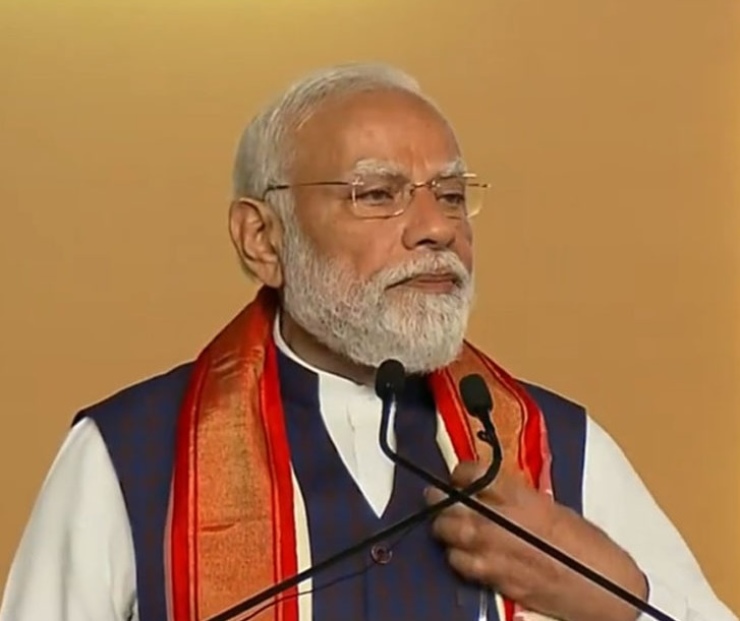
Prime Minister Narendra Modi on Sunday, May 10, called on Indians to revive work-from-home arrangements, limit foreign travel and stop buying gold for a year, as the ongoing US-Iran war pushed global crude prices to punishing levels and strained India’s ability to manage its import bill.
Speaking at a public event in Hyderabad, where he inaugurated multiple projects, Modi framed his appeal as a national duty, drawing parallels with the adaptation Indians demonstrated during the Covid-19 pandemic.
“During the Corona period, we developed many systems of work from home, online meetings, and video conferences, and we even became accustomed to them. Today, the demands of the times are such that if we restart these systems, it will be in the national interest,” he said.
India depends on overseas suppliers for the overwhelming bulk of its crude oil needs. Since the war began on February 28, import costs have risen from around $70 a barrel to nearly $120, while the rupee has lost significant ground against the dollar, compounding the pressure on an already strained foreign exchange position. The Strait of Hormuz, through which a large share of India’s oil supplies pass, has been closed to commercial traffic for more than two months. The International Energy Agency has called it the “largest supply disruption in history.”
Modi urged city dwellers to travel by Metro, share rides and switch to electric vehicles wherever possible. He asked farmers to cut chemical fertiliser use by half and move towards natural farming. “We must also place a strong emphasis on saving foreign exchange, as petrol and diesel have become so expensive globally,” he said.
On gold, he was direct. “Gold purchases are another area where foreign exchange is used extensively... In the national interest, we must resolve not to purchase gold for a year, no matter how many functions we have scheduled at home,” he said.
He extended the appeal to overseas travel. “We must decide that during this time of crisis, we should postpone travelling abroad for at least a year,” Modi said, specifically calling out the rising trend of destination weddings and foreign holidays among the middle class.
The remarks landed hard on financial markets. The benchmark Sensex shed more than 1,000 points in early Monday trade, with analysts linking the fall partly to Modi’s comments and the anxieties they signalled about the road ahead.
The pressure on fuel retailers has reached a critical point. Petroleum minister Hardeep Singh Puri said oil marketing companies were bleeding up to Rs 1,000 crore every day, with total under-recoveries for the current quarter threatening to touch Rs 2 lakh crore. Monthly losses across petrol, diesel and cooking gas combined had reached approximately Rs 30,000 crore. Pump prices in Delhi have not moved substantively in two years, with petrol at Rs 94.77 and diesel at Rs 87.67 per litre.
That freeze, however, was not purely a crisis-era sacrifice. Prices were held ahead of the 2024 Lok Sabha elections, with a Rs 2 per litre cut announced just weeks before polling day, a move widely read at the time as electoral rather than economic.
According to a government official quoted by the Hindustan Times on condition of anonymity, even after a ceasefire, prices were unlikely to ease quickly, as maritime trade, insurance markets and fuel inventories would all need considerable time to return to normal.
An energy sector expert told the Hindustan Times that Modi’s remarks should be read as preparation for what was coming. ‘People must be prepared to share the partial burden of this crisis in terms of a price hike, which is imminent,’ the expert said.
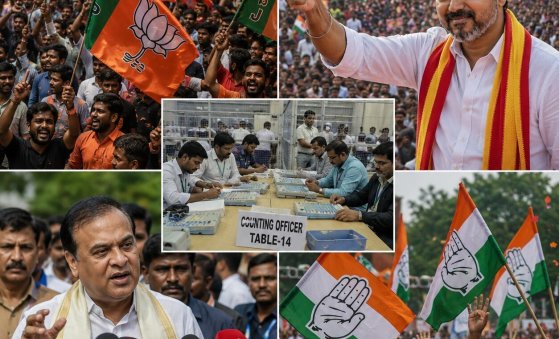
The Opposition hit back sharply. Congress general secretary KC Venugopal accused the government of being “clueless about ensuring India’s energy security” three months into the conflict. Congress leader Rahul Gandhi said the government was shifting “responsibility onto the people” and that Modi’s suggestions were “proofs of failure.”
Modi’s remarks also reignited debate among IT professionals on social media, with many calling on companies to restore flexible remote work policies, while others expressed doubt that firms would act without a formal government directive.