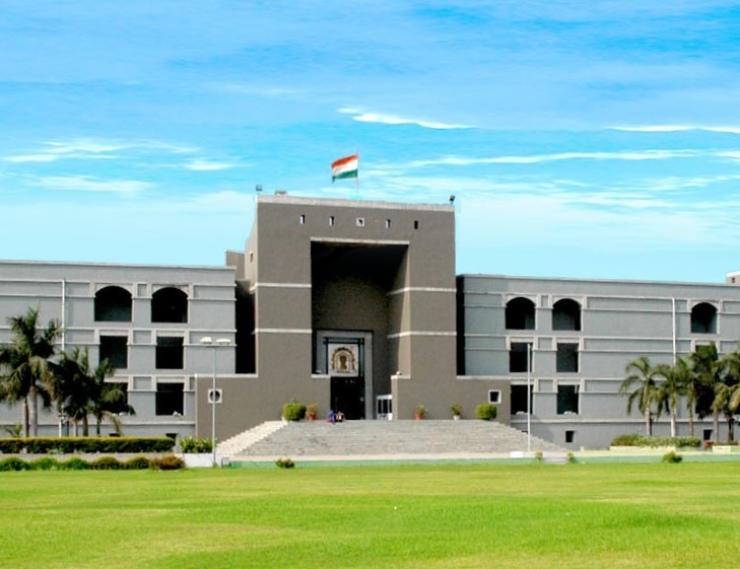
A pastor’s family in Surat district is currently shielded from investigation by a Gujarat High Court stay, after the court found that police had invoked charges against them under the state’s anti-conversion law without obtaining mandatory prior sanction. The matter comes up for hearing in August, when authorities must file their replies.
The case has its origins in May 2025, when a 27-year-old widow filed an FIR at Mandvi police station in Surat district, accusing a doctor of raping her on the false promise of marriage. The woman alleged she had been in a relationship with the doctor, who is the son of a local pastor, for six months. Police filed a chargesheet against the doctor in July 2025.
Seven months later, in December 2025, police submitted a fresh report before the court alleging that the doctor’s family had illegally converted the complainant to Christianity. Based on the complainant’s statement that the doctor had told her he would marry only a Christian woman, after which she took part in religious rituals and embraced the faith, police were allowed to add charges under Sections 4(1), 4(2)(a)(b) and 4(c)(1) of the Gujarat Freedom of Religion Act, 2003, read with Sections 5 and 6 of the 2021 amendment. The charges were pressed against the doctor’s parents, his two sisters, and two other close relatives.
The family approached the Gujarat High Court through advocate Utkarsh Dave, seeking to quash the conversion charges. The petition argued that investigators had improperly combined two separate allegations into a single probe and that the six petitioners were innocent. It further alleged that the complainant sought to implicate the family because the doctor’s father is a pastor and trustee of a Christian charitable trust, and that the case was motivated by personal animosity rather than genuine grievance.
The petition’s central argument was procedural: prosecution under the Gujarat Freedom of Religion Act requires prior sanction from an authority not below the rank of a Sub-Divisional Magistrate, and no such sanction had been obtained before the charges were filed.
Nearly five months after adding the conversion charges, and only after the family moved the High Court, police rushed to apply to the District Magistrate for the required sanction, doing so in the brief interval between two hearing dates. The attempt drew little sympathy. Justice M R Mengdey observed, “The fact remains the same that till date there is no sanction granted by the district magistrate under Section 6 of the Gujarat Freedom of Religion (Amendment) Act, 2021.”
The court stayed the probe and issued notices to the authorities, who must file their replies by August 20.
Gujarat’s anti-conversion law, originally enacted in 2003, prohibits religious conversion through force, allurement or fraudulent means. The 2021 amendment significantly tightened its provisions, making conversions for the purpose of marriage a specific offence and requiring prior sanction from the District Magistrate before any prosecution can be initiated. Its anti-conversion framework has been applied in several high-profile cases in recent years, with courts frequently examining whether procedural safeguards built into the law have been followed before charges are brought.