The secretary general of the World Evangelical Alliance (WEA) has visited a village in southern Jordan where nine Christians were killed during a church funeral last month. The Rev. Botrus Mansour laid a wreath at the victims’ graves and met with a bereaved family during the visit, according to a WEA statement released on 2 November.
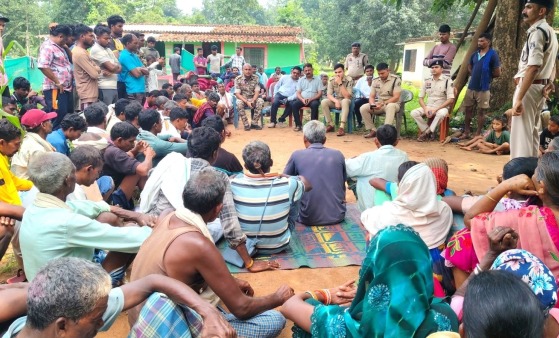
Mansour led a delegation of evangelical and Baptist leaders from Jordan and neighbouring areas to Hmoud, in the Karak Governorate. Gunmen opened fire on mourners at a Greek Orthodox church there on 23 October.
Speaking at the cemetery, Mansour said the killings had “shook us to our core”. He recalled that he had already issued a message of solidarity and prayer on behalf of the WEA, which represents an estimated 650 million evangelicals worldwide, but said the delegation also wanted to offer its condolences in person.
Mansour, who is from Nazareth, described Jordan as “an oasis of tolerance and full citizenship for all its people, without any discrimination between Muslim and Christian”. He praised King Abdullah II and the royal family for their response to the attack, describing it as decisive and courageous, both in words and actions.
He said the shooting had deeply affected the whole country, not only its Christian community. He called for stronger national unity, opposition to injustice and efforts to address grievances experienced by any group in Jordan.
Mansour also said the delegation would encourage evangelicals worldwide to visit Jordan, particularly as the country prepares to mark the 2,000th anniversary of Jesus’ baptism in the Jordan River in 2030. The planned international commemoration is expected to take place at Bethany Beyond the Jordan, a UNESCO-listed site on the river’s eastern bank traditionally identified as the place of Jesus’ baptism. Mansour has previously said the WEA hopes to work closely with Jordanian authorities on the event.
The delegation included the Rev. Nabih Abbasi, president of the Baptist Convention in Jordan and Middle East ambassador for the Baptist World Alliance, and the Rev. Jack Sara, president of Bethlehem Bible College and the Evangelical Alliance in the Middle East and North Africa.
Jordanian church leaders also joined the visit, including the Rev. David Rihani, head of the Assemblies of God in Jordan, and the Rev. Rami Hussein Halsa, pastor of Resurrection Baptist Church in Sweileh, near Amman.
The group prayed for the families of those killed, the injured and Jordan’s security. They then visited the family of Alaa Masarwa to offer condolences and pray with them.
Abbasi said the visit to the graves brought together sorrow and hope. He said the delegation had come to honour those who died, support their families and affirm the Christian belief that death does not have the final word because Christ rose from the dead.
He also referred to the biblical meaning of the word “martyr”, which is commonly translated as “witness”. Christians are called to bear witness to Christ, he said, adding that some are called to complete that witness by giving their lives.
“From this place, we declare that terrorism will not prevail, that hatred will not defeat love, and that darkness will not extinguish the light of Christ,” Abbasi said.
He prayed for comfort for the bereaved and recovery for those wounded in the attack. He also called for prayers for the king, the government and the security forces.
Mansour concluded his remarks by referring to the resurrection of Jesus, saying that those responsible for the killings might have believed they could end the victims’ lives and their stories, but that the story would continue because Christ had risen.
The shooting took place during a funeral at St George’s Greek Orthodox Church in Hmoud. Witnesses told CNN that gunmen fired for an extended period towards the church courtyard, where many mourners had gathered, while shouting “Allahu Akbar”, meaning “God is greater”.
At least 34 people were wounded in the attack, according to Reuters. Earlier reports had put the number of injured at 28.
Jordanian security forces arrested two brothers and their brother-in-law on 26 October following an exchange of fire in the nearby village of al-Judayyda. The Public Security Directorate said the three men had been found hiding in an abandoned house and refused to surrender, firing at officers who then wounded and detained them. No security personnel were injured.
Jordan’s director of public security, Major General Obeidallah al-Maaytah, said the suspects might have acted alone. Interior Minister Mazen al-Faraya said the investigation was continuing and that there were no indications at that stage of links between the men and other cells.
Later on 26 October, Jordan’s armed forces announced that its air force had attacked militant hideouts in southern Syria after concluding that the suspects were connected to terrorist groups operating there.
The following day, Government Communication Minister Mohammed al-Momani said the strikes had killed more than 20 Islamic State militants and destroyed a large weapons depot belonging to the group, according to Reuters and AFP.
Christians account for an estimated 2 to 3 per cent of Jordan’s population, although the area around Hmoud has a long-established Christian community. Attacks against Christians in the kingdom are rare. On the day of the shooting, King Abdullah pledged on social media to pursue those responsible with an “iron fist”.
Based on reporting by Christian Daily International.