The Supreme Court has agreed to hear an appeal challenging a recent state court order that temporarily restored land rights to around 600 families in Kerala, most of them Catholics. The case concerns disputed land in the state that a Muslim charitable body claims as waqf property.
On 12 December, the Supreme Court admitted a petition filed by the Kerala Waqf Protection Forum against an interim ruling of the Kerala High Court dated 10 October. That ruling had reinstated basic revenue rights to 610 families living in Munambam village in Ernakulam district. A larger bench of the High Court upheld the order on 26 November.
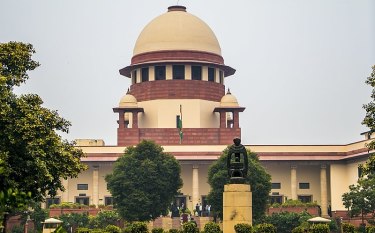
A Supreme Court bench made up of Justices Manoj Misra and Ujjal Bhuyan issued notices to the Kerala government and other parties and scheduled the matter for hearing on 27 January. The court clarified that it has not fully suspended the High Court’s decision, but said key legal questions need closer examination, including whether the High Court could issue directions while the case remains before the Waqf Tribunal.
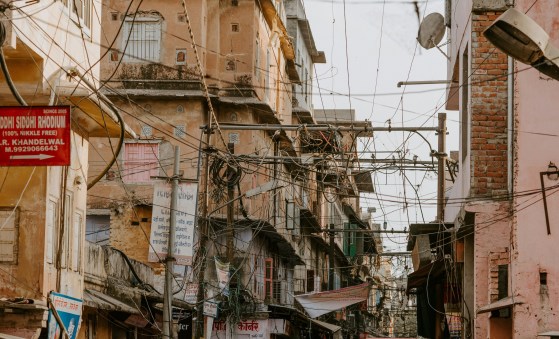
The disputed land, covering about 404 acres, is claimed by the Kerala State Waqf Board, a statutory body that oversees Muslim charitable properties. Residents of the area, mainly Latin Catholics along with a small number of Hindus, say they legally bought their plots between 1988 and 1993 and have lived there for decades.
Tensions increased in January 2022 when the state revenue department stopped accepting land tax payments from residents, citing the waqf claim. This raised fears of eviction and led to an indefinite relay hunger strike in 2023.
Most protesters ended the protest on 30 November, after 414 days, following the High Court’s interim order. However, a small group has continued to press for a final legal settlement.
Father Antony Xavier, parish priest of Valankanny Matha Church, which is located on the disputed land, said the community is preparing to defend its case before the Supreme Court. He explained that the issue dates back to 2008, when a government-appointed panel classified the land as waqf, a decision residents only became aware of years later.
The Waqf Board formally asserted its claim in 2019, and in 2022 the revenue department halted land tax collection. “These are mostly poor fishing families who invested their lifetime savings in their land and homes,” Father Xavier said, adding that the community hopes the Supreme Court will deliver a just outcome.
Some residents have expressed concern that the appeal may further delay a resolution. Others have questioned why land registration and tax payments were permitted for decades if the land was under dispute. Village leaders have said the Waqf Tribunal has been informed of the High Court’s interim finding that the land does not belong to the Waqf Board.
Adapted from UCA News.