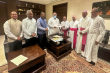
The Catholic Church has joined other Christian voices in opposing a proposed law in Sindh that would change existing rules covering Christian marriage, divorce and other family matters.
The Archdiocese of Karachi called for the withdrawal of the Sindh Christian Family Laws Bill, 2026, saying the proposal raises concerns about religious freedom and the Church’s independence.
In a statement issued on 10 September, Archbishop Benny Travas said the Pakistan Catholic Bishops’ Conference (PCBC) had neither endorsed nor approved the bill in its current form. The statement urged the Sindh authorities to record the Church’s objections, pause further consideration of the proposal and consult bishops and other Christian representatives.
The bill was introduced in the Sindh provincial assembly three days earlier by Deputy Speaker Anthony Naveed, a Catholic.
Under the proposed legislation, either husband or wife would be able to seek the dissolution of a marriage on grounds including adultery, remarriage, cruelty, rape or violence, desertion, non-consummation, lack of discretionary judgement, and conversion or abandonment of the Christian faith. It would also provide for judicial separation, protection orders for deserted spouses and financial support.
The proposed changes would replace the different requirements currently set out for men and women under the Divorce Act, 1869. At present, a husband can seek divorce on the grounds of adultery, while a wife must establish additional circumstances, such as her husband converting and remarrying, bigamy, rape, or adultery combined with cruelty or prolonged desertion.
Christian lawyers have argued that these requirements can make divorce difficult and leave couples, particularly women, facing stigma and emotional distress.
The proposed bill would also raise the minimum marriage age for Christian men and women to 18 and require both parties to give free and voluntary consent. Under the Christian Marriage Act, 1872, the minimum age is currently 16 for men and 13 for women.
However, the Catholic bishops have raised objections to the proposed structure of the legislation. They have called for provisions seeking to repeal or replace the Christian Marriage Act, 1872, and Christian Divorce Act, 1869, to be removed, arguing that these are federal laws.
The Church has also opposed creating a separate provincial framework for Christian family law and called instead for a uniform national system. It further argued that marriage and divorce should remain governed separately rather than being combined into a single law.
Naveed defended the introduction of the bill while acknowledging that discussions about its provisions could continue. He pointed to the 18th Amendment to Pakistan’s Constitution, passed in 2010, which transferred areas including health, education and minority affairs to the provinces.
“The bill’s introduction is not a point of no return. They want to talk and we want to listen,” Naveed told UCA News.
He said the proposal was intended to strengthen Christian family law and was not designed to interfere with Christian theology.
Christian activist Riaz Masih Aasi also called for caution, saying Christians should not become tools of vested interests seeking to create divisions within the community over religious beliefs and family law. He alleged that some current and former lawmakers were using legislation to advance what he described as “a foreign agenda”.
The dispute follows another controversy earlier this year. In April, Catholic and Protestant Churches in Punjab rejected proposed amendments to Christian marriage law, showing that disagreements over how Christian family matters should be regulated remain active in different parts of the country.
Based on reporting by UCA News.