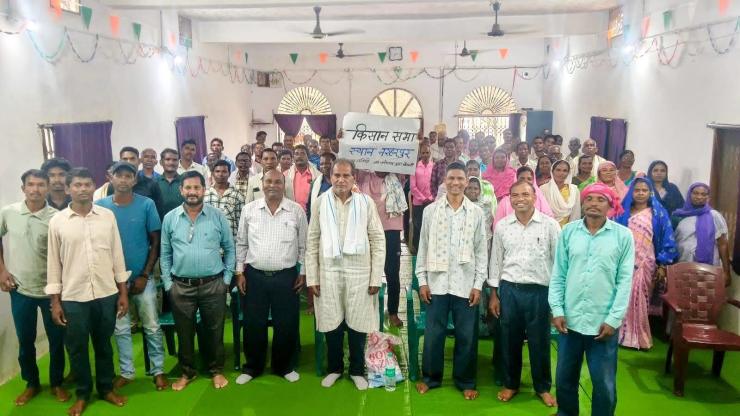
More than 100 farmers gathered at Narharpur in Kanker district, Chhattisgarh, on Thursday, 10 September, for a meeting organised by the Bhu-Beej Kisan Sangh (Soil and Seed Farmers’ Association), where speakers addressed farmer unity, land and livelihood issues, and the need to make farmers aware of their constitutional and legal rights. Details of the meeting were shared with Christian Today India by Rev. Dr. Akhilesh Edgar, advisor to the Progressive Christian Alliance, in a press release titled “Farmers’ Meeting of Bhu-Beej Kisan Sangh (Soil & Seed Farmers’ Association) Held in Narharpur, Distt. Kanker (Chhattisgarh).”
Narottam Das Bairagi, Chhattisgarh in-charge of the All India Kisan Mahasabha (AIKM), a national farmers’ organisation, attended the programme as chief guest and speaker.
Addressing the gathering, Simon Digbal Tandi, coordinator of the Progressive Christian Alliance, referred to concerns that farmers from Jashpur to Bastar, two regions of Chhattisgarh state, have been raising over “jal, jangal, zameen” (water, forest and land), land use and livelihoods. He said land-related disputes in some areas have been found to be connected with resolutions passed by the gram sabha (the village-level assembly that functions as a unit of local self-government in India), local customary arrangements and administrative procedures.
Tandi also referred to problems reportedly faced by some Christian farmers, including difficulties in accessing agricultural land, obstruction in farming activities, crop losses, and alleged pressure relating to land or housing following allegations concerning religious conversion. He said such matters should be examined and resolved fairly through due legal process, in accordance with the Constitution and applicable laws.
Turning to land disputes more broadly, Tandi said parties in some cases cite local customs, traditions and prevailing practices to support their claims of rights or possession over land. Arguments have reportedly been made in certain matters that laws applicable in Fifth Schedule areas (regions of India, largely inhabited by Scheduled Tribes, where the Constitution provides for special administrative arrangements) do not operate in the same manner as elsewhere, and that the powers of the district collector (the senior government officer heading administration in an Indian district) and the district administration are limited in areas governed by customary arrangements, he said.
He further said that in some instances, local decisions are described as being based on a customary system of governance or an “unwritten constitution”, which is presented as a basis for decisions concerning land, social rights and local affairs. Tandi emphasised that while local customs and traditions should be respected, claims based on them must also be examined in accordance with the Constitution, applicable laws and established legal procedures, particularly where a customary decision may affect an individual’s land, livelihood, property or other legal rights.
Bairagi, the chief speaker, said farmers should not be divided on the basis of religion, community or any other consideration, and stressed the importance of raising farmers’ issues through democratic and constitutional means. Farmers’ lives are closely connected with land and agricultural resources, he said, while faith remains a personal matter. According to him, no person should face discrimination on the basis of faith, and farmers should not be placed in a situation where they have to choose between their land and their faith. He stated that the AIKM is committed to raising issues concerning farmers’ rights through public mobilisation as well as appropriate legal and judicial forums.
Habil Masih, also addressing the gathering, stressed that farmers and agricultural labourers should be aware of government welfare schemes and complete the necessary registration to obtain the cards or documents needed to access benefits for which they are eligible. Citing free education and scholarships as examples, he encouraged eligible families to complete the required registration and documentation.
The programme included a question-and-answer session in which Bairagi responded to questions raised by farmers on various issues. Tea and refreshments were arranged for participants, and the organisers expressed their appreciation to the farmers and others who supported the programme.
Pati Ram Netam, Ghanshyam Dhruv, Dron Nirmal Kar, Dev Kumar Salam, Sumit Kawade and Naresh Hirwani were among those present, along with more than 100 farmers.