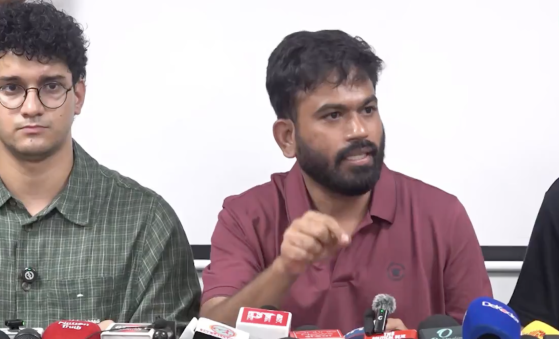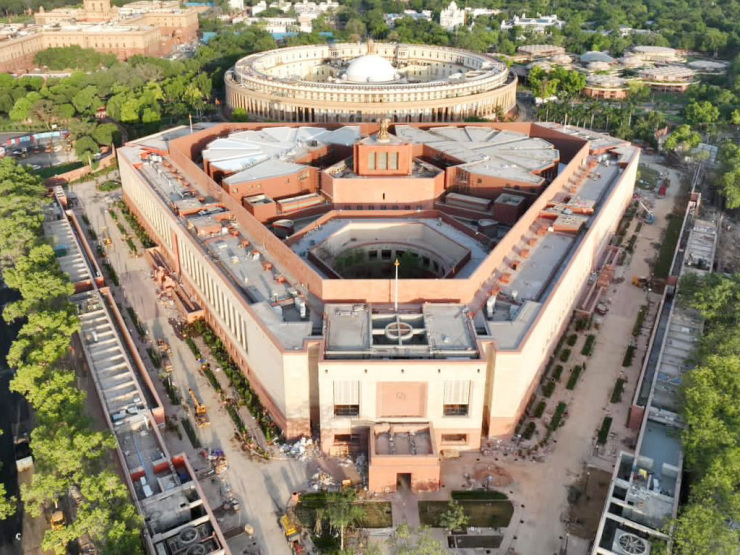
Ten opposition members of the Joint Parliamentary Committee (JPC) on the Foreign Contribution (Regulation) Amendment Bill, 2026, have asked its chairman to put off the panel's October 12 meeting by at least four weeks. The Bill has drawn objections from opposition parties and Christian groups. The request came on Tuesday, September 29, as officials of the Ministry of Home Affairs and the Ministry of Law and Justice took members through the legislation clause by clause at the committee's second sitting.
In a letter dated September 29 to chairman Sanjay Jaiswal of the Bharatiya Janata Party (BJP), the MPs further asked that public comments on the Bill remain open for at least four weeks. They said its implications are far-reaching and members need time to read it and the related papers closely. A longer window, they argued, would give organisations, experts and the public a fair chance to respond, and let the committee consider those submissions before it begins deliberations.
The signatories were A. Raja and P. Wilson of the Dravida Munnetra Kazhagam (DMK); Christopher Manickam, Hamdullah Sayeed, Viriato Fernandes and Anto Antony of the Congress; Javed Ali Khan and Zia Ur Rehman Barq of the Samajwadi Party; Kalyan Banerjee of the Mamata All India Trinamool Congress (MAITC); and James P.K. Sangma of the National People's Party. The MAITC was formed on September 18 after a split in the All India Trinamool Congress.
A JPC is a panel of legislators formed to examine a Bill in detail before it goes back to Parliament. This 31-member committee is due to file its report with the Lok Sabha, the lower house, by the final day of the Winter Session's first week.
The Bill seeks to amend the 2010 Foreign Contribution (Regulation) Act (FCRA), which requires every organisation and non-governmental organisation (NGO) receiving money from abroad to register, with the Home Ministry acting as the nodal authority that monitors them.
As per media reports, representatives of the State Bank of India, government law officers led by Additional Solicitor General Chetan Sharma, and lawyers from AZB & Partners and T. Nair Chambers appeared before the panel. The bank's chairman, Challa Sreenivasulu Setty, was expected to present views as per earlier reports.
The government brought the Bill to the Lok Sabha on March 25. It went to the JPC on August 12, after opposition parties pressed for such a review and called some provisions objectionable.
Opposition parties contend that the Bill singles out minorities and could cut off legitimate funds to Christian NGOs and to welfare and educational institutions run by minority communities. The government denies this.
Introducing the Bill, Minister of State for Home Nityanand Rai said it would improve transparency and ensure that money from abroad is properly used. When opposition members called the Bill "dangerous", Rai said it is "indeed dangerous" for those who engage in "forced religious conversion" using foreign contributions.
Mizoram Chief Minister Lalduhoma had led a delegation of Christian organisations to Union Home Minister Amit Shah and registered objections to the Bill. DMK MP P. Wilson led Church leaders to Shah and sought its withdrawal, a demand DMK chief M.K. Stalin has echoed. Chief Ministers Neiphiu Rio of Nagaland and Conrad K. Sangma of Meghalaya have flagged problems with its provisions.
Congress leader K.C. Venugopal has made the same charge against the Bill as the wider opposition. Nationalist Congress Party (Sharad Pawar) working president Supriya Sule opposed it in its present form, saying foreign funding cannot always be viewed with suspicion.
Lawmakers in the United States from both the Democratic and Republican parties, including Senator James Risch, chairman of the Senate Foreign Relations Committee, have expressed concern. They said the changes could hurt Christian organisations and other civil society groups. India rejected the criticism, calling the legislation an internal affair.
At the committee's first meeting on September 18, a Home Ministry team led by Union Home Secretary Govind Mohan said the number of active FCRA-registered NGOs has fallen by half in ten years, while the foreign money they receive has grown. The count now stands at 14,466, down from 29,022 in 2015.
Tamil Nadu leads with 2,102, followed by Maharashtra (1,578), Karnataka (1,355), Delhi (1,218), Andhra Pradesh (1,022) and Kerala (1,013). Foreign funds received by these NGOs went from Rs 17,832 crore in 2015-16 to Rs 22,974 crore in 2024-25. A crore is ten million.