A Naga students’ body has warned that border villagers may turn to China for help if the Centre and the Manipur government cannot protect them, after a succession of killings in the state’s hill districts.
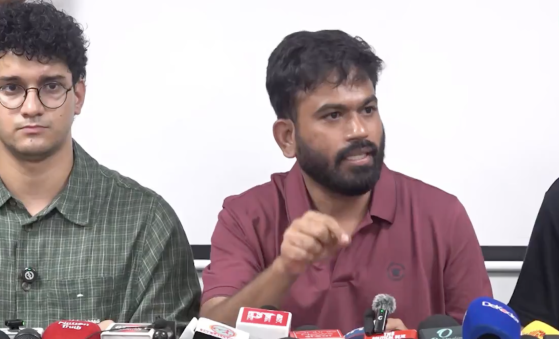
Tangkhul Aze Katamnao Long (TAKL) president Yarchuiso Kashung made the warning at the Manipur Press Club on Tuesday, September 29. If the governments were unwilling or unable to shield indigenous citizens, he said, people would have no option but to seek help from neighbouring countries such as China, even to the point of raising the Chinese flag. “We are extremely tired at this juncture,” he said. He also called on Chief Minister Yumnam Khemchand Singh to accept moral responsibility and consider stepping down, and sought more Manipur forces at Namlee, Wangle, Kaka and Pilong, along with operations against unauthorised camps and illegal weapons. A commentary the following day stressed that the statement was not evidence of an actual move towards Beijing.
On Tuesday, the Naga Women’s Union said the string of assaults by Kuki armed groups endangered the safety and stability of Manipur. The Tahamzam Youth Forum sided with the Naga People’s Organisation (NPO), Senapati, in a dispute over the Kailenjang killings. It dismissed the United Kuki Youth Club’s rejoinder and the Kuki Revolutionary Army’s (KRA) later clarification. If the KRA denies involvement, the forum said, it should hand its evidence to investigators. “Denials cannot erase dead bodies,” it said.
Senapati shut down on Monday, September 28, at the NPO’s call, to mourn the dead and demand justice. The NPO blamed armed Kuki elements for the attack and accused Kuki refugees of involvement. Neither claim has been independently verified.
The attack took place at Kailenjang in Senapati district on Saturday, September 26, at about 2.30 pm. The Chief Minister, on a visit to the district, had attended a function about 30 km away earlier, the Times of India reported. Two Naga men died at the spot, identified in reports as Rocky of Chowainamai Khullen and Kumar of Laii Shirafii. Ashiho Sani, 49, of Shajouba village, died of his wounds at a private hospital at about 3 am on Sunday, September 27. Adani Manio, 33, of Makhel was also hospitalised. Imphal Times reported initial allegations naming suspected KRA militants. Police have not established their involvement.
Naga organisations and local sources put the Naga civilian toll at 26. The Times of India has counted more than 40 deaths on both sides since February. Of those, at least 21 have occurred since August 27: 11 Nagas and 10 Kukis.
The shooting came on the day the United Naga Council (UNC) suspended its economic blockade of National Highways 2 and 37 from 6 pm, after tripartite talks in Guwahati with the Centre and the Manipur government. The council began the agitation in May, protesting the abduction of six Liangmai Naga civilians from Leilon Vaiphei in Kangpokpi district. The six were found dead on June 10.
Two days earlier, on Thursday, September 24, four Tangkhul Naga civilians were killed at Pilong village in Kamjong district, near the Myanmar border. A police source said unidentified armed men entered the village at about 2.30 pm and opened fire. The dead were Phami Jajo and his father Vareishim Jajo of Kangpat Khullen, Betterson Jajo of Kangpat Khunou and Ningthem Kashak of Zingsui. A fifth villager, Akhan Kaping of Hunphun, escaped. The Working Committee of the Tangkhul Naga Long blamed Kuki National Army-Burma (KNA-B) cadres and Kuki elements backed by the Myanmar-based People’s Defence Force.
Police registered a suo motu case under the Bharatiya Nyaya Sanhita, the Unlawful Activities (Prevention) Act and the Arms Act. Police suspect KNA-B involvement, although that attribution has not been officially established.
On Monday, September 21, a 17-year-old Liangmai Naga student, NK Wiphenbou, was shot dead in Tamenglong district while walking towards Tamei town. The Joint Tribes Council Manipur blamed Kuki militant groups, but authorities have not identified the attackers.
Kuki-Zo communities have lost civilians too. On Sunday, September 13, police said four Kuki people, two of them women, died in separate attacks at Tollen village in Tamenglong district and Longpi village in Noney district. On Tuesday, September 15, two Kuki women were shot dead at Leisang village in Tamenglong. The Kuki-Zo Council called the killings an “unacceptable and alarming pattern” and accused Naga armed groups. The allegation has not been independently verified.
These killings come against a wider conflict that began on May 3, 2023, when clashes broke out between the Meitei majority of the Imphal Valley and the Kuki-Zo communities of the hills. A tribal solidarity march against the Meiteis’ demand for Scheduled Tribe status preceded it. An RTI response said ex gratia had been paid in 217 violence-linked deaths up to March 30, 2026. By August 31, the state government told the Assembly that 306 people had been killed.
The National United Christian Forum reported more than 300 churches destroyed, among them Meitei Christian churches. Nagas, roughly a quarter of the population, mostly kept out of that conflict. Naga-Kuki hostility, rooted in clashes of the 1990s, flared again on the night of February 7, 2026, when a scuffle at Litan in Ukhrul district escalated into clashes and arson between Tangkhul Nagas and Kukis. Accounts of who was involved differ. Chief Minister Singh had taken office three days earlier.