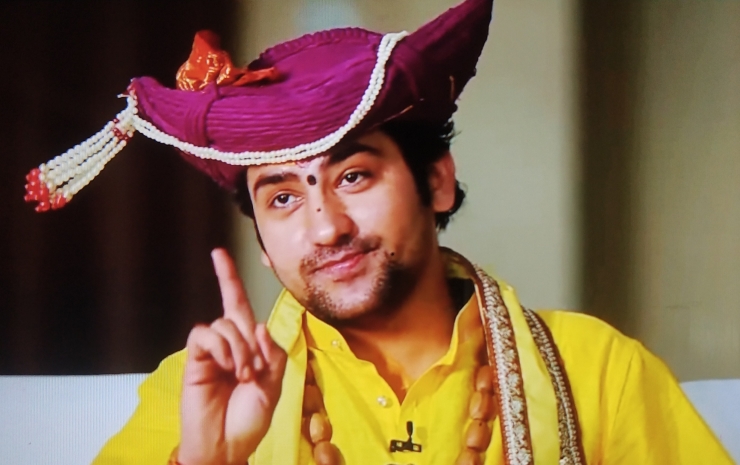
Christian and Muslim leaders in Punjab have objected to remarks by Hindu preacher Dhirendra Krishna Shastri on religious conversion, with Christian representatives approaching police and a senior Muslim cleric demanding a public apology.
Shastri, who heads Bageshwar Dham in the central Indian state of Madhya Pradesh, made the remarks during a five-day Hanumant Katha, a Hindu devotional discourse, in Ludhiana, one of Punjab’s largest cities.
Speaking about conditions in the state, Shastri said two things needed to be stopped: drug abuse and religious conversion.
While discussing conversion, he addressed Sikhs and said people who followed the Guru Granth Sahib, Sikhism’s sacred scripture, should not be influenced to change their religion. He said he would stand with Sikhs against conversion and declared that conversions would not be allowed in Punjab.
He later told journalists that he had not spoken against any religion and said his concern was with drugs and conversion.
“Hindus and Sikhs must visit temples and gurdwaras, what is the need to visit some other place?” he said, without naming another religion.
Some of his other comments drew strong objections from Muslim leaders, who said they were offensive and could disturb communal relations.
Punjab’s Shahi Imam, Maulana Mohammad Usman Rehmani Ludhianvi, demanded that Shastri withdraw his remarks and apologise publicly.
The Shahi Imam said he had no objection to anyone propagating their own faith, but objected to remarks against another religion being made in the name of religious preaching.
“Punjab is the land of Guru Nanak Dev and Baba Farid. It has always given a message of love, brotherhood and religious harmony. In such a place, coming here and making remarks against any religion is unfortunate,” he said.
He also warned that a police complaint could be filed against Shastri and the organisers if an apology was not issued, and proposed a meeting of representatives from different faith communities in Ludhiana.
Christian representatives have raised separate concerns.
Members of the Christian community met the Ludhiana Commissioner of Police, saying Shastri’s statements could inflame religious sentiments and lead to violence.
Albert Dua, president of the Christian United Federation, told the media that Christians would maintain peace.
“The statements show the mentality of the spiritual leader - how he was trying to divide the people of Punjab. There is no need to disturb the peace in the state ahead of the elections and we would like to ignore these leaders who divide us,” Dua said.
Prof Dr. Emanual Nahar, chairman of the Minority Department of the Punjab Congress party, also objected to the remarks, saying they had hurt members of minority communities and risked creating tension in the state.
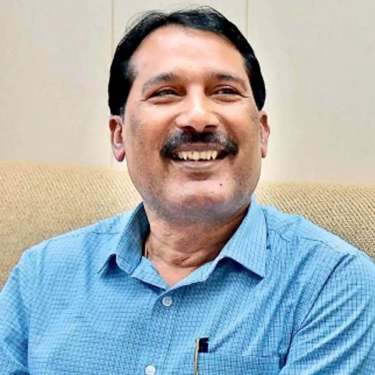
Nahar said Punjab was the land of gurus, pirs, or Muslim spiritual teachers, and saints, and had long been associated with religious coexistence and mutual respect.
He said no religious preacher should use a platform to hurt the sentiments of another community or spread hatred. Minorities, he said, had contributed alongside others to the progress of Punjab and India.
Nahar called on the Punjab government and law enforcement agencies to take action in accordance with the law against statements that could threaten public peace. He also appealed to minority communities not to respond to provocation and to maintain restraint.
Shastri has emerged as a frequently controversial religious figure in recent years. He has repeatedly spoken against conversion and has publicly called for India to become a Hindu nation. Media has described his political clout as extending beyond his home state of Madhya Pradesh.
His remarks have previously caused controversy in Punjab. During a visit to the state in October 2023, Christian groups objected to comments they considered derogatory, and a Christian organisation filed a police complaint in Amritsar alleging that he had hurt religious sentiments. During the same visit, Shastri called on the Punjab government to enact an anti-conversion law, alleging that “innocent people” were being exploited through conversions.
His interventions have also drawn criticism from political leaders, including within the BJP. Earlier this month, Shastri appealed to people in West Bengal not to cook or eat fish and meat during Durga Puja, one of Hinduism’s major festivals. The remarks prompted criticism in a state where non-vegetarian food forms part of established cultural and religious practices for many Hindus. West Bengal BJP president Samik Bhattacharya publicly distanced the party from Shastri’s remarks, saying no one could prescribe what people should eat or wear.
In April this year, Shastri also faced criticism over remarks concerning Chhatrapati Shivaji, the 17th-century Maratha ruler widely revered in Maharashtra. Chief Minister Devendra Fadnavis said he could find no historical evidence or reference supporting Shastri’s account. Shastri later apologised.
At the same time, Shastri has had repeated public interactions with senior figures from India’s governing Bharatiya Janata Party and the Rashtriya Swayamsevak Sangh, the Hindu nationalist organisation regarded as the BJP’s ideological parent.
Prime Minister Narendra Modi visited Bageshwar Dham in February 2025 to lay the foundation stone of a medical and research institute promoted by Shastri and publicly referred to him as a “younger brother”.
In April 2026, Shastri addressed an event in Nagpur attended by Fadnavis, RSS chief Mohan Bhagwat and Union minister Nitin Gadkari.
BJP leaders were also prominent at the Ludhiana programme. The Tribune reported that several political leaders, “especially those in the BJP”, attended the five-day event, while senior women office-bearers of the party participated in a procession connected with it.
Shastri’s organisation has also secured permission to receive foreign donations under India’s Foreign Contribution Regulation Act, which governs overseas funding to non-governmental and religious organisations.
In April 2026, the Union Home Ministry granted FCRA registration to Shri Bageshwar Jan Seva Samiti, the organisation associated with Bageshwar Dham. The registration covers religious, cultural, economic, educational and social activities and is valid for five years.
The approval came amid sustained scrutiny of foreign funding to civil society and religious organisations. A January 2022 analysis of Ministry of Home Affairs data found that, of 2,257 religious-category organisations that no longer held valid FCRA registration, 1,626, or more than 72 per cent, were organisations registered to run Christian social programmes.
Since then, several prominent Christian organisations have also faced FCRA cancellations or renewal refusals, including the Evangelical Fellowship of India, the CNI Synodical Board of Social Services and Church’s Auxiliary for Social Action.
Punjab, the birthplace of Sikhism, has a Sikh majority and a substantial Hindu population, alongside smaller Christian and Muslim communities.