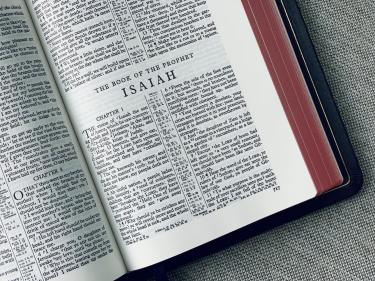
More than 500 million Christians around the world face restrictions or other serious barriers when trying to obtain or use a Bible, according to the 2026 Bible Access List.
The report estimates that more than 250 million Christians experience very difficult or severe restrictions. In some countries, possessing a Bible can reportedly result in imprisonment or even death.
Published by the Bible Access Initiative, a partnership of Bible agencies and ministries, the assessment covers 106 countries. It looks at both government and community restrictions on Scripture and shortages among Christians who want a Bible but do not have one.
Afghanistan ranks highest on the report’s Bible Restrictions List, followed by Yemen, Somalia, North Korea and Eritrea. Mauritania, Turkmenistan, Libya, Sudan and Iran also appear among the 10 countries with the most severe restrictions.
The report describes Afghanistan as a place where possessing a Bible can put Christians in extreme danger. In North Korea, it says, Christians can face severe punishment simply for keeping a Bible at home.
According to the assessment, every major stage of Bible distribution is restricted or severely restricted in dozens of countries. Printing faces such restrictions in 39 countries, while distribution is restricted in the same number. Importing Scripture faces comparable barriers in 38 countries, while storing Bibles is prohibited or severely restricted in 37 countries and personal ownership in 34.
Digital access also carries risks. The report estimates that about 277 million Christians in 48 countries live in online environments where access to Christian material is unsafe, restricted or monitored.
It cites surveillance and website blocking as examples. In Eritrea, phones are reportedly inspected at checkpoints and Christian online content is monitored. In Ethiopia, Christian websites are sometimes blocked, while in China, foreign Christian websites are blocked and some Bible applications have been removed from app stores. The report also points to a new online identification system that it says is making digital activity increasingly traceable.
Somalia presents another challenge. The Bible is available digitally and exists in a major national language, but the report says government monitoring and extremist groups make accessing or distributing Scripture dangerous.
Conditions have also worsened in some countries since the previous assessment. The companion paper identifies Mali, Burkina Faso and Syria as places where expanding extremist control and deteriorating security have increased restrictions on Bible access.
Venezuela moved 17 places higher on the restrictions list because of increased restrictions affecting the import and printing of Bibles.
The situation is different in Uganda and Mozambique, where the report says Bible access has improved alongside reductions in violence.
Legal restrictions are not the only obstacle. Millions of Christians face difficulties caused by poverty, weak infrastructure, illiteracy, geographical isolation and limited internet access. Some may legally own a Bible but still be unable to obtain one.
The report estimates that more than 125 million Christians in 81 countries want a Bible but do not have one.
It identifies the Democratic Republic of Congo, Ethiopia, Nigeria and India as having the largest estimated shortages, with more than 10 million Christians in each country wanting a Bible but lacking one.
In the Democratic Republic of Congo, the report estimates that fewer than one in three believers owns a Bible, despite the absence of legal restrictions on obtaining Scripture.
Economic and social conditions are a particularly important factor in some countries. Of the 33 countries identified as facing the most severe socioeconomic barriers, 15 also have significant persecution-related restrictions. The remaining 18 have limited or no significant persecution-related restrictions, which the report says could provide opportunities for affordable or free Bible distribution.
Digital technology cannot solve the problem on its own. More than 400 million Christians across 42 countries are estimated to lack internet access, while the cost of phones, computers and internet connections creates additional barriers.
Language is another challenge. Some smaller language communities have completed Bible translations but still lack printed copies because limited demand makes small print runs expensive.
The estimated global Bible shortage is higher than the figure of more than 100 million reported in 2025. However, the report's companion paper says the increase largely reflects the inclusion of additional countries and improvements in gathering evidence, rather than simply a rise in the number of Christians without Bibles.
The Bible Access Initiative says stronger distribution networks and safer methods of accessing Scripture could help address the problem.
The report identifies an estimated 54 million Bibles needed in 18 countries where persecution-related restrictions are limited or absent and socioeconomic barriers are the main obstacle. It says other countries present more complex challenges but stresses that the need for access remains.
The assessment is intended not only to document restrictions but also to identify areas where Bible agencies and Christian ministries may be able to respond through distribution, safer access, prayer and other forms of support.
Based on reporting by Christian Today UK.