The Nagpur bench of the Bombay High Court ruled on February 26 that a painting of the Holy Cross or a statue of Jesus Christ inside a home is not proof that a family has converted to Christianity, delivering a sharp rebuke to a district committee that had stripped a college student of his Scheduled Caste status on precisely that basis.
The division bench of Justices M.S. Jawalkar and Nandesh S. Deshpande allowed the petition filed by Stavan Wilson Sathe, 19, a resident of Akola, and directed the District Caste Certificate Verification Committee there to issue him a validity certificate recognising him as belonging to the Mang Scheduled Caste within two months.
The Akola committee had in September 2023 rejected Sathe’s caste status, citing a solitary entry of “Christian” in his grandfather’s 1962 school record, the testimony of one witness who said the family professed Christianity, and Christian-sounding names among relatives.
Sathe’s lawyer told the court that his grandfather Prabhakar Ganpat Sathe had temporarily adopted a Christian identity in school to escape caste-based harassment and been transferred to another school on the advice of others, but no member of the family had ever undergone baptism. The claim was backed by school leaving certificates from 1932 and 1934 recording the great-grandfather’s caste as Mang, an extract from the grandfather’s service book showing the same, validity certificates already issued to blood relatives, and a 2009 certificate from the Pastor of Alliance Church, Akola, itself confirming that the family was Matang by caste. Mang and Matang refer to the same Scheduled Caste community found predominantly in Maharashtra and neighbouring states.
The court found that across all documents on record, every entry recorded the caste as Mang or Matang save for that single 1962 entry. The bench said the Christian entry in that document was likely a clerical error, noting that a validity certificate had already been issued in the grandfather’s favour.
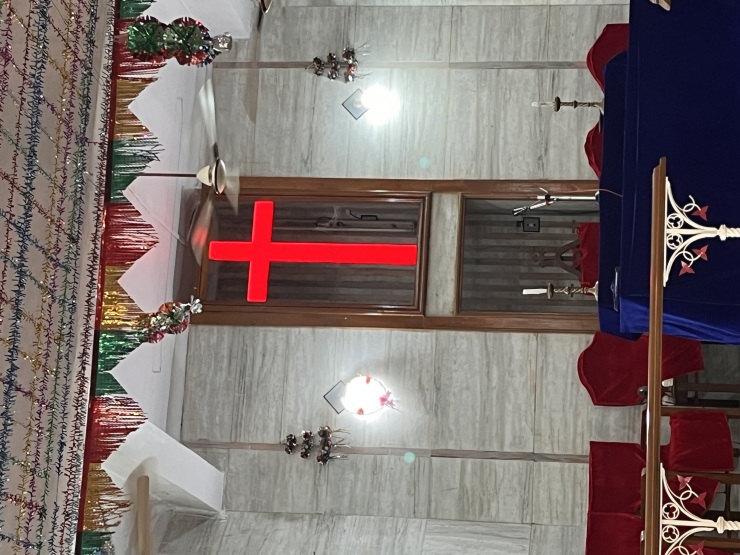
“It is the duty of the Caste Scrutiny Committee before concluding that the petitioner’s father and grandfather have converted themselves into Christianity, whether there was any rituals of baptism are performed or not,” the bench said. “Only because there is painting of Cross or presence of a statue of God Jesus Christ, would not suffice to hold that the forefather of the petitioner converted into Christianity.” It held the committee’s findings to be “patently erroneous and perverse” and quashed the order.
Dr. John Dayal, veteran journalist and spokesperson of the All India Catholic Union, told Christian Today the ruling fits into a broader pattern of courts correcting official overreach on the question of what constitutes conversion. “Conversion under the law must fulfil several criteria. The person must admit he has faith in the religion of his choice. In some states, including those with anti-conversion laws, this must be done before a magistrate or similar authority. Some sort of ceremony or rite of passage is also called for.” He noted that most Indians, regardless of faith, display religious imagery at home without any legal consequence. “Indians are plural people, and homes, shops and offices are adorned with statuettes, icons or framed photographs. Cars carry rosaries even if owned by an Evangelical Pentecostal, or even someone not Christian.”
The Nagpur bench’s position is consistent with a series of rulings from courts across the country. In October 2023, Justices Prithviraj Chavan and Urmila Joshi Phalke of the same court quashed an order by the Amravati District Caste Certificate Scrutiny Committee, which had denied a 17-year-old girl her Mahar Scheduled Caste status after a vigilance officer spotted a photograph of Jesus Christ in her home. “No sane man will accept or believe that merely because there is a photograph of Jesus Christ in the house would ipso facto mean that a person had converted himself into Christianity,” the court said then. On November 28 last year, the Lucknow bench of the Allahabad High Court ruled, in a case reported by this publication, that distributing the Bible and preaching religion is not a criminal offence under the Uttar Pradesh Prohibition of Unlawful Conversion of Religion Act, 2021. “Learned AGA has failed to indicate and obviously would not be able to indicate that distribution of Bible is a crime. Further, even preaching of a religion has not been prescribed as a crime anywhere,” the bench of Justices Abdul Moin and Babita Rani said, while criticising the state police for what it termed overreach.
The issue carries significant stakes for Dalit families across India. Under the Constitution (Scheduled Castes) Order, 1950, only those professing Hinduism, Sikhism or Buddhism can claim Scheduled Caste status, which determines eligibility for reservations in education and government employment. A finding of conversion to Christianity or Islam effectively strips a family of those entitlements.
Dayal described the 1950 Order in blunt terms. “The presidential order, now part of Article 341, is in fact the biggest and harshest anti-conversion law in the country and is not confined to twelve or so states as the so-called Freedom of Religion bills are at present. This law says anyone who converts and does not remain a Hindu will not be given those guaranteed benefits of jobs, scholarships, political empowerment and protection of the law.” He was pessimistic about the prospects for change. “In my view, no government in India will give Scheduled Caste rights to Dalit Christians under the current religious polarisation.”
The Supreme Court is currently hearing petitions by Christian and Muslim groups challenging this exclusion as unconstitutional, while a government-appointed commission headed by former Chief Justice K.G. Balakrishnan continues to examine whether Scheduled Caste status should be extended to Dalit converts, its tenure having been extended more than once without a final report.