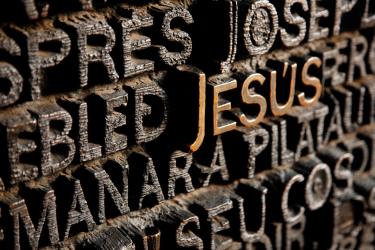
“Jesus Christ is the same yesterday and today and forever.” (Hebrews 13:8)
Introduction: Standing at the Threshold of 2026
Every new year places us at a threshold. We stand between what has been and what is yet to come. Behind us are memories we cherish and moments we regret, prayers that were answered and prayers that still wait. Ahead of us is a year we cannot control, predict, or fully prepare for.
The Bible is deeply honest about such moments. Scripture never treats time as empty or neutral. Each year is a gift, a calling, and a responsibility. As we enter 2026, the central biblical assurance we carry is not certainty about events, but confidence in God’s presence.
The question the Bible places before us is not, “What will happen this year?”
It is, “Whom will we trust as we walk into it?”
1) God Goes Before Us into the Year
One of the most repeated promises in Scripture is this: God goes before His people. When Israel stood on the edge of the wilderness, God said, “The LORD himself goes before you and will be with you; he will never leave you nor forsake you” (Deuteronomy 31:8).
This promise is not tied to a specific year or circumstance. It is rooted in God’s character. As we enter 2026, we do not walk into unknown territory alone. God is already there.
This truth reshapes how we face the future:
• We do not step into 2026 anxiously, but trustingly.
• We do not enter the year as orphans, but as people led.
• We do not face uncertainty alone; we face it accompanied.
Faith does not remove uncertainty, but it removes abandonment.
2) A New Year Does Not Mean a New God
The calendar changes, but God does not. Hebrews 13:8 reminds us: “Jesus Christ is the same yesterday and today and forever.” This is not a poetic phrase. It is a stabilising truth.
In a world of rapid change—technology, culture, politics, economies—the unchanging nature of God becomes our anchor. God’s faithfulness in the past is not outdated. His mercy has not expired. His promises have not lost their power.
As we enter 2026:
• The God who sustained you in previous years will sustain you again.
• The grace that carried you through past failures will carry you forward.
• The mercy that met you in weakness will meet you again.
New seasons do not require new gods. They require renewed trust.
3) The Bible Invites Reflection, Not Regret
Scripture encourages remembrance, but not self-condemnation. The psalms often look back—not to relive shame, but to recall God’s faithfulness. “Forget not all his benefits” (Psalm 103:2).
As we stand at the beginning of 2026, reflection is necessary:
• What has God taught us?
• Where have we grown?
• Where have we resisted change?
But biblical reflection always leads to hope, not despair. God does not invite us to relive our failures, but to learn from them. Grace does not erase the past; it redeems it. If the past year holds regret, Scripture offers this promise: “If anyone is in Christ, the new creation has come: The old has gone, the new is here!” (2 Corinthians 5:17).
The gospel assures us that the past does not have the final word. God does.
4) Walking into 2026 with Humility, Not Control
One of the most countercultural biblical virtues is humility. James writes: “You do not know what will happen tomorrow… Instead, you ought to say, ‘If it is the Lord’s will, we will live and do this or that’” (James 4:14–15).
The Bible does not condemn planning, but it warns against presumption. Humility acknowledges limits. Faith entrusts outcomes to God.
As we enter 2026:
• We plan responsibly, but we hold plans lightly.
• We work diligently, but we trust deeply.
• We commit our ways to the Lord, knowing that human wisdom is partial.
Humility is not weakness. It is wisdom that knows where control truly lies.
5) God Calls Us to Faithfulness, Not Fear
Fear often dominates our thinking about the future. Fear of loss. Fear of failure. Fear of change. Scripture repeatedly responds with the same command: “Do not be afraid.” This command is never detached from God’s presence. “Do not fear, for I am with you” (Isaiah 41:10).
God does not promise that 2026 will be easy. He promises that we will not face it alone. Biblical faith does not deny danger; it refuses to let fear rule. Courage in Scripture is not the absence of fear, but obedience in spite of it.
As we walk into 2026, faith calls us to:
• Speak truth even when silence feels safer.
• Act with integrity when compromise feels easier.
• Love generously in a guarded world.
Faithfulness matters more than comfort.
6) A Year Shaped by Daily Trust, Not Occasional Inspiration
Scripture consistently emphasises daily faithfulness over dramatic moments. Jesus teaches us to pray for “daily bread” (Matthew 6:11). Not yearly bread. Not lifetime supply. Daily provision.
This shapes how we approach 2026. The Christian life is not sustained by one spiritual high at the beginning of the year. It is sustained by daily dependence on God.
Daily practices matter:
• Daily prayer, even when it feels ordinary.
• Daily obedience, even when it feels unnoticed.
• Daily repentance, even when pride resists it.
God works through consistency more than intensity.
7) Living with Purpose, Not Distraction
Scripture reminds us that time is precious. “Teach us to number our days, that we may gain a heart of wisdom” (Psalm 90:12). 2026 will pass, just as previous years have passed. The question is not whether time will move forward, but how we will live within it.
The Bible calls us to purposeful living:
• Loving God wholeheartedly.
• Loving our neighbour sincerely.
• Using our gifts responsibly.
• Seeking justice, mercy, and humility.
Purpose is not about achievement alone. It is about alignment with God’s will.
8) Hope Rooted in God’s Faithfulness
Biblical hope is not wishful thinking. It is confidence anchored in God’s promises. Lamentations declares: “Because of the LORD’s great love we are not consumed, for his compassions never fail. They are new every morning”(Lamentations 3:22–23).
As we enter 2026, hope does not come from optimism about circumstances. It comes from trust in God’s steadfast love.
Even if the year brings:
• Unexpected trials.
• Delayed answers.
• Difficult changes.
Hope remains because God remains faithful.
9) Walking Together, Not Alone
The Bible never imagines faith as a solitary journey. God calls a people, not isolated individuals. We are reminded: “Let us consider how we may spur one another on toward love and good deeds” (Hebrews 10:24).
As we enter 2026, community matters:
• Encouragement matters.
• Accountability matters.
• Shared prayer matters.
God often strengthens us through one another.
Conclusion: Entering 2026 with Trust
As we step into 2026, Scripture does not offer a detailed forecast. It offers something better: the assurance of God’s presence, faithfulness, and guidance. We enter the year not knowing what it holds, but knowing who holds us.
May 2026 be a year marked not merely by success, but by faithfulness. Not merely by activity, but by obedience. Not merely by survival, but by trust.
“The LORD bless you and keep you; the LORD make his face shine on you and be gracious to you; the LORD turn his face toward you and give you peace.” (Numbers 6:24–26).
Amen!