Reflections from John 15:1–16
New Year Resolutions
New Year’s resolutions often begin with high ideals, yet they quietly fade into disappointment. At the start of a new year, we imagine ambitious plans for self-improvement — spiritually, physically, academically, or morally. We resolve to pray more, work harder, live healthier, and serve more faithfully. In her book Happy to Help, Amy Wilson observes that nearly 80 percent of New Year’s resolutions are abandoned by mid-February. Without a deeper source of life and strength, even our noblest commitments eventually wither.
This invites us, at the threshold of a new year, to pause and ask a more fundamental question: What does God truly desire from me this New Year? Before we rush into planning and promising, Scripture calls us to discern whether our ambitions are aligned with God’s purposes or merely expressions of our own desire for control, success, or recognition. It is precisely at this point that Jesus’ words in John 15 speak with clarity and authority into our restless, resolution-making hearts.
“I Am the True Vine” — The Foundation of All Commitment
In John 15, Jesus declares, “I am the true vine, and my Father is the gardener” (John 15:1). This is the seventh and final of the great “I am” statements recorded in the Gospel of John. Each of these declarations reveals something essential about Jesus’ identity and His saving relationship with humanity. Here, Jesus presents Himself not merely as a provider, caregiver or guide, but as the very source of life itself.
By calling Himself “the true vine,” Jesus contrasts Himself with all false sources of life, security, and meaning. Israel had often been described as God’s vine in the Old Testament, yet it failed to bear the fruit of faithfulness and righteousness. Jesus now stands in Israel’s place as the faithful, obedient Son through whom God’s life flows into the world.
This image redefines the nature of Christian commitment. It is about remaining — abiding — staying vitally connected to Christ. Therefore, before Christ calls us to bear fruit, He calls us to remain: “Remain in me, as I also remain in you. No branch can bear fruit by itself; it must remain in the vine” (John 15:4). The central commitment of the Christian life is not a list of resolutions but a posture of dependence — a daily, conscious, humble remaining in Christ.
1. Remain in Christ – Divine Communion
“Remain in me, as I also remain in you.” (John 15:4)
At the heart of Jesus’ teaching in John 15 is a simple command: remain. The Greek verb used here is μένω (menō), which means to stay, to dwell, to lodge, to reside — not momentarily, but continuously. It describes an ongoing relationship. To remain in Him means
(a) To Live in the Presence of God - To remain in Christ is first to live in the presence of God — to walk with continuously. Through Christ, we are brought into God’s dwelling place. As the psalmist declares, “Whoever dwells in the shelter of the Most High will rest in the shadow of the Almighty” (Psalm 91:1). Therefore, remaining in Christ means living consciously within that shelter. Our very existence is sustained by God’s presence. The life of Enoch beautifully illustrates this: “Enoch walked with God” (Genesis 5:24) is not about visibility but about intimacy. Sadhu Sundar Singh was once invited by a king. During the audience, the king said to him: “You must be very happy to be in the place of the king.” Sadhu Sundar Singh gently replied: “Your Majesty, I am always happy in the presence of the King of kings.”
(b) To Be Connected with God’s Eternal Life - Second, to remain in Christ is to be connected with God’s eternal life, who is the source of all spiritual vitality, hope, and renewal. In John 6, many in the crowd followed Jesus because of the miracles and the provision of food, but some were unwilling to accept His teaching about Him as the true bread from heaven and they left Him. Jesus then asked the Twelve whether they also wished to leave. On this “Simon Peter answered him, “Lord, to whom shall we go? You have the words of eternal life” (6:68). Mary of Bethany sat at Jesus’ feet, choosing what Jesus called “the better part” (Luke 10:38–42) while others were busy serving. She knew that it is important to be connected with Jesus.
(c) Communion with the Triune God - To remain in Christ is, therefore, to live in living fellowship with the Triune God — Father, Son, and Holy Spirit. The Father is the Vinedresser, who lovingly tends, lifts, and prunes us so that we may bear more fruit. Jesus is the Vine, the source of all spiritual life. The Holy Spirit is the life-giving presence — the divine “sap” flowing through the branches — communicating Christ’s life to us and producing fruit within us. To abide in Christ, then, is to be rooted in the Son, shaped by the Father, and sustained by the Spirit.
2. Remain Dependent, Not Self-Sufficient
“No branch can bear fruit by itself… apart from me you can do nothing.” (John 15:4–5)
Jesus not only calls us to remain in Him; He warns us against the illusion of self-dependent. A branch has no independent life, strength, and productivity. Once separated from the vine, the branch may retain a green appearance for a short time, but its life is draining away. Without the vine, branch has no future, no fruit, and no vitality. “Apart from me you can do nothing” are the words of wisdom and warning as we live and profess our Christian living. It exposes that without Him, we cannot sustain ourselves.
King Saul began well when he was appointed as the King of Israel. He was chosen by God, anointed by God, and empowered by the Spirit (1 Samuel 10:1, 6–10). He appeared like a healthy branch, full of promise and potential. Yet over time, Saul began to trust his own judgment instead of God’s Word (1 Samuel 13; 15). Sadly because he started to trust himself “the Spirit of the Lord departed from Saul” (1 Samuel 16:14). Saul still wore the crown, still occupied the throne, and still functioned publicly as king — but inwardly he was withering and evil spirit took full control over him. Saul’s story warns us. Against this danger, Jesus calls us to reject self-reliance and embrace dependence on Him. Dependence is not weakness; it is the posture through which divine strength flows. The Apostle Paul when confronted with his own limitations, he heard the Lord say, “My grace is sufficient for you, for my power is made perfect in weakness” (2 Corinthians 12:9). This is why he could confidently declare, “I can do all things through Christ who strengthens me” (Philippians 4:13). J. Henry Jowett once observed that “there are multitudes of professing Christians who are like detached branches; their spiritual life is ebbing away… They have no splendid force of character, and therefore they exercise no arresting witness for the King.” His words expose the danger of maintaining religious identity without living spiritual connection. Whether in ministry, academia, leadership, or daily discipleship, we are invited to totally dependent on Him.
3. Remain Fruitful- Evidence of Authentic Discipleship
“If you remain in me and I in you, you will bear much fruit.” (John 15:5)
In John 15, fruitfulness is not presented as optional or exceptional; it is the natural and necessary outcome of our dwelling in and dependence upon God’s presence through Jesus Christ. Fruit is therefore not the basis of our belonging to Christ, but the evidence of it. This fruitfulness has two inseparable dimensions: remaining in Christ and being enlivened by the Holy Spirit. As Paul writes, “So then, just as you received Christ Jesus as Lord, continue to live your lives in him, rooted and built up in him, strengthened in the faith as you were taught” (Colossians 2:6–7). To be rooted in Christ establishes our identity and to be built up and strengthened by the Spirit enables growth, maturity, and visible fruit.
Jesus adds a clarifying dimension when He says, “Every branch in me that does not bear fruit He takes away, and every branch that does bear fruit He prunes, that it may bear more fruit” (John 15:2). Two types of branches exist within the same vine: fruit-bearing and fruitless. Both are “in the vine,” yet their outcomes differ. In viticulture, older or improperly oriented growth may produce leaves but little fruit unless it is pruned. Thus, pruning is not punishment for being alive; it is purposeful cutting that redirects life toward fruitfulness. The Greek word kathairō conveys cleansing and purification rather than destruction. Scripture therefore presents two simultaneous actions of the Father: the removal of dead wood and the pruning of living wood.
Dead Wood
Dead wood is a branch that is still attached outwardly but no longer alive inwardly. It has lost its living connection with the vine. It may look green for a time, but its cell sap is drying up. When we resist God’s pruning and substitute self-reliance for dependence on Him, devotion gradually becomes routine and obedience becomes convenience. We may remain outwardly active, yet inwardly we become spiritual dead wood — disconnected from the life of the Vine. This condition is not merely weakness but spiritual degeneration, marked by the loss of vitality and fruitfulness.
Fruit That Remains
Jesus concludes this section with a statement of divine intention: “You did not choose me, but I chose you and appointed you so that you might go and bear fruit — fruit that will remain” (John 15:16). Here again the verb menō is implied: fruit is not only to be produced but to endure. Jesus speaks not merely of bearing fruit, but of bearing much fruit, and not merely temporary fruit, but fruit that remains. Such fruit includes Christlike character, transformed lives, faithful service, reconciled relationships, and missional impact. It cannot be reduced to performance, or visible success alone. Fruitfulness must be understood as the manifestation of Christ’s life within us as mentioned in Galatians 5:22. It must be visible in integrity, humility, love, perseverance, and faithfulness
4. Remain in the Word
“If you remain in me and my words remain in you, ask whatever you wish…” (John 15:7)
Christ remains in us through His Word, and we remain in Him by allowing His Word to shape our minds, and hearts. This requires a disciplined life shaped by Scripture and sustained by prayer. Prayer in John 15 is the natural expression of a life formed by God’s Word. When Christ’s words remain in us, our desires are gradually purified, and our prayers increasingly reflect God’s purposes.
The life of the vine teaches us that visible fruit is always preceded by invisible formation. In viticulture, it takes approximately three years for a vine to produce good fruit, and five to seven years for it to produce abundant fruit. During this time, the vine invests deeply in root development. Above-ground growth may appear slow, but beneath the surface, the root of the plant is strengthening its capacity to sustain future fruitfulness. So it is in the spiritual life. Rootedness precedes productivity. Without deep roots in God’s Word, visible activity may exist, but lasting fruit will not. The psalmist describes this rooted life: “Blessed is the one… whose delight is in the law of the Lord, and who meditates on his law day and night. That person is like a tree planted by streams of water, which yields its fruit in season” (Psalm 1:1–3). Fruitfulness flows not from frantic effort, but from steady immersion in God’s Word.
The same principle is evident in God’s instruction to Joshua. As he stood at the threshold of leadership, God did not first command strategic planning or political strength, but spiritual rootedness: “Keep this Book of the Law always on your lips; meditate on it day and night, so that you may be careful to do everything written in it. Then you will be prosperous and successful” (Joshua 1:8). Obedience flows from meditation; effectiveness flows from obedience. Without Scripture, we lose direction. Without prayer, we lose dependence. Without both, we lose discernment. Therefore, to remain in Christ is to remain in His Word and to persist in obedient, God-shaped prayer — cultivating depth that will, in time, yield fruit that glorifies God and blesses the world.
5. Remain in Christ’s Love
“As the Father has loved me, so have I loved you. Now remain in my love.” (John 15:9)
In Jesus' final discourse (John 13–17), the word love appears twenty-one times. In these chapters, Jesus emphasizes two inseparable realities: How much He loves us? and How much we must love each another? Hence the heart of Jesus’ teaching is captured in John 13:34–35, where Jesus gives a new commandment: "Love one another. As I have loved you, so you must love one another."
Jesus locates the believer’s life not in effort, performance, or achievement, but in participation in divine love. The love with which the Father eternally loves the Son is now extended to the disciples. To “remain” in this love is therefore not a passive emotional state but an active, relational, and obedient dwelling within the life of God. “Remain in me, and I in you” (John 15:4) expresses mutual indwelling — not merely our closeness to Christ, but Christ’s active presence within us. Closely related is the noun μονή (monē), meaning a dwelling place or abiding home. Jesus uses it in John 14:2 — “In my Father’s house are many dwelling places” — and again in John 14:23: “We will come to them and make our home with them.” This reveals that remaining in Christ’s love is not merely our action toward God; it is God’s gracious action of making His dwelling within us.
To remain in Christ's love, then, is to receive His love deeply, to return it wholeheartedly through obedience, and to extend it generously to one another. It is to discover that we are not simply striving toward God but dwelling within Him, and He within us—an abiding that transforms both our relationship with Christ and our relationships with one another.
The Nature of God’s Love
Biblically, God’s love is not weak, sentimental, or passive. It is creative (Genesis 1; John 1), redemptive (John 3:16; Romans 5:8), transformative (2 Corinthians 5:17), and sanctifying (Ephesians 5:25–27). God’s love is powerful, life-giving, and active, formative. This love energizes holiness, empowers obedience, and reshapes character. It moves us to speak the truth in love (Ephesians 4:15), to serve with humility (John 13:1–17), and to forgive with generosity (Colossians 3:13–14). Love is therefore not merely the greatest virtue; it is the greatest force of transformation in the Christian life (1 Corinthians 13:13).
Conclusion: A Life That Remains
As we step into this new year, let us make our commitment not a list of ambitious resolutions, but a singular devotion to remain in Christ. The life Jesus calls us to is not one of striving but of abiding — not of self-effort but of Spirit-sustained fruitfulness. Our commitments for the new year are simple yet transformative:
· Remain in Christ — dwelling daily in divine communion with the Triune God, walking in His presence, and drawing from His eternal life.
· Remain dependent — rejecting the illusion of self-sufficiency and embracing Christ as our only source of strength, wisdom, and vitality.
· Remain fruitful — allowing the Father to prune us, trusting that He removes what is dead and refines what is alive, so that we may bear fruit that glorifies Him and endures.
· Remain in the Word — rooting ourselves deeply in Scripture and prayer, knowing that visible fruit flows from invisible formation and that obedience is born from meditation.
· Remain in Christ's love — receiving the Father's love extended through the Son, returning it through wholehearted obedience, and reflecting it in sacrificial love toward one another.
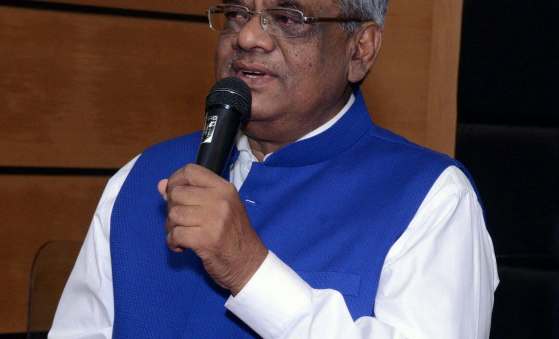
Revd. Dr. Samuel Richmond is serving as Executive Director at Caleb Institute. He is also Hon. Secretary, EFI Theological Commission, South Asian representative for Lausanne/WEA Creation Care Network and Member of WEA Theological Commission.