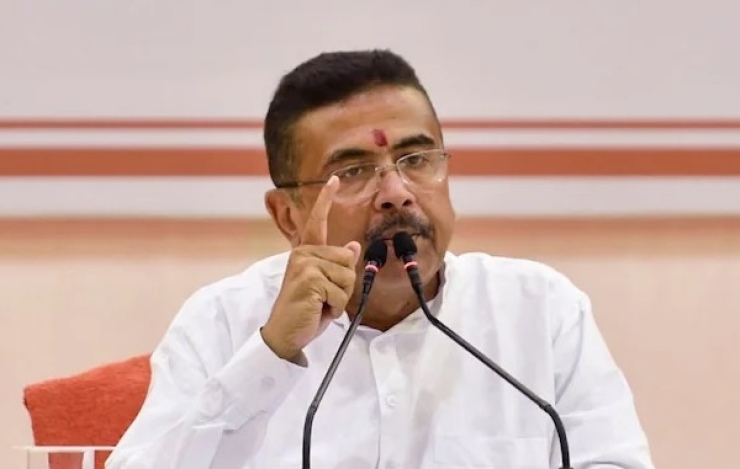
West Bengal Chief Minister Suvendu Adhikari is set to make a statement on the proposed Uniform Civil Code (UCC) Bill, 2026, in the state Assembly on Monday, June 29, as the government moves to introduce a clutch of legislations during the ongoing Budget session.
Besides the UCC Bill, the Assembly will also take up four other pieces of legislation: the West Bengal Backward Classes (Other than Scheduled Castes and Scheduled Tribes) (Reservation of Vacancies in Services and Posts) (Amendment) Bill, 2026, the West Bengal Commission for Backward Classes (Amendment) Bill, 2026, the West Bengal Maintenance of Public Order (Amendment) Bill, 2026, and the West Bengal Public Safety and Control of Anti-Social Activities Bill, 2026.
Officials cited by Hindustan Times said the two public order Bills broaden the definition of “anti-social activity,” permit detention without trial for up to twelve months with provision for repeat detention, and let the state auction an offender’s assets to recover losses, a mechanism already used in Uttar Pradesh, Gujarat, Tamil Nadu and Maharashtra. The Anti-Social Activities Bill’s recovery model follows the Uttar Pradesh precedent under Chief Minister Yogi Adityanath, where those found responsible for damaging property can be made to pay compensation. The Public Order Amendment Bill carries a similar seize-and-auction provision.
The decision to bring the UCC Bill forward was finalised at a Business Advisory Committee meeting, advancing a key BJP election promise by several months ahead of its six-month manifesto deadline. Parliamentary Affairs Minister Shankar Ghosh indicated that work on bringing the Bill to the House had already begun.
The move follows an announcement by Adhikari on Friday, June 26, at a programme held at Rabindra Sadan to mark the 150th anniversary of Vande Mataram. Adhikari said his government would bring in stringent laws against “land jihad,” “love jihad” and forced religious conversion, besides implementing the UCC and the National Register of Citizens (NRC), describing the measures as necessary to strengthen national security and preserve the state’s cultural identity. “Give us some time. A strict law against land jihad, love jihad and forced religious conversion and Uniform Civil Code will be introduced in West Bengal,” he said, without furnishing evidence for his claims of infiltration-driven demographic change. He said holding centres had been set up in border districts to identify and send back infiltrators, while distinguishing such persons from Hindu refugees covered under the Citizenship (Amendment) Act, who he said would not be treated as infiltrators and would be granted citizenship.
On the UCC framework, Adhikari said a panel led by a retired judge was already in place to draw up the framework, and that the process would mirror the procedures followed in Gujarat, Uttarakhand and Assam. “There is a prescribed procedure for implementation of UCC. A committee will be set up under a retired judge,” he said.
Adding to the political push, West Bengal minister Dilip Ghosh said on Sunday that the Bill would clear the House sooner or later, calling its passage simply a matter of timing and process. “The UCC bill is bound to be passed. It has been passed in many states, and the process has begun here as well. It is up to the government to decide the next steps, when the bill will be introduced and what will happen,” he said. Fellow minister Jagannath Chattopadhyay had earlier said the government intended to introduce and clear the Bill on June 29 itself, telling reporters, “On the 29th, we will introduce the UCC in the Bengal Legislative Assembly, pass it, and ensure Bengal joins the club of states that have enacted the UCC.”
West Bengal BJP president Samik Bhattacharya defended the move, saying the UCC has been part of the party’s agenda since its founding in 1980, while Union Minister Sukanta Majumdar linked the legislation to concerns over demographic change and a proposed Demographic Commission.
The proposal has drawn sharp criticism from the Opposition. Trinamool Congress MP Mahua Moitra said, “We are very concerned about the intent of the bill. We believe it is being brought only for polarisation.” The All India Muslim Personal Law Board has reportedly said it will resist the move, arguing such a law has no place in a secular republic.
West Bengal’s move follows similar legislation already passed in Uttarakhand, Gujarat and Assam, all of which exempt Scheduled Tribes from the law’s ambit. Other BJP-ruled states are also moving in the same direction. Madhya Pradesh, under Chief Minister Mohan Yadav, may bring its own UCC Bill in the state legislature’s monsoon session, while Maharashtra has taken a more cautious route, setting up a panel under a retired High Court judge to study the law’s implications first.