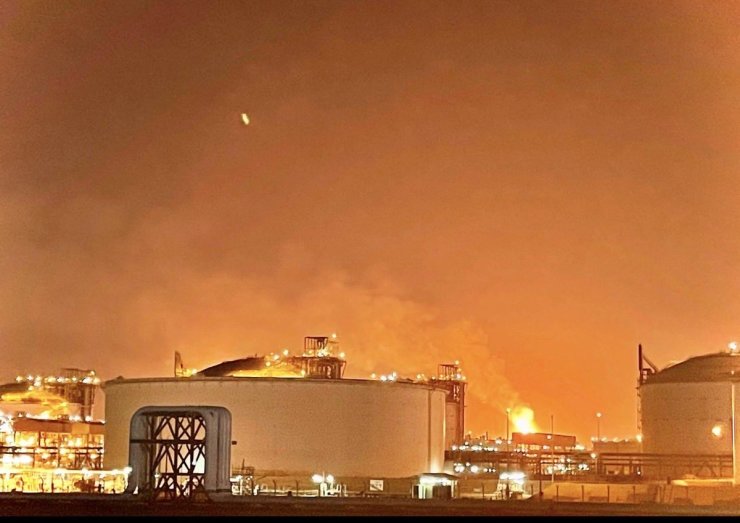
A massive explosion tore through the Barzan gas supply facility at Ras Laffan Industrial City in Qatar on the night of 21 June, killing 13 workers and injuring 66 others. Twelve of the dead were Indian nationals and one held Pakistani nationality, Qatar's Energy Minister Saad al-Kaabi confirmed, as reported by India Today. The blast shook central Doha, rattling windows in the capital more than 70 kilometres away and sending residents into a panic.
The Indian Embassy in Doha confirmed the death toll in a post on X on Tuesday. "We convey our deepest condolences to the families of those who have unfortunately passed away in the sad incident at Ras Laffan Industrial City last night," the embassy wrote. The mission added that it stood in close coordination with Qatari authorities to extend all possible assistance to the affected Indian nationals and their families.
What Happened at Barzan
Qatar's Energy Minister and QatarEnergy chief executive Saad al-Kaabi addressed reporters on Monday and confirmed the casualties. He said the explosion was caused by an operational fault during the restart of operations at the Barzan gas supply centre, which triggered a fire and a powerful explosion.
"This was an accident and not a sabotage or hostile in nature. Plant production was intentionally completely stopped since December 2025 due to urgent maintenance requirements. It was first restarted again only two days ago," al-Kaabi told reporters.
Authorities described the incident as a "technical accident" and confirmed that an investigation had been launched into the cause. The 66 injured workers came from a wide range of nationalities, including nationals of Qatar, India, Pakistan, Bangladesh, Kenya, Ghana, Tanzania, Nigeria, and Nepal, according to Asia Today. Al-Kaabi confirmed that "66 people have been reported injured and are receiving medical treatment, none of whom are in life-threatening condition.”
A Facility Already Carrying War Scars
The Barzan explosion comes months after Iranian missiles struck key gas-processing units at Ras Laffan during the Iran war. Those strikes, which took place in March, hit two major gas-processing units and cut approximately 17 per cent of Qatar's LNG export capacity. QatarEnergy has previously stated that repairs to the damaged infrastructure could take between three and five years.
Qatar, which hosts a major United States military base, faced repeated Iranian missile and drone attacks during the conflict. The closure of the Strait of Hormuz during the war disrupted nearly 20 per cent of global LNG supplies before shipments gradually resumed. Around 10,000 workers were evacuated from offshore platforms and onshore processing facilities during that period, though no injuries were reported in those missile strikes.
The Barzan facility had been shut down since December 2025 for urgent maintenance and had only been restarted two days before the fatal explosion. Bringing a facility of this scale back online demands that engineers cool equipment gradually to prevent thermal shock, and that each LNG train be activated one at a time in a strictly sequenced process, India Today reported. This complexity makes the restart phase particularly vulnerable to technical failure.
Qatar's LNG Lifeline Under Strain
The Barzan facility is a critical node in Qatar's energy network. It supplies gas to local industries and power stations and produces liquefied petroleum gas and other products for export. The facility is part of Ras Laffan Industrial City, QatarEnergy's flagship LNG production and export centre, which carries an annual production capacity of 77 million metric tons.
Despite the scale of the tragedy, al-Kaabi assured the public that Qatar's LNG export capacity had not been compromised and that there were no environmental risks arising from the incident, AsiaNews reported.
Condolences and Coordination
Al-Kaabi opened his remarks to reporters with a statement that conveyed the weight of the moment. "I find myself today having to do something I have always hoped will never happen, and that is to announce the tragic loss of 13 lives of our people who hold Indian and Pakistani nationalities.” He expressed condolences to the families of all victims.
The Indian Embassy in Doha committed to ensuring the earliest possible repatriation of the mortal remains of the deceased to India. "Our embassy is working in close contact with the Qatari authorities to extend all possible assistance to the Indian nationals and their families affected by this incident, including ensuring that the mortal remains of the deceased are repatriated to India at the earliest," the mission posted on X.
Thirteen families, most of them in India, now wait for their loved ones to come home.