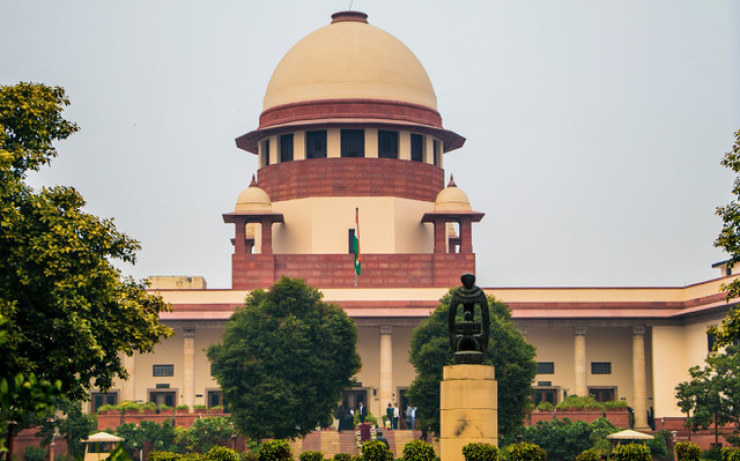
India’s Supreme Court on Thursday, September 17, ordered the Chief Secretary of Manipur, the state’s senior-most civil servant, to explain deaths in relief camps for people displaced by ethnic violence. A report from an officer of the Indian Administrative Service recorded 34 unnatural deaths in the camps. One of them was allegedly linked to a sexual assault.
A bench of Chief Justice of India Surya Kant and Justices Joymalya Bagchi and V. Mohana was hearing petitions on investigations and trials linked to the ethnic-religious violence that began in Manipur, a state in India's north-east, on May 3, 2023. The violence pitted the mainly Hindu Meitei community against the mainly Christian Kuki-Zo tribal community. According to official data, at least 217 people have died and more than 58,000 have been displaced. More than 300 churches have been reported destroyed.
The court acted on the 47th report of the Justice Gita Mittal Committee, a three-member panel it appointed to monitor relief and rehabilitation. According to the court’s order, the committee wrote to the Chief Secretary’s office on June 11, seeking district-wise figures for deaths in the camps since May 2023. Some information arrived on July 2 but lacked the required details, so the committee asked again on July 4. The committee also received a report from a district legal services authority in Churachandpur about the death linked to sexual assault.
Chief Justice Kant called that case “very, very shocking” and asked why the information had not been furnished. The state’s Advocate General, its chief law officer, said the matter had been flagged only that morning and promised to address it immediately. Counsel for the state suggested that the delay may have been connected to the recent change of Chief Secretary. Rajeev Singh Thakur took charge on September 1.
The bench directed the Chief Secretary to file an affidavit, a sworn statement, on the deaths. It must cover the 25 unnatural deaths that a newspaper reported in June, which the committee had cited, with post-mortem reports and the causes of death. It must also describe how the state is keeping camp residents safe and preserving their dignity, and give details of medical facilities and daily necessities.
The order cited a July 17 email from that officer, Aahana Devi. She reported 640 deaths in camps across eight districts, of which 34 were unnatural. Post-mortems were done in only 20 cases. Criminal cases were registered in 25, but prosecution had begun in only four. Next of kin received ₹20,000 to ₹30,000 in compensation, against ₹5 to 10 lakh (₹500,000 to ₹1 million) paid to others. The court asked the state to explain why post-mortems were not done in all 34 cases and why the amounts were so low.
The court also directed the Manipur State Legal Services Authority, a body that provides legal aid, to intervene at once. It must help get First Information Reports, the police records that formally set a criminal investigation in motion, registered for every unnatural death. It must ensure investigations establish the cause of each death, and it must file a separate status report.
The bench also reviewed the wider criminal cases. Additional Solicitor General Aishwarya Bhati, who appeared for the Central Bureau of Investigation (CBI), India’s central investigating agency, and for the state, said the CBI is investigating 31 cases. It has filed final reports in 28, while three remain under investigation. Apart from those, she said, 42 Special Investigation Teams of the Manipur Police in eight districts were handed 3,020 cases. Police have filed chargesheets, reports that set out the accusations and evidence before a court, in 302. Closure reports, in which investigators seek to end a case, have been filed in 1,583. Another 1,135 remain under investigation.
The court also took note of the 16th status report of Dattatray Padsalgikar, a former Director General of Police of Maharashtra state. The court appointed him in 2023 to supervise investigations by both the CBI and the state police’s investigative machinery. Filed on September 8, the report described a campaign demanding an updated National Register of Citizens, a register intended to identify Indian citizens, before the census.
It led to a general strike. The central government has since deferred the first phase of the census, house-listing, in Manipur. On September 2, the state Assembly reaffirmed its earlier resolutions urging the Centre to update the register before conducting the census. The report said the agitation has since toned down.
Advocate Nizam Pasha, who appeared for the victims, told the court that the special court in Guwahati, in the neighbouring state of Assam, hears the transferred cases only two days a week. Counsel for the CBI said the courts there, which hear cases of the CBI and the National Investigation Agency, another central agency, must also handle corruption cases. Chief Justice Kant said hearings twice a week would still help if competent and committed officers take them up. The bench asked the central government to ensure that the Gauhati High Court’s requirement for two courts to handle National Investigation Agency cases was addressed without delay.
The court will hear the matter next on October 5, 2026.