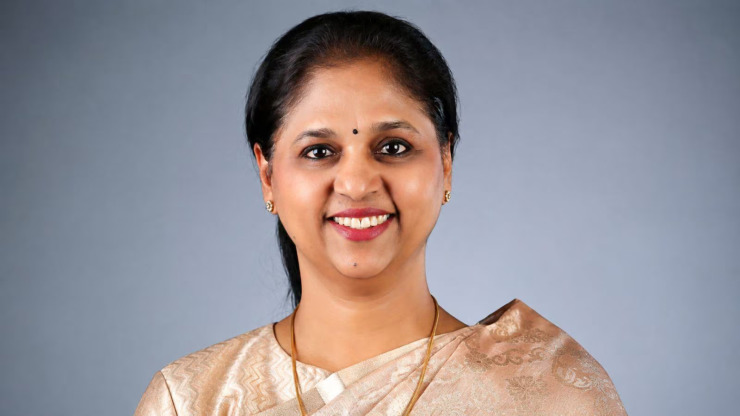
St Stephen’s College will proceed with the appointment of Professor Susan Elias as its 14th principal on June 1, relying on its status as a Christian minority institution even as the University of Delhi has asked it to halt the process. Elias, a computer scientist and academic administrator, is set to become the first woman to lead the college in its 145-year history since its founding in 1881.
The college, an institution of the Church of North India, has cited Article 30(1) of the Constitution in proceeding with the appointment. The article grants religious and linguistic minorities the right to establish and administer educational institutions of their choice, including the autonomy to appoint institutional heads and teaching staff.
Chairman Bishop Paul Swarup, of the CNI Diocese of Delhi, had earlier told the media that Elias was appointed after “the proper procedure” was followed, including a public advertisement, interviews, shortlisting, and candidate presentations before the selection. The college announced her appointment through a notification dated May 12, and sources within the institution confirmed by May 26 that she would assume charge as planned.
The appointment marks a historic transition for a college long associated with the teaching of the humanities, theology, and the liberal arts. An official, speaking on the condition of anonymity, told the Press Trust of India, “Elias is expected to take over charges as the 14th principal from June 1. Meanwhile, John Varghese, the last principal, has been absorbed as a faculty member in the English department, though there are a lot of ambiguities surrounding that, and not much is clear to us either.”
The university has objected at each step. On May 14, the DU registrar wrote to the chairman of the governing body asking St Stephen’s to “not proceed with the appointment” of Elias, contending that the selection committee had not been constituted in accordance with the University Grants Commission (UGC) Regulations of 2018. DU argued that St Stephen’s, as a centrally funded college, should have included university-nominated higher education experts and a nominee of the vice chancellor on its panel, and it wrote to the UGC seeking intervention.
The college’s position draws on an earlier precedent. A 2008 Delhi High Court judgment, delivered during the appointment of former principal Valson Thampu, held that St Stephen’s, as a minority institution, was not bound by the Ordinance’s provisions on selection committees for principals. The UGC regulations cited by DU also note that, in minority institutions, certain nominees and subject experts may preferably be drawn from minority communities, though the university maintains this does not remove the requirement for the expert panels it has sought.
The recognition of past appointments has been contested before. A second official told PTI that even after the 2008 ruling, Thampu was not formally recognised by the university in the initial phase, and that “his salary would not come from UGC but from a private fund of the college.” Recognition followed much later. “The university has even refused to recognise Varghese’s second term, but he did continue as the principal. Likewise, Elias is expected to take over, too,” the official said.
Similar disputes have arisen elsewhere. At St Xavier’s College, Mumbai, the appointment of Karuna Gokarn was disputed by the state’s education authorities and the University of Mumbai on the ground that the panel lacked government and vice chancellor nominees. St Xavier’s moved the Bombay High Court on minority-institution grounds, and Gokarn, an eminent microbiologist, went on to become that college’s first woman principal in 156 years.
The dispute widened on May 29, when DU directed St Stephen’s not to proceed with its proposal to absorb Varghese as a professor in the English Department once his tenure ended. In a letter to the chairman of the governing body, Registrar Vikas Gupta wrote that the UGC sanctions substantive teaching posts only at the level of Lecturer or Assistant Professor, and that no rule provided for absorbing a person directly as a professor. He termed the proposed move “in violation of all rules of UGC and University” and said any such recommendation by the governing body was “ultra vires and should not be acted upon any further.” The university said Varghese should be repatriated to his parent institution after his tenure.
The conflict between the college and the university over governance and autonomy has run for years. DU had challenged Varghese’s continuation as principal beyond March 2021, describing his extension as “illegal,” “non-statutory,” and “ab initio null and void,” and the matter over the recognition of his second term, which ended in February 2026, remains pending before the Delhi High Court. The college has maintained that his continuation was valid under resolutions passed by its supreme council.
For St Stephen’s, the appointment of Elias is being marked as a milestone, the first woman in the institution’s history to hold the post.
Christian Today contacted Bishop Paul Swarup, the Rt. Rev. Paul Swarup of the CNI Diocese of Delhi, and the Bursar of the College, Dr Guite, for comment, but did not receive a reply.