

World leaders in New York for the United Nations General Assembly and the G-20 economic summit in Pittsburgh should call on the Sri Lankan government to immediately release more than 260,000 displaced persons illegally confined in detention camps, Human Rights Watch said today.
Human Rights Watch said it was concerned about a lack of protection mechanisms in the camps and the secret, incommunicado detention - and possible enforced disappearance - of suspected combatants. Poor conditions, overcrowding, and inadequate medical care increases the risk of serious health problems during the coming monsoon season. Human Rights Watch also said that the authorities are not being open and honest with camp residents about when they may go home, keeping them in a state of uncertainty and anxiety.
Last week, Human Rights Watch sent a letter to European Union states outlining problems and urging governments to intervene forcefully with the Sri Lankan government.
"The civilians locked up in these detention camps have a right to liberty now, not when the government gets around to it," said Brad Adams, Asia director at Human Rights Watch. "World leaders should support calls from the UN to restore full freedom of movement to these people, who already have suffered mightily from war and displacement."
Since March 2008, the Sri Lankan government has confined virtually everyone displaced by the war between the government and the Liberation Tigers of Tamil Eelam (LTTE) to detention camps, depriving them of their liberty and freedom of movement in violation of international law. As of September 15, 2009, the government was holding 264,583 internally displaced persons in detention camps and hospitals, according to the UN, while fewer than 12,000 have been released or returned home.
Human Rights Watch said that recent government claims that a large number of camp residents had been released were false. A statement published on the website of the Ministry of Defence on September 12, claimed that the government released nearly 10,000 persons from the camps to their hometowns the previous day. However, it later emerged that they had been transferred to camps in their home districts, where they are undergoing further screening by the authorities. The Sri Lankan armed forces have indicated that the additional screening could take from several days to up to six months, even though each individual had already been registered and screened several times and cleared for release.
Sri Lanka has repeatedly promised to release the displaced persons from the camps as early as possible, including in a joint statement on May 23 by the UN secretary-general, Ban Ki-moon, and President Mahinda Rajapaksa. But four months after the end of the fighting, there has been little progress.
During a visit to Sri Lanka last week, the UN under-secretary-general for political affairs, B. Lynn Pascoe, issued a strong statement calling on the government to allow internally displaced persons who have completed the screening process to leave the camps and to allow those who choose to remain to go out during the day and to meet freely with family and friends elsewhere. In response, Rajapaksa said that arrangements would be made to complete the return of the displaced civilians by the end of January, but that the return depended on the progress of demining in areas to which some would return.
"Demining is crucial, but the presence of landmines is not a valid basis for keeping people locked up," said Adams. "Many of the displaced can stay with relatives and host families far from any mined areas."
A delegation of high-level Sri Lankan officials will be in New York this week to attend the high-level segment of the UN General Assembly. Prime Minister Rathnasiri Wickramanayake will address the General Assembly on September 26 on, "Strengthening of Multilateralism and Dialogue among Civilizations for International Peace, Security and Development."
Human Rights Watch called upon world leaders to keep the plight of Sri Lanka's displaced persons at the forefront of discussions with the Sri Lankan delegation.
Most Popular
-
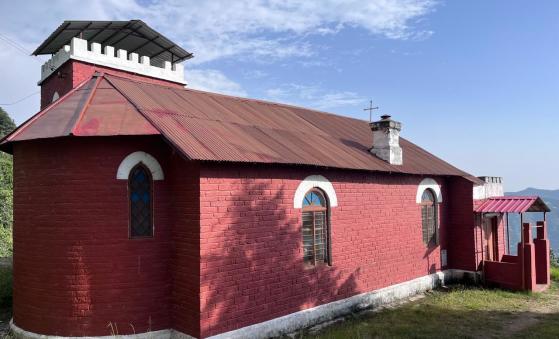
A Hilltop Church in Kumaon Turns 94
-
Evangelical Fellowship of India Calls Churches to Pray for Persecuted Christians on 1 and 8 November
-
Catholic priest and school principal seriously injured in attack by masked men in Jharkhand
-
Fresh Violence in Manipur Leaves Four Dead as Security Is Tightened
-

Myanmar Military Accused of Destroying Two Churches in Christian Regions