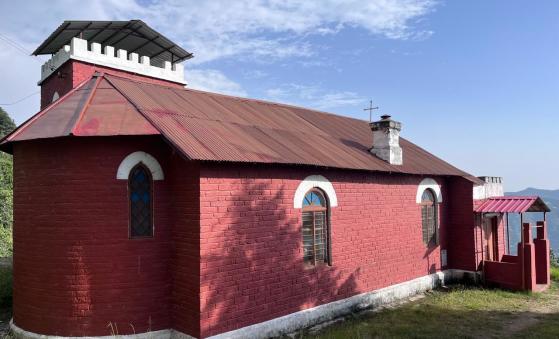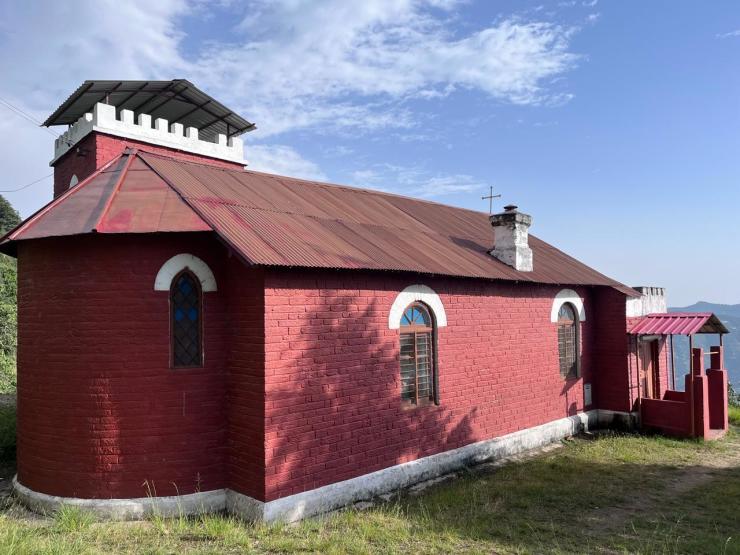
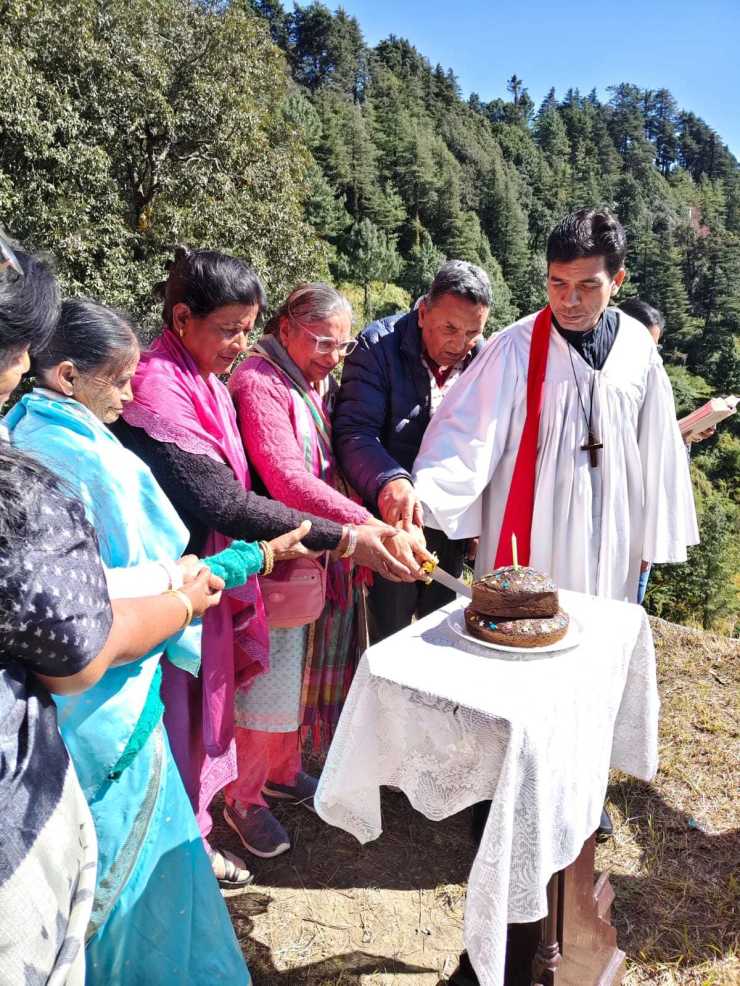
The Methodist Church in Mukteshwar marked 94 years since its founding on October 19, 1932, with a service led by Rev. Chandar Pal, the pastor in charge. About 40 people attended. The church bell was rung for the occasion, and the congregation shared a meal after the service.
Rev. Vinay Butler Gowan, District Superintendent of the Methodist Church in Nainital, congratulated the congregation on the “94th Birthday of Historic Church”. He prayed for God’s blessings on Rev. Pal and on all the members.
Mukteshwar is a small hill town in Nainital district of Uttarakhand, a Himalayan state in northern India. It sits at over 2,100 metres (about 7,000 feet) in the Kumaon hills. In colonial times the British knew it as Muktesar.
The town owes much of its modern history to science. In 1893 the British moved the Imperial Bacteriological Laboratory from Pune to Mukteshwar to study contagious cattle diseases in isolation. After independence it became the Indian Veterinary Research Institute (IVRI).
The church stands close by, though well below the road. Worshippers park at Chowfulli, the town’s only roundabout, opposite the IVRI gate. From there they climb down a narrow trail of pebbles and rock-cut steps through deodar, or Himalayan cedar, forest. After the service, they make the steep walk back up to the road.
The building is modest, with an old stone wall, wooden windows and a tin roof. It opens only for the Sunday afternoon service. Its bell carries a story of remembrance. According to local accounts, a woman named Barbara had it installed on Christmas Day in memory of her parents.
The congregation belongs to one of the oldest strands of Methodism in India. American missionaries William and Clementina Butler began work at Bareilly, in present-day Uttar Pradesh, in 1856. During the 1857 uprising against British rule, which many Indians call the First War of Independence, Butler moved to Nainital. There he founded what is widely regarded as India’s oldest Methodist church. The mission later spread across the Kumaon region.
The hills hold another landmark of Indian Methodism. In 1930, two years before the Mukteshwar church opened, the American missionary E. Stanley Jones founded the Sat Tal Ashram in the same district. An ashram is a traditional Indian place of spiritual retreat. Jones opened it to seekers of every faith who wished to learn about Jesus.
Today the Mukteshwar congregation is part of the Methodist Church in India. Since 1981 that church has been autonomous and affiliated with the United Methodist Church.
On ordinary Sundays, fewer than a dozen members attend. Suman Dass, a lay leader and member of the pastorate committee, is one of those who keep the church running from week to week. She said most Christian families have left Mukteshwar in search of work, because jobs in the town are scarce.
Dass described IVRI as the settlement’s lifeline. The institute built a second campus at Izatnagar near Bareilly in 1913, and that campus later became its headquarters. Dass said local jobs declined as more of the institute’s work moved to the plains. She added that buyers from outside, especially from Delhi, have bought property in the area, turning the quiet town into a busy tourist destination that its infrastructure struggles to support.
With fewer members, Dass said, the church faces financial strain. It relies on donations, including from people who no longer live in Mukteshwar but remain attached to it.
Abhishek Singh is one of them. His father grew up in Mukteshwar in staff quarters allotted by IVRI and moved away in the early 1970s. He kept returning every few years to see his childhood home and his church. Singh and his wife have also visited and occasionally send small donations. They know of others who have done the same. “This historic landmark needs to be preserved,” Singh said.
According to Dass, worship at the church has continued without interruption for more than nine decades. A handful of committed members still open its doors every Sunday.