Myanmar’s military has destroyed two churches in predominantly Christian areas of Chin and Kachin states this month, bombing a Presbyterian church in Mindat and burning a Baptist church near Bhamo, according to human rights groups and local reports.
Christian Solidarity Worldwide (CSW), a UK-based religious freedom organisation, said two military jets took off from an air base in Magway and carried out two bombing runs over Mindat at about 2.30 pm on 9 October. The aircraft dropped four bombs at two locations in the town. One struck a Presbyterian church compound, destroying the church building. No casualties were reported.
Mindat, in southern Chin State, has faced repeated military offensives, shelling and airstrikes since the military seized power in a coup in February 2021. The continuing violence has forced many residents to flee their homes.
Three days later, on 12 October, soldiers from the military’s 33rd and 88th Light Infantry Divisions reportedly set fire to Htingnan Kachin Baptist Church and nearby houses in Shwe Pyi Tha Ward, in an area known as Three Mile in Bhamo Township, Kachin State. Bhamo is also known as Banmaw.
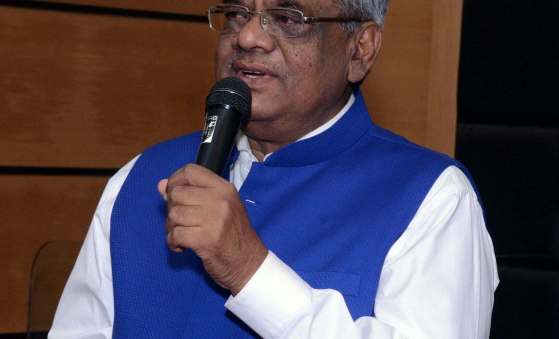
Mervyn Thomas, founder president of CSW, condemned the destruction of both churches, describing the attacks as violations of international humanitarian law and religious freedom.
He said places of worship often serve as vital spiritual and community centres for vulnerable people, adding that their deliberate destruction was a grave crime.
Col. Naw Bu, a spokesperson for the Kachin Independence Army (KIA), an armed resistance group, told The Irrawaddy that soldiers had burned a church in Three Mile Village, on the road to Momauk. He said clashes had occurred in the area from time to time.
The church was operated by the Kachin Baptist Convention. Local media quoted residents as saying that soldiers had burned it previously, following heavy military losses in fighting against resistance forces.
The latest fire occurred as the military continued its campaign to regain control of Bhamo. The KIA and allied groups attacked the town in late 2024 and captured most of it in 2025. However, resistance forces lost some territory this year after the military deployed additional troops ahead of a counteroffensive.
Naw Bu said fighting had frequently taken place near Bhamo University and around the military’s Light Infantry Battalion 47. He added that resistance groups continued to control much of the town.
CSW said the destruction of the churches reflected a wider pattern of attacks on religious buildings in Christian-majority ethnic areas, including Chin, Karenni and Kachin states. The organisation argued that ethnic identity and religion are closely linked in Myanmar, where the military leadership has promoted ethnic nationalism associated with the predominantly Buddhist Bamar majority.
According to CSW, churches have been targeted in retaliation for armed resistance by Chin and Kachin groups, with Christian civilians suffering as a result. The organisation also noted that churches often provide shelter for people displaced by fighting and serve as schools and centres for distributing humanitarian aid.
Thomas called on the international community to move beyond expressions of concern and take practical measures to restrict the military’s access to aviation fuel and military equipment.
Jacob, a representative of the rights group Kachin Human Rights Watch, told The Irrawaddy that the burning of the church violated religious freedom. He accused the military of repeatedly breaching international law, citing reports of religious leaders being detained, churches being attacked by drones and religious sites being used for military purposes. He said violations of religious freedom in Kachin State were increasing.
Other religious sites have also reportedly been affected. In September, the Shanni Nationalities Army, a militia allied with the military, used the grounds of two churches in Indaw, one Baptist and one Catholic, as a training area and an office. The move drew criticism from ethnic Kachin residents.
Earlier in October, the military and its allies reportedly used a suicide drone to attack a church in Mohnyin Township.
Attacks on religious buildings have not been limited to Christian sites. Monitoring group Myanmar Witness reported in April that it had documented more than 300 airstrikes on religious sites, including churches, mosques and Buddhist monasteries, between January 2024 and December 2025. The military air force was responsible for nearly 90 per cent of the recorded strikes, with Shan State and Sagaing Region among the hardest-hit areas.
In August, a military airstrike struck a Buddhist temple in Myaung Township in Sagaing Region, killing 14 civilians. Around 100 people had gathered at the temple for a meditation retreat.
Based on reporting by Christian Solidarity Worldwide.