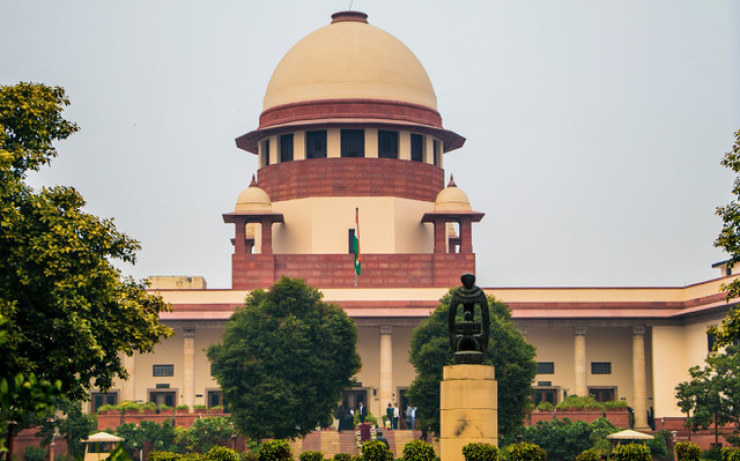
India’s Supreme Court on Thursday, October 15, endorsed a Madras High Court verdict that a Hindu who embraces Islam does not gain reservation as a Backward Class Muslim through conversion alone. Reservation is India’s system of quotas in education and public jobs for communities recognised as socially and educationally disadvantaged.
Justices Prashant Kumar Mishra and Shree Chandrashekhar rejected the Tamil Nadu government’s plea against the High Court ruling that voided a 2024 state order. They held that Article 16(4) of the Constitution, which permits reservation for backward classes in public jobs, gives a convert no benefit based on his earlier place in the Hindu social order. “A backwardness suffered in the antecedent social order cannot by itself be carried forward,” the bench said.
Citing paragraph 3 of the Constitution (Scheduled Castes) Order, 1950, the court also held that anyone following a religion outside Hinduism, Sikhism and Buddhism cannot count as a Scheduled Caste member. Scheduled Castes are communities historically subjected to caste discrimination, once called “untouchables”, and they have a separate quota. The bench said its reasoning focuses on constitutional grounds, and that a private religious body cannot conclusively settle such an entitlement.
The ruling lands amid a long-running demand by Dalit Muslims and Dalit Christians for Scheduled Caste status, which the 1950 order gave only to Hindus, extending it to Sikhs in 1956 and Buddhists in 1990. The Ranganath Misra Commission reported in 2007 that “caste is in fact a social phenomenon shared by almost all Indian communities irrespective of their religious persuasions”, with members of many castes “equally facing problems of social degradation and mistreatment both by their co-religionists and the others”. It recommended deleting paragraph 3 of the 1950 order. The Narendra Modi government told the Supreme Court in December 2022 that it won’t accept the findings. It called the report flawed and compiled without field studies, said untouchability is not prevalent in Islam or Christianity, and warned of the effect on existing Scheduled Castes. Petitions challenging paragraph 3 have been pending in the Supreme Court for about 20 years. A commission headed by former Chief Justice KG Balakrishnan, set up in 2022, had finished its report by June, but no release has been announced.
The government order of March 9, 2024 let converts to Islam from Backward Classes, Most Backward Classes, Denotified Communities or Scheduled Castes obtain certificates placing them in one of seven notified Muslim communities: Ansar, Dekkani Muslims, Dubekula, Labbais (including Rowthar and Marakayar), Mapilla, Sheik and Syed. The state argued that people already enjoying reservation should not lose it by converting.
The dispute began with Sameer Ahamed, born in 1993 to Hindu parents, who converted in 2015 and applied for a certificate as a “Muslim Lebbai”. A local revenue official refused. On June 25, Justices GR Swaminathan and PB Balaji struck the order down as unconstitutional. Relying on a 1951 Madras High Court precedent, they held that a convert becomes “just a Mussalman”, and that an executive order cannot override court decisions. An earlier bench including Justice Swaminathan had made the state a party on its own initiative. Ahamed’s counsel conceded his case depended on the order.
The judgment also went beyond the legal question. The Madras judges wrote that “Christian missionaries as well as Islamic preachers” had long claimed their faiths offered social equality, unlike Hinduism, making it “disingenuous to claim that there is hierarchy in Islam also”. They said the earlier rule “probably disincentivised” conversion, and called the order “un-Islamic”. The holding itself rested on precedent, the separation of powers and the argument that Muslim communities are determined by birth, so these remarks were not needed to decide the case. The Supreme Court’s 1997 code of judicial values asks judges to let judgments speak for themselves, though it is not legally enforceable.
Justice Swaminathan, born in 1968, practised as an advocate from 1991 and became a High Court judge in 2017. In December 2022, sitting alone, he took the same view on a convert’s status in another case. His public remarks have drawn criticism. In April 2023 he said the Constitution would perish if the country’s demographic profile changed. In January 2026 he said he would carry Sanatana Dharma in his heart for the rest of his tenure.
Days after his December 2025 order allowing a lamp to be lit at a stone pillar near a dargah (Sufi shrine) at Thiruparankundram, 107 opposition Lok Sabha MPs sought his impeachment. Their notice alleged undue favouritism toward a senior advocate and lawyers of one community, and decisions driven by political ideology. Scroll reported that advocates and two former Madras High Court judges describe him as leaning toward the Rashtriya Swayamsevak Sangh (RSS), a Hindu nationalist organisation. It quoted a senior advocate close to him as saying he is a member, while denying caste bias. More than 150 Madurai lawyers and dozens of former judges opposed the impeachment move. Speaker Om Birla said in December he was examining the notice; no decision has been reported.