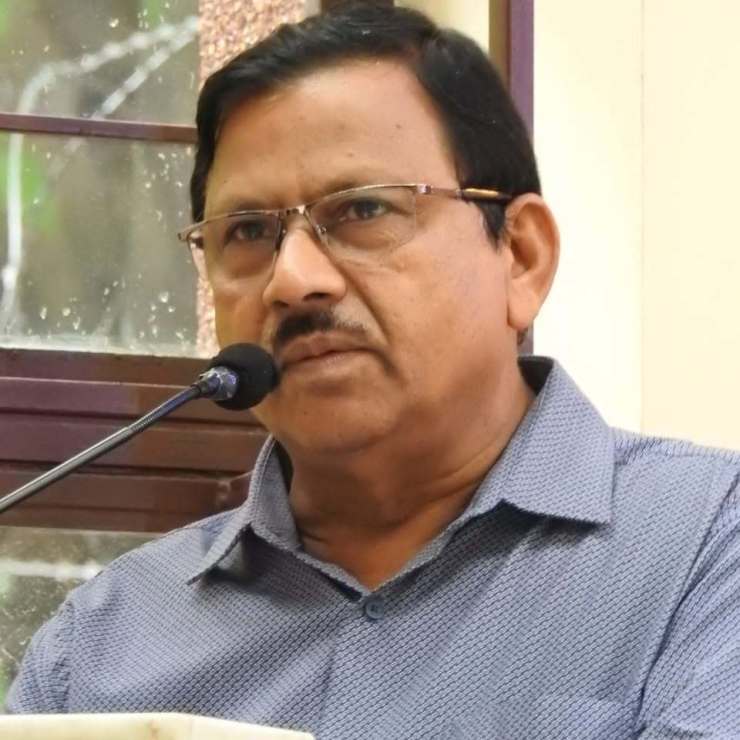
A Chinnappan has taken charge as National President of the All India Catholic Union (AICU), having been elected to the post at the body’s Annual General Meeting held in New Delhi in August 2026. He has now put forward a broad set of priorities for his term at the head of the 107 year old organisation, according to a press statement issued by the AICU to media houses, a copy of which is available with Christian Today India.
Founded in 1919 and registered under the Societies Registration Act of 1850, the AICU functions as a national platform for Catholic laity, drawing on a network of around 120 diocesan units spread across the country.
Chinnappan’s priorities touch on several fronts: bringing the Latin, Syro-Malabar and Syro-Malankara communities into closer cooperation, giving women a bigger role in leadership, moving communication between the national office and the diocesan and state units onto digital platforms, keeping up research work related to Dalit Christians, dealing more decisively with cases of persecution, building a working relationship with Church leaders, and reaching out further to civil society.
Chinnappan sums up his approach through the phrase “One Faith. Three Rites. One Catholic Family.” For him, unity among the rites is not about erasing their differences. He wants the Latin, Syro-Malabar and Syro-Malankara communities to hold on to their own liturgical customs and cultural identity even as they come together as one Catholic community. He sees scope for the three groups to work jointly on programmes involving youth, women, social outreach and service to the community.
Women’s leadership is a central plank of Chinnappan’s agenda. He wants women to move beyond organising events and take up positions as decision-makers, contribute to policy, and serve as trainers, spanning every tier from the parish to the national body. The release said the aim is to “make women’s leadership in the AICU normal rather than exceptional,” alongside building a system that lets younger women rise steadily from the grassroots to the top.
Chinnappan also wants to shore up the roughly 120 diocesan units that carry out the AICU’s work on the ground. Under his plan, a digital platform would let these units send updates on their activities and flag problems as they arise, cutting down delays. Such a set-up, the release said, would keep the national office informed of “conditions on the ground” while helping national priorities reach the grassroots.
The union’s long-standing call for Scheduled Caste status to be extended to Dalit Christians is set to get a fresh push under Chinnappan, moving from a standing demand to an active national campaign. The release said this would include “credible research on education, employment, land, income and access to welfare,” along with taking the matter up with political parties, lawmakers, official commissions and policymakers. The AICU will also keep pursuing the issue through courts and constitutional means.
On persecution and the legal vulnerability faced by Christians, the release said the AICU’s approach is “firmly grounded in the Constitution, particularly Articles 14, 21 and 25.” It calls for “stronger networks of constitutional lawyers, legal researchers and state-level contacts,” along with better documentation of violence, intimidation and unlawful interference. The union has also flagged concern that “broadly drafted anti-conversion laws can expose legitimate religious freedom and charitable service to harassment.”
On ties with the Church hierarchy, the release said relations “will be based on respect, dialogue and responsibility.” The union will stay committed to the Church and its pastors even as it functions independently as a lay body, choosing dialogue over conflict, though the release added that the AICU “will speak when constitutional rights, human dignity or justice are at stake.”
The AICU has also called for “sustained engagement with civil society and people of other faiths,” pointing to shared efforts in blood donation drives, environmental causes, education, disaster response, support for women and safeguarding children.
Summing up its stance, the release said the AICU “seeks no confrontation with any religious community,” even as it stands firm in protecting the constitutional rights of Christians alongside those of every other citizen.