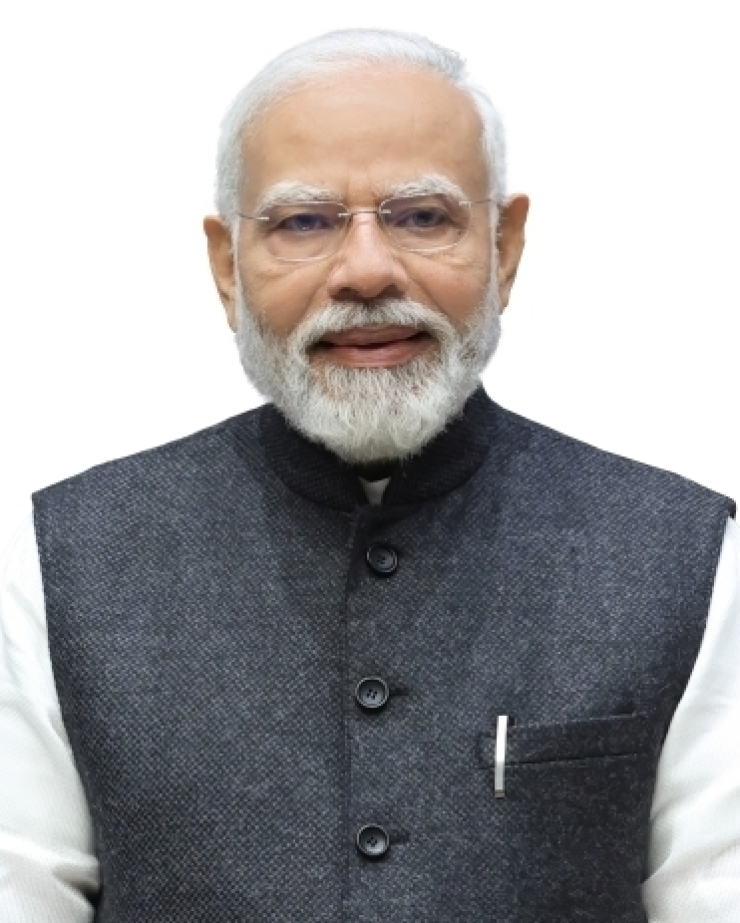
Prime Minister Narendra Modi’s government is expected to make a second attempt to redraw India’s parliamentary map when Parliament meets in a special sitting on Monday, after the Union Cabinet on Friday cleared a constitutional amendment bill that ties reservation for women in legislatures to an expansion of the Lok Sabha, the directly elected lower house. Opposition parties accuse the government of using the women’s quota as cover for a political power grab and have vowed to block the bill.
The opposition says it supports the quota itself. Parliament passed the women’s reservation law unanimously in September 2023, reserving 33 per cent of seats in the Lok Sabha and state Assemblies for women. The dispute concerns a condition attached to it: the quota can begin only after delimitation, the process of redrawing constituencies and redistributing seats by population, following the next Census.
Congress veteran P Chidambaram said the opposition had resisted that condition, written into the Constitution as Article 334A, but the Bharatiya Janata Party (BJP) insisted on it. “Once Article 334A is deleted, women’s reservation can be implemented immediately,” he wrote on X. Trinamool Congress (TMC) MP Sagarika Ghosh asked why the government had not implemented the 2023 law if it was serious about women’s representation, and called the bill a “SHAMELESS POWER GRAB wrapped in a sari.”
The revised bill raises Lok Sabha seats in every state by a uniform 50 per cent and extends by 25 years the freeze on using the 1971 Census to fix each state’s share. India has kept those shares fixed since 1976 so that states which curbed population growth would not lose seats. The uniform increase meets a demand of southern states such as Tamil Nadu, Kerala and Karnataka. DMK president M.K. Stalin said Tamil Nadu must keep its 7.18 per cent share of seats in any enlarged House.
The bill also offers the BJP a campaign message. According to The Indian Express, delivering the quota before the 2029 general election would let the party claim it had kept a major promise to women, whom it has courted as a distinct voting bloc. When a similar bill failed in April, Modi and Home Minister Amit Shah portrayed the opposition’s resistance as hostility to women’s reservation.
Much of the criticism concerns how seats would be drawn within states. Delimitation decides where constituencies lie and which seats are reserved for Scheduled Castes and Scheduled Tribes, historically disadvantaged communities. The April bill relied on the 2011 Census, and The Indian Express reported that the government wants to use it again, although counting for a fresh Census should finish across most of the country in just over three months. Fifteen years of growth in India’s cities and industrial centres fall outside the 2011 count.
The April bill would also have removed the constitutional requirement to redraw seats after every Census and let Parliament decide, through legislation, which Census to use and when. If the new bill keeps these provisions, the newspaper noted, constituencies based on 2011 data could remain in place for several elections.
Rashtriya Janata Dal MP Manoj Kumar Jha warned of “politically motivated gerrymandering, carried out to suit the whims and electoral interests of Narendra Modi ji and Amit Shah ji.” Gerrymandering refers to drawing constituency boundaries to favour one party. Samajwadi Party chief Akhilesh Yadav said the government was pushing delimitation to win next year’s election in Uttar Pradesh, where the BJP is seeking a third straight victory. India’s most populous state would rise from 80 Lok Sabha seats to 120.
The government argues that a fresh Census would delay the quota. In April, Shah told the Lok Sabha that delimitation based on new Census data could not be completed before 2029. The Indian Express also noted a benefit for all parties in enlarging the House first: a quota in the present 543-member Lok Sabha would leave only 362 seats open to candidates of either gender. On Thursday, Shah accused the Congress and Rahul Gandhi, Leader of the Opposition in the Lok Sabha, of stalling women’s reservation. “You cannot stop us,” he said.
That earlier bill, the Constitution (131st Amendment) Bill, sought an 850-member Lok Sabha. It won 298 votes against 230, falling 54 short of the two-thirds majority a constitutional amendment requires. It was the Modi government’s first failure to carry a constitutional amendment in the Lok Sabha.
The arithmetic has since changed through defections from the TMC, Shiv Sena (Uddhav Balasaheb Thackeray) and the Aam Aadmi Party (AAP) to the ruling BJP-led National Democratic Alliance. The opposition says many of those votes should not count. Rajya Sabha MP and senior lawyer Kapil Sibal claimed that 20 TMC MPs and six Shiv Sena MPs facing pending disqualification proceedings could vote on the bill. “Whatever is left of democracy in 2026 on November 30, if the 131st Constitutional Amendment Bill is passed, it will be the end of whatever was left in democracy in India,” he said.
Ghosh said the Lok Sabha Speaker had not ruled on the disqualification petitions for six months. Congress MP Jairam Ramesh said the government hoped to secure “its super-tainted two-thirds majority” after “105 days of Operation Lotus”, the opposition’s term for alleged BJP-engineered defections.
The opposition has also questioned the timing. Parliamentary Affairs Minister Kiren Rijiju announced the sitting on Thursday, Constitution Day, which marks the adoption of India’s Constitution, and opposition leaders accused the government of deliberately choosing that day. The sitting continues the Monsoon Session, which Parliament adjourned without a fixed date on August 13 but never formally closed. The government has not said what business it will take up, and the Rajya Sabha secretariat has told members there will be no Question Hour, Zero Hour or private members’ bills, the routine slots MPs use to question ministers and raise issues.
Regional parties may now decide the outcome. The Dravida Munnetra Kazhagam (DMK) left the opposition INDIA bloc after the Congress ended their alliance following the Tamil Nadu Assembly elections, and its stand, along with that of the YSR Congress Party, will be crucial.
Congress president Mallikarjun Kharge has called opposition floor leaders, including those of the DMK, AAP and Biju Janata Dal, to his residence on Saturday to agree on a joint strategy. The Congress has issued a whip, a binding party directive, requiring its MPs to attend. Congress leader KC Venugopal said the bill “will be nothing more than an exercise in Sansad Chori”, or theft of Parliament.
The Lok Sabha reconvenes on November 30 and the Rajya Sabha, the upper house, on December 2. Both are likely to rise on December 3.