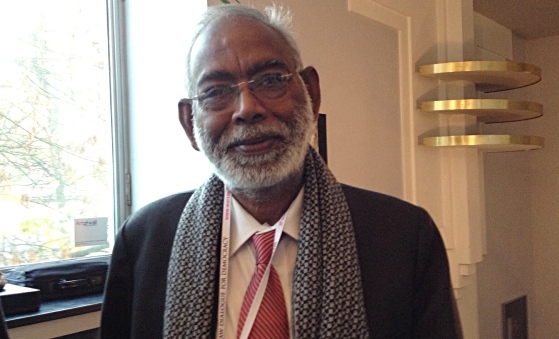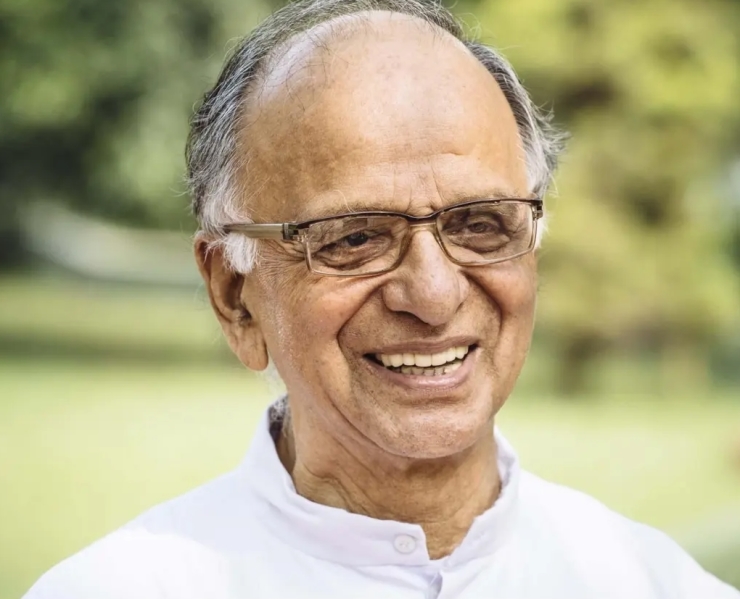
Archbishop Thomas Menamparampil, the retired Catholic Archbishop of Guwahati in northeastern India, died at 5.40 a.m. on Wednesday at AIG Hospitals in Hyderabad after a period of illness. He was 90.
The Salesian prelate had been under treatment for complications of the liver and bile duct, according to NESCOM, the social communication commission of the Catholic bishops of Northeast India. Doctors placed a stent in his bile duct on 18 November after detecting a malignant growth. His condition turned critical when a liver infection caused breathing difficulties, and he was on dialysis in the intensive care unit. Efforts were under way to bring him to Guwahati by air ambulance.
Archbishop John Moolachira of Guwahati, who succeeded him in 2012, announced the death in a circular to bishops, priests, religious and lay faithful. He described the late prelate as “a devoted shepherd, an ardent missionary and a faithful servant of God.” The funeral will be held on Monday, 30 November.
Menamparampil was born on 22 October 1936 at Vakakkadu, near Pala in Kerala. He studied at St Thomas English School in Palai and completed high school in Darjeeling, West Bengal. In 1955 he joined the Salesians of Don Bosco, a Catholic religious order dedicated to the education of young people. He moved to the Northeast in 1961, studied theology in Shillong and was ordained a priest in 1965.
His early ministry centred on education. He headed Savio Juniorate, a high school in Shillong, and later served as warden of a hostel at St Anthony’s College. From 1972 to 1975 he was Vice-Provincial of the Salesians in Northeast India.
He was appointed Bishop of Dibrugarh in Assam in 1981 and became the first Bishop of the newly created Diocese of Guwahati in 1992. When the Vatican raised Guwahati to an archdiocese in 1995, he became its first Archbishop. He set up schools with hostels for boys and girls across lower Assam, and his efforts led to the formation of the Diocese of Bongaigaon in 2000.
He is best remembered, however, for his peace work in the Northeast. The region of eight states is home to many tribal and ethnic communities and has seen repeated ethnic violence.
In 1996, clashes in Kokrajhar in western Assam between the Bodos, an indigenous community of the state, and Adivasis, as India’s tribal peoples are known, killed more than 500 people and left some 250,000 in relief camps. Menamparampil organised relief and brought leaders of both communities to the negotiating table, with support from other churches and the local administration.
Three years later, Kuki and Paite tribes clashed around Churachandpur in Manipur, leaving more than 400 dead. At the invitation of other church leaders, he held talks with both sides and helped broker a settlement that has held since. He later stepped in during the Dimasa-Hmar conflict near Haflong, which killed 100 people, and the Kuki-Karbi clashes near Diphu, which killed 46.
In August 2003, the churches of the Northeast set up a Joint Peace Team and named him its convener. Even in his late eighties, he undertook solo peace missions to Manipur.
The work earned him the Maschio Award for peace and reconciliation in 1998, an honour earlier given to Mother Teresa and the social reformer Baba Amte. He was nominated for the Nobel Peace Prize in 2011. People in the region called him the “Peace Prophet”.
Beyond the Northeast, he served as Special Secretary of the 1998 Synod of Bishops for Asia in Rome, sat on the Vatican’s Congregation for Consecrated Life and chaired the education and culture commission of the Conference of Catholic Bishops of India (CCBI). In 2009, Pope Benedict XVI asked him to write the meditations for the Good Friday Way of the Cross at Rome’s Colosseum.
He retired in January 2012 on reaching 75, the age at which Catholic bishops submit their resignation. Two years later, after the sudden death of Bishop Vincent Kympat of Jowai in Meghalaya, Pope Francis named him Apostolic Administrator, or interim head, of that diocese, a post he held until 2016. He wrote several books and more than 180 articles on culture, education, peace and prayer.
Political leaders across the region paid tribute. Assam Chief Minister Himanta Biswa Sarma called him “a man of deep faith and a tireless champion of peace” and praised his work for reconciliation and for the education of young people. Meghalaya Chief Minister Conrad Sangma described him as “a guiding voice for peace and reconciliation across the Northeast.”
Amarsing Tisso, the Bharatiya Janata Party (BJP) member of the Lok Sabha, the lower house of India’s Parliament, for Diphu, said the Archbishop’s work for peace, harmony, reconciliation and education “touched the lives of many across Assam and the Northeast.” Tisso’s constituency covers Karbi Anglong, West Karbi Anglong and Dima Hasao districts, which include Diphu and Haflong, two of the places where Menamparampil once mediated.