Prime Minister Narendra Modi’s government has systematically weakened the institutions meant to protect human rights and democratic freedoms in India, Human Rights Watch (HRW) says in a new report. The international rights organisation says this has allowed the government to harass its critics and normalise discrimination and violence against Muslims, Christians and other religious minorities.
The 95-page report, titled “‘So What’s This Democracy We’re Talking About?’: Modi’s Authoritarian Playbook in India”, examines four areas. These are the handling of Parliament and the political opposition, the use of federal investigative agencies, the state of constitutional and statutory bodies such as the Election Commission and human rights commissions, and interference in the judiciary along with the judiciary’s own failings. HRW interviewed more than 40 lawyers, journalists, activists, researchers, academics, current and former judges and former government officials between January 2025 and September 2026.
“Over the past decade, the Modi government has been hollowing out India’s independent institutions that are critical to checking executive power and protecting civil liberties,” said Elaine Pearson, HRW’s Asia director.
The government had not publicly responded to the report at the time of writing. It has rejected similar assessments in the past. India’s Ministry of External Affairs once called a US State Department human rights report “deeply biased”.
For India’s Christians, the report’s findings on anti-conversion laws stand out. These state laws regulate changes of religion, and governments present them as a safeguard against forced conversion. HRW counts such laws in at least 12 states and says authorities have widely used them against people who choose Christianity of their own will, especially in tribal and Dalit communities. Tribal, or Adivasi, communities are India’s indigenous peoples, and Dalits are communities that the caste system long treated as “untouchable”. According to the report, the laws breach international human rights standards and have encouraged vigilantes. It says members of the Bharatiya Janata Party (BJP), which leads the government, and groups linked to it have attacked churches and priests suspected of seeking converts, and have mostly gone unpunished. BJP-run governments in at least seven states have passed or amended such laws since 2019, some of which make conversion for marriage a crime.
The report also recalls the death of Stan Swamy, an 84-year-old Jesuit priest with Parkinson’s disease who campaigned for the rights of Dalit and Adivasi communities. He died in custody in 2021. Authorities had arrested him along with 15 other human rights defenders in the Bhima Koregaon case, in which they were accused of supporting a Maoist insurgency. HRW calls the case politically motivated.
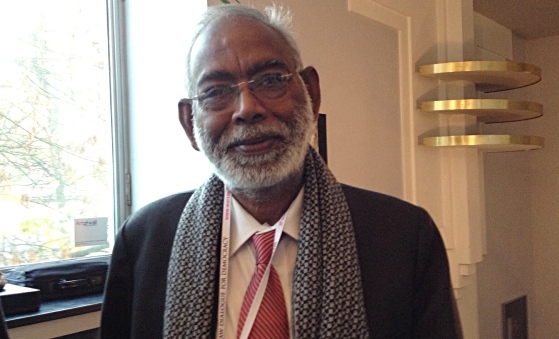
Dr John Dayal, veteran Journalist and human rights activist, echoed the report’s findings on Christians. “Many pastors remain in jail pending decisions on their bail petitions,” he said.
Rev Vijayesh Lal, general secretary of the Evangelical Fellowship of India (EFI), the umbrella body of Indian evangelicals, founded in 1951, said some of HRW’s concerns matched what his organisation had documented over several years. “Increasingly, Christians in several parts of India are finding it difficult to exercise even their most basic religious freedoms, and securing justice when these rights are violated is often an uphill struggle,” he said.
Lal noted that India’s Constitution guarantees freedom of religion and equality before the law. “What we need is for these guarantees to mean as much to a poor Christian or Muslim in a remote village as they do to anyone else in this country,” he said. He added that the institutions responsible for protecting these rights must be able to work independently and impartially, which he said served every Indian.
HRW says the Election Commission, which runs India’s elections, now faces a “massive crisis of credibility”. It points to the Special Intensive Revision (SIR) of electoral rolls, which began in June 2025 with the stated aim of removing dead, duplicate and ineligible voters. By October 2026, the exercise had removed more than 130 million names. HRW calls the process arbitrary and says it disproportionately excluded women, the poor and religious minorities, particularly Muslims.
In West Bengal, about 9 million people, or 12 per cent of the electorate, were struck off before the state elections in April 2026. According to HRW, the Supreme Court effectively said it was acceptable for them to miss that vote as long as they were later added back. The BJP then won control of the state for the first time. About nine in ten West Bengal voters whose appeals were decided were eventually restored. In May 2026, the Supreme Court ruled that the data did not indicate “systemic disenfranchisement” and upheld the rationale for the exercise. It is still hearing petitions on the revision.
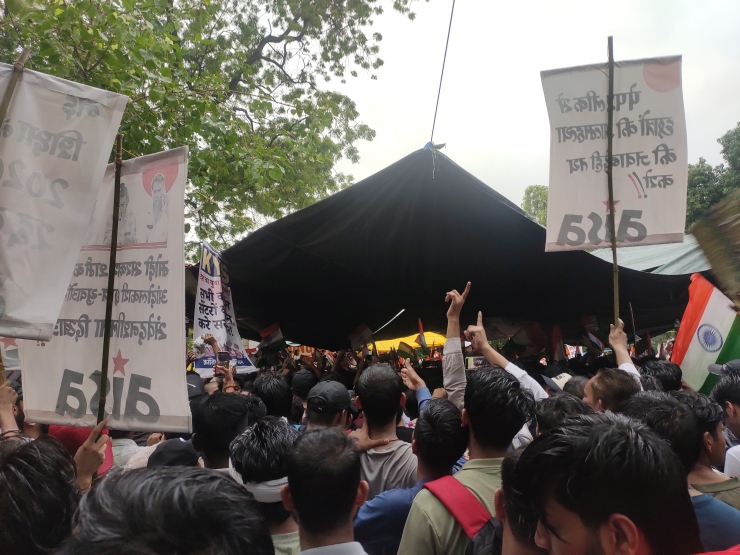
The Election Commission has defended the SIR before the Supreme Court. After protests, it began reversing some decisions this month and offered deleted voters in six states and Delhi a second chance to rejoin the rolls. HRW says that when protesters demanded the exercise be scrapped, the authorities suspended mobile internet, deployed more than 40,000 security personnel in Delhi and arbitrarily detained thousands of people.
The report traces the Commission’s troubles partly to a December 2023 law. It gave the government greater control over the appointment of election commissioners and granted them wide legal immunity for official actions and statements. Parliament passed the law while 100 members of the Lok Sabha, the lower house, and 46 members of the Rajya Sabha, the upper house, were suspended for the whole session.
HRW says the government routinely bypassed parliamentary scrutiny. Citing PRS Legislative Research, an independent research group in New Delhi, it says the government referred 28 per cent of bills to parliamentary committees in its first term (2014-19) and 16 per cent in its second (2019-24). The governments of 2009-14 and 2004-09 referred 71 per cent and 60 per cent respectively. Because the BJP had no majority in the Rajya Sabha from 2014 to 2024, the report says, the government labelled some bills “money bills”, which need no upper house approval. It used this route to expand the powers of the Enforcement Directorate (ED), the federal agency that investigates financial crimes. Justice D.Y. Chandrachud had described the use of money bills to legislate as an “abuse of the constitutional process”.
The report says federal agencies have become political tools. It cites official data showing that the ED filed cases against 193 politicians between April 2015 and February 2025, most of them government opponents. That is a rise of more than 600 per cent from the 26 politicians investigated in the previous decade. The finance minister told Parliament that the agency “does not distinguish” cases by political affiliation. Opposition parties call the BJP a “washing machine”, HRW says, because investigations stall or charges are dropped when politicians switch sides.
HRW says the authorities have also used the Foreign Contribution (Regulation) Act (FCRA), which governs foreign funding for non-governmental organisations, against rights groups and media organisations. It describes the counterterrorism law, the Unlawful Activities (Prevention) Act (UAPA), as abusive. Citing government data, it says 19,868 people were arrested in 10,118 UAPA cases between 2014 and 2024, but only 1,275 people were convicted, in 391 cases.
The rights bodies meant to act as a check have weakened too, the report says. In March 2025, the global alliance of national human rights institutions recommended downgrading India’s National Human Rights Commission from “A” to “B” status, which the Commission challenged. HRW says the National Commission for Women did not act on complaints of sexual violence during the ethnic conflict in Manipur until a video of a mob parading two Kuki women went viral in July 2023. A former chair of the National Commission for Minorities said, “These were supposed to be independent organizations designed to keep the executive in check. But now that these institutions have been completely compromised, they are being used by the government to keep their critics in check.”
On the judiciary, HRW cites allegations by sitting and former judges and lawyers of growing executive interference in judicial appointments, transfers and promotions. It points to the Supreme Court’s refusal in January 2026 to grant bail to activists Umar Khalid and Sharjeel Imam, who have been held under the UAPA since 2020. In May, a different bench said that ruling had ignored binding precedent.
HRW urges Parliament to reform the UAPA, the FCRA and the money laundering law, and to repeal the National Security Act and the Armed Forces (Special Powers) Act. It asks the government to scrap the SIR and release those detained for exercising their rights. It also calls on India’s allies to raise these concerns at the UN Human Rights Council and in trade and security negotiations.
“Checking India’s democratic decline means ending the use of state institutions as weapons against government critics and rebuilding them as safeguards for everyone’s rights,” Pearson said.