Church and civil society leaders from the Kuki and Naga communities have agreed to begin a “forward-looking process” to identify and address the causes of the violent conflict between their communities in the northeastern Indian state of Manipur. They will meet again before Christmas.
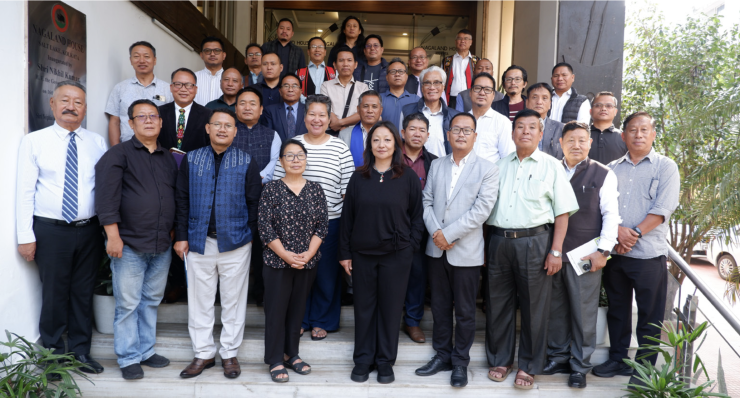
The leaders reached the agreement at the Kuki-Naga Prayer and Peace Summit, held in Kolkata, the capital of West Bengal, from November 22 to 24. The Forum for Naga Reconciliation (FNR) organised and facilitated the meeting. In a statement titled “An Appeal for a Christmas Truce” and issued on November 24, the FNR asked both communities to work towards a truce over the Christmas season.
Manipur borders Myanmar. The Meitei live in the central Imphal Valley, while the Kuki and Naga occupy the surrounding hill districts. Both hill communities are predominantly Christian, while the Meitei are mostly Hindu.
Six organisations represented the Kuki community at the summit: the Kuki Christian Churches Manipur, Kuki Baptist Churches Manipur, Kuki Inpi Manipur, Kuki Christian Leader’s Forum, Kuki Baptist Association Nagaland and Kuki Christian Church Nagaland. Kuki Inpi Manipur is the apex body of the Kuki community.
The Naga community sent four: the Naga Christian Forum Manipur, Naga Peoples’ Initiative for Peace Manipur, Fellowship of Naga Baptist Association and the United Naga Council, the Naga apex body in Manipur.
The delegates lived together at the venue for the full three days. According to the FNR, they “engaged in an honest, open-spirited and respectful dialogue where they recognized and acknowledged how deeply they have hurt one another.” They also realised “the urgent need to explore concrete ways to break the chain of fear, hate and violence, and forge a path towards finding peaceful resolution.”
The forum stressed that nobody at the table expected a swift settlement. “The leaders are fully aware that the road to peace is not a quick-fix, but one that requires political and moral courage and willingness to be part of a sustained and broader dialogue to peace,” the statement said.
The participants committed themselves to identify “the core issues of the conflict and truthfully address them by talking and listening to each other’s need with mutual respect and understanding.” The next round, to be held before Christmas 2026, will include all stakeholders.
The FNR described the proposed truce as a confidence-building measure, a step meant to build trust between the two sides. It said the truce must create “a conducive and safe environment” that will:
“Provide immediate relief to all the affected families and communities.”
“End the cycle of violence and prevent further escalation and the loss of human lives.”
“Enable the leaders to begin real dialogue around the underlying core issues of the conflict.”
The summit also issued a joint appeal to “Stop the violence of words waged through social media platforms.” The statement warned: “The lies, rumors, hatred and propaganda are instilling more animosity and polarization. This must end immediately.”
The forum urged both communities to “take ownership of the process by being vigilant against and not allowing any vested interest or any third force to disrupt this process.” It did not name any such interests. The statement ended with a prayer: “May God grant us the courage to walk this road to peace!”
Clashes between the two communities have killed more than 70 people since February. The violence began that month with a clash between Tangkhul Naga and Kuki groups at Litan village in Ukhrul district. The Tangkhul are one of the Naga tribes.
Church leaders have themselves become targets. On May 13, an ambush in Kangpokpi district killed three Kuki church leaders. On the same day, 18 Naga civilians were abducted; six of them were killed, and their bodies were recovered on June 10. The killings of the pastors struck at efforts by Christian leaders to ease tensions between the Kuki-Zo and Naga communities.
The latest major flare-up came at the turn of this month. Three Kuki men died in an exchange of fire in Noney district on October 31, and the bodies of two other Kuki men, missing since October 28, were recovered the next day.
The Kuki-Naga conflict has opened a new front in a state already scarred by ethnic violence. Fighting between the Meitei majority and the Kuki-Zo communities began in May 2023, and more than 300 people have been killed and 49 remain missing since then. “Kuki-Zo” is a broader term that covers the Kuki and related tribes.
The FNR has not announced the date or venue of the next round of talks.