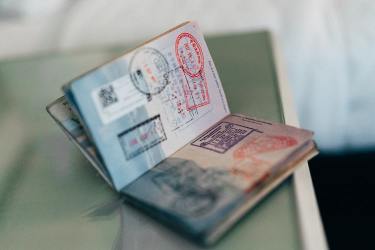
The scheduled visit of prominent American evangelist Rev. Franklin Graham to Nagaland has been cancelled after Indian authorities denied him an entry visa, triggering sharp criticism from opposition parties and disappointing thousands of Christians who were preparing to receive him.
The Kohima Baptist Pastors’ Fellowship (KBPF) announced on Friday that Graham would not be able to attend the programme scheduled for November 30 due to “unforeseen visa-related circumstances.” The event proceeded under a revised title: “Nagaland United: A Gathering of Faith, Hope and Revival,” with Rev. Robert Cunville, an Associate Evangelist of the Billy Graham Evangelistic Association, delivering the sermon instead.
Graham, son of legendary evangelist Billy Graham, was expected to visit the Christian-majority state more than five decades after his father’s historic 1972 crusade in Kohima, an event still remembered as the “Kohima Miracle” that drew over one lakh people.
The visa denial has sparked a political firestorm in the north-eastern state, with multiple parties now raising the issue with the central government.
The Nagaland Pradesh Congress Committee (NPCC) issued a sharp condemnation on Friday, calling the decision “blatant discrimination against the Christian community” and “a direct assault on the freedom of faith that is enshrined in the Indian Constitution.” The party alleged the incident reflected “systematic and intolerant policies of the BJP-RSS regime” and criticised the Naga People’s Front (NPF), a constituent of the ruling coalition, for “complete inaction.” The NPCC has demanded that BJP legislators from Nagaland resign on moral grounds.
The National People’s Party (NPP) has formally petitioned the Union Minister of External Affairs seeking reconsideration of the visa denial. In a letter signed by NPP National Working President James P.K. Sangma, the party requested the minister to review the decision and consider granting Graham permission to visit Nagaland.
The NPP letter noted that the cancellation has led to “deep disappointment among thousands of faithful who had prepared for weeks for this spiritually significant event.” While acknowledging the government’s sovereign prerogative to regulate entry of foreign nationals, the party argued that allowing the visit “would send a powerful message of India’s commitment to religious freedom and inclusiveness, and would greatly reassure the Christian communities of Nagaland and the wider North East.”
In a separate statement, NPP Nagaland said the decision has “deeply hurt the sentiments of the Christian community.” The party stated: “Nagaland’s Christian faith is not a ceremonial identity; it is the moral, spiritual and social backbone of the State.”
The party warned that “repeated restrictions on Christian faith engagements could send a dangerous signal that minority religious sentiments are being sidelined,” adding: “Freedom of religion is not a discretionary concession - it is a fundamental right. Any decision that appears to suppress or selectively restrict Christian religious expression demands urgent review, not silence.”
Just two days before the cancellation was announced, Chief Minister Neiphiu Rio had expressed optimism about Graham’s visit. During an event in Kohima on November 27, Rio said the government of India had assured him that the visa clearance would be processed and expressed hope that the evangelist would arrive before the Hornbill Festival.
KBPF President Rev. Dr. Ruokuovilie Sachü and secretary Dr. S.N. Among Jamir stated that the core purpose of the November 30 programme remained unchanged. The gathering at Indira Gandhi Stadium in Kohima will bring together believers from all tribes, denominations, and backgrounds for praise, prayer, and worship, featuring a mass choir of more than 700 members from various tribal churches.
The Ministry of External Affairs has not issued any statement explaining the visa denial.