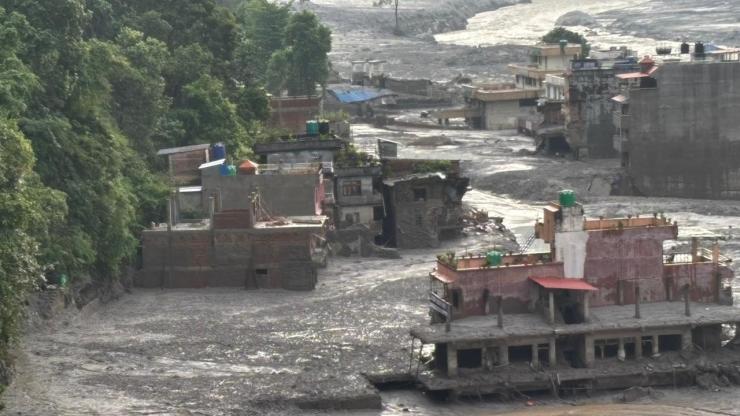
Christian organisations across India have expressed grief and solidarity with the people of Nepal following the catastrophic floods that struck the Trishuli river basin on August 26, 2026, killing hundreds and leaving thousands missing on both sides of the Nepal-China border.
The disaster was triggered by a glacier collapse near Langtang Lirung. The flash floods and mudslides that followed swept through the districts of Rasuwa, Nuwakot, Dhading, Gorkha, Tanahun, Nawalparasi and Chitwan, destroying the Gyirong Port complex on the Nepal-China border. Victims’ remains were carried as far as 240 kilometres downstream into India.
The All India Catholic Union (AICU), founded in 1919 and now in its 107th year, sent a statement to the media, including Christian Today India, mourning the disaster and standing in solidarity with the people of Nepal. AICU put the toll at 734 confirmed dead and 2,498 missing in Nepal, with a further 16 dead and 546 unaccounted for across the border in the Tibet Autonomous Region of China. AICU’s newly elected National President, A Chinnappan, said the organisation stood in mourning with the bereaved families of Nepal and China alike. “This tragedy does not recognise borders. Nepali villagers, Chinese labourers and Indians have all perished together in the same waters. Our grief, and our prayers, extend to every family touched by this calamity, regardless of nationality or faith,” he said.
The AICU said it had written to Father Silas Bogati, Apostolic Administrator of the Apostolic Vicariate of Nepal, offering condolences and prayers, and had also prayed for those engaged in the search for survivors and in relief work on the ground. It noted that the floods coincided with Teej, the Hindu festival ordinarily marked by prayer and celebration among Nepali communities, turning a season of festivity into one of mourning, and hoped that the spirit of communal solidarity around the festival might now be channelled into relief work. The organisation also called for closer regional cooperation between Nepal and China on early warning systems and glacial monitoring in the Himalayas, given the fragility of the terrain. Dr John Dayal, AICU’s Official Spokesman, released the statement.
The Catholic Bishops’ Conference of India (CBCI) issued its own message from New Delhi on August 29, 2026, describing the disaster as a Glacial Lake Outburst Flood (GLOF) and offering condolences to the bereaved. His Eminence Cardinal Poola Anthony, President of the CBCI, said, “We share in your grief and entrust the departed souls to the mercy of God. We also earnestly pray for all those who are still reported missing and for the success of the ongoing rescue and relief operations.” The CBCI also thanked those engaged in rescue and relief operations, praying for their safety and perseverance, and asked the faithful, parishes and Catholic institutions across India to remember the victims during the Sunday Holy Mass on August 30, 2026.
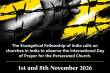
Speaking to Christian Today India, the Rev. Vijayesh Lal, General Secretary of the Evangelical Fellowship of India, said, "Our hearts break for the people of Nepal in the wake of this catastrophe." Citing the Nepal Disaster Update Live tracker he put the toll at 781 confirmed dead, with around 2,500 still missing. He said between 15 and 25 churches have been destroyed or severely damaged, and that pastors and church leaders are themselves among the dead, missing and displaced. “The National Churches Fellowship of Nepal, which is the Evangelical Alliance of the nation, together with the Nepal Christian Society, is leading relief and rebuilding on the ground under Rev. Dr. Kiran Kumar Das. We have been in contact with their leadership, mobilising prayer for Nepal and appealing to Indian churches to give generously through them,” he said.
Rev. Lal said the EFI is mobilising prayer across Indian churches and encouraging them to give directly to NCF Nepal (NCFN), which is already leading relief on the ground. He said he has remained in touch with NCFN’s leadership since the disaster, and that their most urgent needs are food, clean water, temporary shelter, medicine and basic supplies for displaced families, with the rebuilding of homes and churches as a longer-term priority.