On the afternoon of Saturday, April 25, fellow passengers on a State Transport bus travelling to Katol in Nagpur district found 75-year-old Laxman Patil lying unresponsive in his seat. He had boarded the bus to attend a family wedding. Doctors at the Rural Hospital declared him dead on arrival. The suspected cause was heatstroke.
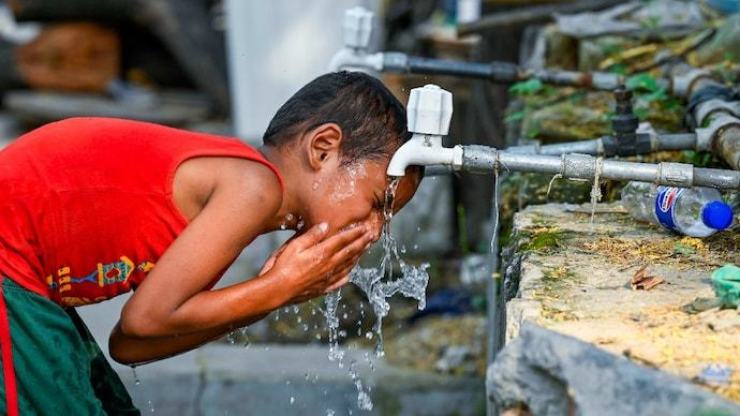
Patil was one of several people who died across India over the weekend as a punishing heatwave tightened its grip. According to data from AQI.in, 98 of the world's 100 hottest cities are currently located within India's borders. Temperatures across north and central India have crossed 40 degrees Celsius, with some locations touching close to 45 degrees.
The India Meteorological Department has issued an orange alert for Delhi, where April 26 marked the third consecutive day of heatwave conditions. Maximum temperatures in the capital are hovering between 43 and 45 degrees Celsius, with nights offering little relief, the mercury staying between 25 and 27 degrees. Dry northwesterly winds and strong solar heating are driving the conditions.
The IMD has forecast that the heatwave will persist across Punjab, Haryana, Rajasthan, Uttar Pradesh, Madhya Pradesh, Chhattisgarh and parts of the south for at least the next seven days. Coastal states including Odisha, West Bengal, Tamil Nadu and Andhra Pradesh face a different but equally dangerous combination of heat and humidity. The department has advised the public to stay hydrated, avoid direct sunlight between noon and 4 pm, use hats and umbrellas when stepping out, and not leave children or pets in parked vehicles.
Scientists are watching this with particular concern. Early climate models for 2026 are pointing towards a potentially powerful El Nino event developing in the Pacific Ocean, with sea surface temperatures rising rapidly, a key indicator of its development. If current trends hold, it could rival the El Nino of 1877-78, which drove famine, drought and extreme heat across continents and contributed to the deaths of an estimated 4 per cent of the global population. For India, a strong El Nino weakens the monsoon. Coming on top of a heatwave already breaking early-season records, it could strain water supplies, reduce crop yields and drive up food prices well into next year.
The deaths are mounting across the country.
In Odisha, two teachers conducting Census 2027 duty died in separate incidents over the weekend. Anurag Ekka, an assistant teacher in Sundargarh district, collapsed while going door to door in Jarada village on April 25, and was declared dead at a health centre the same day. In Mayurbhanj district, Rajkapur Hembram had fallen ill on April 23, while on similar duty and took two days of leave. Speaking to the media his family members said that he had told colleagues he was unwell and felt pressure to continue working. He died during treatment at PRM Medical College and Hospital on Sunday, April 26. The Odisha government had issued a Standard Operating Procedure for the safety of census workers on April 23, days before both men died. No official has explained whether it reached the ground in time.
The weekend deaths come after Karnataka had already reported two suspected heatstroke deaths within 48 hours last week. A 20-year-old youth in Bidar died on Sunday April 20, the state's first fatality of the season. The following day, Venkatesh Ballari, a 35-year-old chief officer of Chinchali town panchayat in Belagavi district, felt dizzy and fell during a Basaveshwara Jayanti procession. He was rushed to a nearby hospital where doctors pronounced him dead.
In Haryana's Nuh district, 50-year-old Rajendra Paswan, a labourer from Bihar, fell unconscious while loading grain sacks at a mandi on the afternoon of April 26, and died on the spot. Workers stopped work immediately and protested, demanding shade and drinking water. Neither had been provided despite the known heatwave conditions.
Kerala recorded its first suspected heatstroke death of the year on April 23, when Sanal Kumar, a 37-year-old man from Kannur, collapsed while working at a well construction site and died hours later at a private hospital. In Maharashtra's Latur district, an infant and a 60-year-old farmer are under investigation as suspected heatstroke deaths, with postmortem reports awaited.
State governments announced a series of measures. Karnataka's Health Minister Dinesh Gundu Rao set up dedicated heatstroke wards with five to ten ICU-style beds in every district hospital. "The IMD has issued a heatwave forecast over the next couple of weeks, with temperatures scaling up as high as 45 degrees in parts of Karnataka," Rao said, urging people to stay indoors between 11 am and 4 pm.
Delhi Chief Minister Rekha Gupta reviewed her government's Heat Wave Action Plan 2026 and directed strict ground-level implementation. More than 339 health centres have reportedly been placed on alert, over 30 hospitals have set up dedicated cool rooms, and 330 ambulances are on round-the-clock deployment. Construction workers may be barred from outdoor work during peak afternoon hours.
Kerala's Chief Minister urged residents to observe a self-lockdown between 11 am and 3 pm. Rajasthan districts shifted school timings to 7:30 am.
Beyond the weather agency's guidance, there were no reported statements from the Union government on the deaths. No compensation for the families of the census workers who died on duty had been announced.
On Sunday, April 26, Union Minister Jyotiraditya Scindia addressed a gathering in Shivpuri, Madhya Pradesh, and told the crowd that he does not use air conditioning in his car and is used to the heat. He had advice for those who are not. "Keep an onion in your pocket," he said. "Nothing will happen to you. The communication minister is carrying onions. These are old things. And as Ayurveda progresses, we shouldn't forget these things."
There is no scientific evidence that carrying an onion prevents heatstroke.