The Narendra Modi government on Wednesday deferred debate on the Foreign Contribution (Regulation) Amendment Bill, 2026, in the Lok Sabha following a fierce opposition protest inside Parliament and sustained pressure from Kerala’s Christian leadership, with the BJP’s own Kerala unit recommending that the Bill be held back ahead of the April 9 state elections.
The Bill, introduced on March 25 by Minister of State for Home Affairs Nityanand Rai, was listed for consideration and passage. As soon as proceedings began, opposition MPs staged a protest at Makar Dwar in the Parliament complex before descending on the well of the House demanding withdrawal. Lok Sabha Speaker Om Birla adjourned the House till noon.
Parliamentary Affairs Minister Kiren Rijiju told the House he had already informed senior Congress leaders the previous day, and again on Wednesday morning, that the Bill would not be taken up. “Whatever misinformation has been spread regarding FCRA in Kerala is not correct,” he said. “The amendment is aimed at regulating foreign contributions, ensuring proper utilisation in the national interest and national security, and preventing misuse of funds. It is not against any religion or organisation. Congress and the Communist Party are misleading the people of Kerala in view of the elections.”
Outside Parliament, the opposition was unsparing. Congress MP Manish Tewari called the Bill “arbitrary, malafide and capricious,” saying it offended Articles 14, 19, 21 and 300A of the Constitution. Congress MP Hibi Eden called it “draconian,” saying it amounted to an invasion into the lives of minority communities. “This particular amendment will make sure that any kind of delay in renewal, any kind of mishap, the government can take over these institutions,” Eden said. Congress MP Karti Chidambaram alleged the Bill was designed “to throttle civil society,” warning that “by throttling civil society we are undermining democracy.”
Samajwadi Party MP Dimple Yadav termed the Bill “undemocratic.” Revolutionary Socialist Party MP N.K. Premachandran said it “indirectly violates the basic fundamental rights of the religious minorities” and called for it to be referred to a select committee. Congress Rajya Sabha MP Abhishek Singhvi echoed this, urging the government not to rush. “It is important to send it to a Select Committee, Standing Committee, for a discussion,” he said.
Adding another dimension to the controversy, senior CPI(M) leader and Rajya Sabha MP John Brittas, in a detailed post on X, accused the government of treating routine parliamentary queries on FCRA as classified information. Brittas said he had submitted eight questions since 2024 seeking clarity on FCRA suspensions, cancellations, non-renewals, fresh registrations and the removal of public access to NGO-wise data from the FCRA dashboard, none of which elicited any response. All were disallowed under Rule 47(2)(XXII) of Rajya Sabha procedures, which bars queries seeking secret information. His most recent question, submitted on March 11 during the Budget Session, sought reasons for restricting public access on the FCRA portal. “When transparency itself becomes secret, accountability becomes the first casualty,” Brittas said. “One is compelled to ask: what is so confidential about regulatory decisions affecting public charitable institutions that even Parliament is denied access to the information?”
The BJP defended the Bill. BJP MP Kamaljeet Sehrawat said the amendments brought transparency and that “there is no ban on any type of NGO in the country.”
The more telling intervention came from within the BJP itself. Kerala BJP President Rajeev Chandrasekhar said he had spent three days consulting church leaders and found considerable apprehension remaining. He told reporters he had recommended to the Home Minister on Tuesday, March 31 that “it would be better to pass the Bill after clearing the air,” and assured that the current version would not be passed without addressing concerns raised by the churches.
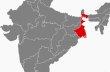
Christians constitute nearly 18% of Kerala’s population and are particularly influential in central districts such as Kottayam, Ernakulam, Idukki and Pathanamthitta. The Catholic Bishops’ Conference of India and the Kerala Catholic Bishops’ Council had described the Bill as “dangerous, undemocratic, unconstitutional and contrary to principles of natural justice.” Kerala Chief Minister Pinarayi Vijayan wrote to Prime Minister Narendra Modi seeking withdrawal of the proposal.
The Bill has not been withdrawn. It remains listed and is expected to return for debate after Kerala votes on April 9, with results due on May 4.