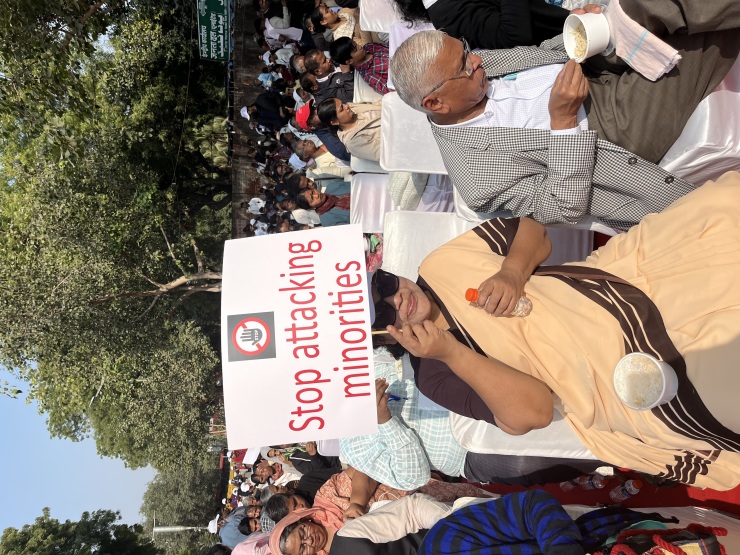
As the Lok Sabha deferred debate on the Foreign Contribution (Regulation) Amendment Bill, 2026 today amid opposition protests, three of India’s major Christian organisations separately raised serious objections to its provisions, warning that the legislation could strip faith-based institutions of assets built over decades and cripple services to the country’s most vulnerable communities.
The Catholic Bishops’ Conference of India (CBCI) submitted a formal memorandum to Union Home Minister Amit Shah on March 31. The National Council of Churches in India (NCCI) addressed an open letter to Members of both houses of Parliament on the same day. The Evangelical Fellowship of India (EFI) released a public statement on April 1. Taken together, the three interventions converge on the same core concern: that the proposed amendments threaten the constitutional rights and operational continuity of faith-based charitable institutions across India.
Introduced in the Lok Sabha on March 25, the Bill seeks to amend the Foreign Contribution (Regulation) Act, 2010 and introduces a new chapter titled “Vesting of Foreign Contribution and Assets in Designated Authority.” Under the proposed section 16A, foreign contributions and assets created from such contributions shall vest in a government-designated authority when an organisation’s FCRA registration is cancelled, surrendered, or deemed to have ceased. The Bill introduces deemed cessation as a new concept, which can be triggered when an organisation fails to apply for renewal, when renewal is refused, or when the certificate expires without renewal. The CBCI memorandum flags that assets shall vest “wholly in the Designated Authority whether created or acquired partly from foreign contribution and partly from other sources,” raising the stakes considerably for organisations that have built infrastructure over decades using mixed funding.
At the heart of the organisations’ concern is how FCRA renewals work in practice. Registrations are renewed every five years. The first renewal cycle was in 2016, the second in 2021, and the third is now due in 2026. The CBCI memorandum points out that the renewal process is entirely controlled by the FCRA department under the Ministry of Home Affairs, and when renewal is refused, the reasons are not communicated to the organisations nor are they given an opportunity to respond. The NCCI letter reinforces this, noting that the Act “does not provide scope for any opportunity to prove oneself before rejecting the application,” which it contests as being against the principle of natural justice, and that many renewal rejections are on technical grounds rather than evidence of wrongdoing.
Under the proposed amendment, such a refusal could now trigger the vesting of an organisation’s assets in the designated authority, without any prior judicial oversight or determination. The CBCI memorandum flags this against Article 300A of the Constitution, which protects the right to property and requires any deprivation to be just, fair and reasonable, and also invokes Articles 25 and 26, which protect religious freedom and denominational autonomy. The NCCI additionally invokes Article 30, which protects the right of minorities to administer their own educational institutions.
The CBCI memorandum also objects to the expansion of liability to all “key functionaries,” including trustees and office bearers, introducing what it describes as a presumption of culpability unless proven otherwise. It argues this reverses the principle of innocent until proven guilty and is likely to discourage individuals from taking on voluntary leadership roles in charitable institutions, “thereby weakening civil society participation.” The memorandum further notes that foreign grant-receiving organisations are “deeply engaged in education, healthcare, and social service, especially among the poor, Dalits, tribal communities, and in remote rural areas,” and that the proposed changes risk disrupting essential services to these populations. The NCCI warns that the Bill’s consequences would mean “permanent denial of access to education and health” for people in remote locations for whom NGO services are the only last-mile connectivity to government schemes. The EFI echoes this concern, warning that “where regulatory frameworks are perceived as uncertain or disproportionate, this partnership risks being weakened, with consequences for education, healthcare, and social support, particularly in underserved regions.”
The CBCI has urged Parliament to refer the Bill to a Parliamentary Standing Committee for wider consultation, ensure that administrative lapses do not lead to disproportionate penalties such as asset seizure, introduce safeguards for due process and judicial oversight, protect the autonomy of charitable, educational and faith-based institutions, and establish an independent appellate authority for impartial adjudication of grievances. The NCCI called on parliamentarians to reject the Bill and demand “further study and public scrutiny through a JPC or Commission of Experts before it is introduced in Parliament or incorporated into the Act.” The EFI urged Parliament to ensure “that the framework that emerges reflects both the rule of law and the spirit of service that has long strengthened India’s civil society.”
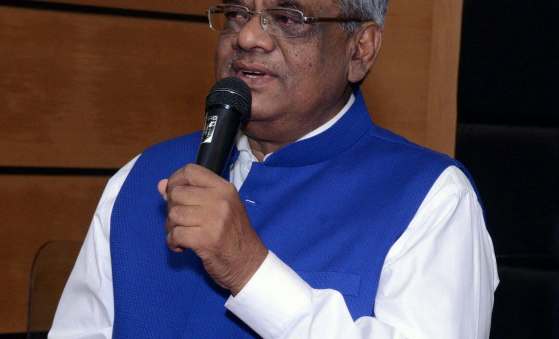
The CBCI memorandum was signed by Archbishop Anil J. T. Couto, Metropolitan Archbishop of Delhi and Secretary General of CBCI. The NCCI letter was signed by Rev. Asir Ebenezer, General Secretary of the NCCI. The EFI statement was released by Rev. Vijayesh Lal, General Secretary of the Evangelical Fellowship of India.