A new drought insurance initiative has provided urgent support to hundreds of struggling farming families in western Nepal, as Christian aid organisation Tearfund highlighted the growing need for faster responses to climate-related hunger crises.
Tearfund confirmed that a drought insurance payout worth $100,000 was released in Nepal’s Bajura district after severe dry conditions damaged crops and threatened livelihoods across the area.
The programme uses satellite technology to monitor rainfall, soil moisture and crop conditions. When drought levels become critical, emergency funding is automatically triggered, allowing support to reach communities quickly without waiting for lengthy inspections or assessments.
According to Tearfund, the payout is believed to be the first insurance response of its kind in Nepal. The initiative forms part of a wider pilot project focused on “anticipatory finance”, an approach that seeks to provide humanitarian aid before a crisis worsens.
Working alongside local partner International Nepal Fellowship, Tearfund delivered food assistance to 671 households affected by the drought.
The project also supplied drought-resistant vegetable seeds, farming equipment and agricultural training to more than 400 people, most of them women. In addition, water storage tanks for small-scale irrigation were installed for 176 households.
Families facing severe food shortages received emergency supplies including rice, lentils, cooking oil and salt.
Among those helped was 59-year-old farmer and blacksmith Bune Sunar, whose family suffered repeated crop losses after flooding during the summer was followed by months of drought.
Sunar said the assistance brought much-needed relief during a difficult season. His family normally depends on small harvests of rice, millet and wheat to survive for several months each year, but this year failed crops left them with only enough food for a short period.
Alongside farming, he earns additional income by making farming tools and kitchen utensils, sometimes accepting grain instead of money for his work.
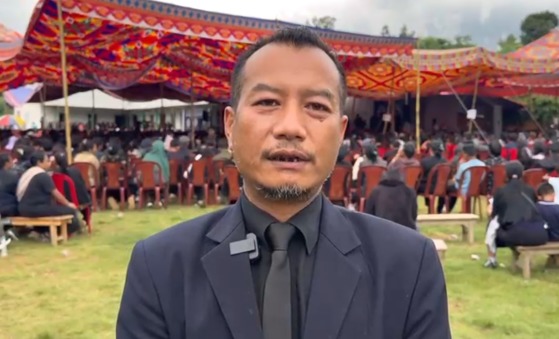
Pranaya Pandey Chhetri, Tearfund’s Country Director for Nepal, said climate-related disasters are making life increasingly difficult for farming communities across Asia.
He warned that the gap between the cost of natural disasters and the funding available to respond continues to widen, placing vulnerable families at greater risk of poverty and hunger.
Chhetri said financial protection schemes such as drought insurance can help communities respond more quickly to crop failures, protect livelihoods and avoid deeper economic hardship.
“This support is bringing much-needed assistance to communities facing the impact of the climate crisis,” he said.
The insurance payout was organised through a parametric insurance system developed by Global Parametrics, part of the CelsiusPro Group, with support from Humanity Insured, a UK-based charity backed by the insurance sector.
The wider programme also receives support from the UK Foreign, Commonwealth and Development Office and Germany’s development bank KfW.
Mark Rüegg, chief executive of CelsiusPro Group, said rapid financial assistance can help vulnerable communities become more resilient in the face of increasingly severe weather conditions.
Tearfund warned that countries such as Nepal are experiencing more frequent cycles of floods and drought linked to climate change, with rural farming communities among the most heavily affected.
Adapted from reporting by Christian Today UK.