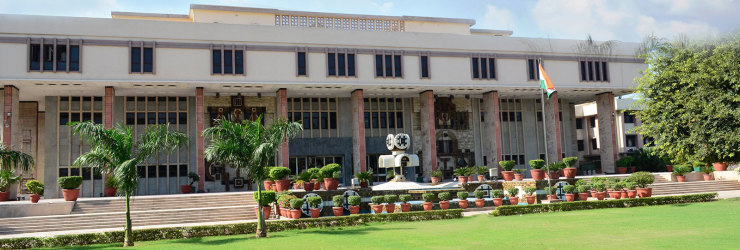
The Delhi High Court on Thursday set aside the Indian government’s 2022 order cancelling the foreign funding registration of the Socio-Legal Information Centre (SLIC), which has offered free legal help to poor litigants across India for more than three decades.
Justice Anup Jairam Bhambhani said the cancellation order was “misconceived, untenable and illegal, apart from being disproportionate and excessive in its rigour and impact.”
Under India’s Foreign Contribution (Regulation) Act, 2010 (FCRA), non-profits need a registration from the federal Ministry of Home Affairs (MHA) to accept money from abroad. Cancellation cuts off foreign donations, hands assets built with those funds to the state government and bars a fresh application for three years.
Senior Advocate Colin Gonsalves founded SLIC in 1989. It told the court that it ran 24 offices with about 150 lawyers, social workers and support staff. A former Supreme Court judge, Justice Deepak Verma, chairs its governing body.
MHA officials audited SLIC’s accounts in September 2021. On 4 February 2022 the ministry suspended the registration, froze SLIC’s bank accounts and issued a show-cause notice, a formal demand to explain why the registration should not be cancelled. SLIC said it learned of the freeze from its bank when it could not pay salaries. The ministry cancelled the registration on 17 October 2022.
In court, the government called the FCRA national security legislation demanding strict compliance and cited six violations. The court found that none justified cancellation.
The ministry said SLIC had not listed a transfer of Rs 33.73 lakh (about 3.37 million rupees; one lakh equals 100,000) to another registered group, Prayas, in a specific entry of its annual return. The court observed that the bank statement filed with the return showed the transfer, and that there was “no attempt at concealing the remittance.”
SLIC had paid Rs 1.1 lakh in bar association fees for Gonsalves and fellow Senior Advocate Gayatri Singh so they could use court libraries while handling its cases. The court called this “at most, an irregularity”.
The ministry alleged that SLIC paid rent from foreign funds to Gonsalves for office space while he used the premises free for his private practice. The court accepted that Gonsalves made about 60 court appearances a month for SLIC’s clients for a monthly fee of Rs 1 lakh, and called the charge of personal gain “misconceived and far-fetched”. It also refused to treat SLIC’s surrender of the premises, and Gonsalves’s resignation, as proof of guilt.
The government accused SLIC of spending money from KIOS, a Finnish NGO foundation, on foreign nationals. SLIC said it trained people only in India and that a single Indian lawyer attended sessions elsewhere in South Asia. The court accepted this explanation.
A European Union-funded project titled “Using the Law to protect Human Rights in conflict States” covered Jammu and Kashmir, Manipur, Punjab and other states. The ministry said it impinged on “political and law & order domains” and portrayed “a wrong image of public institutions of India” abroad. SLIC said the project helped adivasis (India’s Indigenous communities), dalits (communities historically treated as “untouchable” under the caste system), women and children seek justice through courts and statutory commissions. The court said the allegation “strains credulity”.
In its reply to the appeal, the government accused SLIC of “aggressive anti-government political activism”. The court found that this charge appeared in neither the show-cause notice nor the cancellation order, and that no material supported it. It added that “security inputs” could not stay so secret that even the court saw nothing.
The ministry treated Rs 13.44 lakh that SLIC collected from interns and litigants as foreign money. The court held that rupee payments from Indian sources were not foreign contributions.
Agreeing with an earlier Karnataka High Court ruling, the court held that the law required a personal hearing before cancellation, which SLIC never received.
“Strict compliance does not mean mechanical compliance,” Justice Bhambhani wrote, adding that the ministry should have avoided “a harsh and over-exacting line of action.”
SLIC told the court that the freeze stopped salaries, allowed health insurance to lapse and left thousands of poor litigants without lawyers. The government said SLIC could have used domestic funds. The court said the cancellation led “virtually to dismantling” the organisation.
Because SLIC’s registration had lapsed before the ministry cancelled it, the judge let the organisation pursue renewal and told the ministry to decide it promptly, without reference to the six alleged violations.