Christian leaders and rights activists in have voiced concern over the possibility of early release for Dara Singh, the man serving a life sentence for the 1999 murder of Australian missionary Graham Staines and his two young sons in Odisha.
Their comments came after the Supreme Court of India criticised the Odisha government for repeatedly delaying a decision on Singh’s request for remission. The court has now listed the matter for further hearing on 17 September and warned that senior state officials could be summoned if the authorities continue to delay a decision.
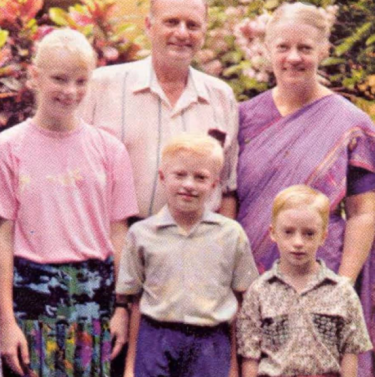
Singh, also known as Ravindra Kumar Pal, was convicted over the deaths of Staines and his sons, Philip, aged 10, and Timothy, aged six. The three were killed while sleeping in their vehicle in Odisha’s Keonjhar district on 22 January 1999.
Under the country's law, state authorities can in certain circumstances grant remission, reducing the period a convicted prisoner must serve.
The Supreme Court had previously directed Odisha’s Sentence Review Board to take a decision on Singh’s remission plea. When the state again sought an adjournment on 8 September, citing the illness of its advocate-on-record, Justices Manoj Misra and Vijay Bishnoi expressed frustration at the continued delay.
The court told the state that it could either accept or reject the remission request but could not leave the matter unresolved indefinitely. It warned that the chief secretary or another senior official could be summoned if a decision was not made.
Father Dibakar Parichha, Chancellor of the Archdiocese of Cuttack-Bhubaneswar, said releasing Singh early could damage confidence in the justice system and increase fears among minority communities.
He said forgiveness should not be confused with the legal responsibility of someone convicted of a serious crime, arguing that accountability remains necessary to protect society and uphold the rule of law.
Bishop Pallab Lima, who leads the Odisha-based ecumenical United Believers Council Network of India, referred to previous Supreme Court decisions concerning life imprisonment. He said authorities should also consider whether there could be a risk of the crime being repeated if Singh were released.
Lima said that, if the authorities ultimately permit Singh’s release, he should be sent to his home state of Uttar Pradesh rather than being allowed to settle again in Odisha, where the killings took place.
Father Ajay Singh, a rights activist and member of the Odisha Lawyers Forum, also pointed to Singh’s convictions in two other cases. According to the priest, Singh is serving life sentences connected with the killing of 35-year-old Catholic priest Father Arul Doss and Muslim garment trader Sheikh Rahaman.
Father Ajay said Singh had not challenged his convictions and, according to reports, had not shown remorse for the crimes.
Singh, who was described in the source as an activist of the Hindu militant organisation Bajrang Dal, has said that he now regrets the killings and that they were committed in what he described as a fit of youthful rage.
He and Mahendra Hembram were convicted in connection with the Staines killings and sentenced to death in 2003. The Orissa High Court later commuted Singh’s death sentence to life imprisonment, and the Supreme Court upheld the life sentence in January 2011.
In April 2024, Hembram was granted early release on the basis of his good conduct in prison.
John Dayal, spokesperson for the All India Catholic Union, said the Church had opposed the death penalty in Singh’s case because of its broader opposition to capital punishment.
However, he said the Church had supported a life sentence because of the seriousness and cruelty of the crimes.
The Staines killings remain one of the most serious attacks against Christians in modern India. Graham Staines had worked as a missionary in Odisha, including among people affected by leprosy, and his wife, Gladys Staines, continued her work in India after the deaths of her husband and sons.
The current remission proceedings have therefore renewed concern among Christian leaders in Odisha, particularly about the message that an early release could send to minority communities.
The court’s next hearing is scheduled for 17 September. Until the state authorities make a decision, Singh remains in prison serving his life sentence.
Based on reporting by UCA News.