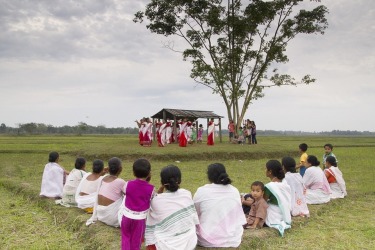
Christian leaders in Assam have cautiously welcomed a proposed change to state law that promises to give long-standing tea estate workers legal rights to the land where their families have lived for generations. The amendment, passed by the state assembly on 28 November, is expected to affect around six million people, including many Catholics, who live in “labour lines” within Assam’s tea gardens but have never held formal ownership.
Chief Minister Himanta Biswa Sarma described the move as a historic step towards justice, saying the revised Assam Fixation of Ceiling on Land Holding Bill would set aside these residential areas for the “preferential settlement” of roughly 330,000 workers’ families. The proposal aims to provide lasting security and protection against displacement. Under the plan, land granted to workers cannot be sold or inherited for two decades, and even after that period, any transfer would be limited to other tea garden workers.
The Assam Christian Forum’s spokesperson, Allen Brooks, welcomed the promise of long-awaited recognition for the community’s contribution to the state. However, he noted that tea estates are privately owned by companies rather than the government, raising questions about whether proper agreements have been reached with estate owners. He also pointed to the political timing, as the state heads into elections next year, and warned the announcement could amount to little more than an attempt to gain favour with a crucial voting bloc.
Tea garden communities, often referred to as “tea tribes,” have lived in Assam for around two centuries, having been brought to the region during the British colonial period. Despite their central role in shaping Assam’s tea industry, they remain among the state’s most marginalised groups, frequently facing limited access to land, education, healthcare and other essential services.
Academic John Minj said the community includes Christians and many other ethnic groups, and that repeated promises of land rights have been made, and broken, by successive governments. He argued that the workers’ contribution to Assam’s identity and economy has long gone unrecognised.
Lakhinder Kurmi of the Assam Tea Tribes Students’ Association welcomed the amendment but warned that ongoing sales of unused estate land to outside buyers could undermine the entire effort. He said many families whose ancestors built the estates now risk losing all connection to the land as tea gardens close and plots are sold off for commercial use.
Kurmi expressed concern that without firm action to halt these sales, the livelihood, heritage and future of tea workers could be put at risk.
Assam is home to about 1.1 million Christians, less than four per cent of the population, but a significant proportion of tea garden workers belong to Christian communities.
Adapted from UCA News.