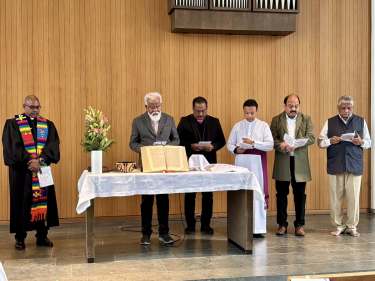
In a historic development for the global Reformed movement, Rev Philip Vinod Peacock took office as head of the World Communion of Reformed Churches during a 1 February ceremony in the German city of Hannover.
The ordained minister from the Church of North India became the organisation’s first chief executive from Asia when he began work on 1 January, following a unanimous vote by the body’s Executive Committee last September.
Religious leaders and ecumenical representatives from across the world gathered at Hannover’s Reformed Church to witness the installation. Among those addressing the assembly was Rev Prof Dr Jerry Pillay, currently leading the World Council of Churches, who spoke about what this appointment represents for the movement.
According to Pillay, a former president of the organisation, Peacock’s ministry has focused on amplifying marginalised voices within church structures, bringing fresh perspectives to theological conversations.
In his previous role overseeing the organisation’s work on justice and witness, Peacock directed international programmes addressing economic inequality and environmental concerns through a Reformed theological lens. Notable initiatives under his leadership included Focus Palestine and advocacy for reforming global financial systems.
His academic credentials include degrees from three Indian theological institutions: a Bachelor of Theology from Union Biblical Seminary in Pune (1991-1994), a Bachelor of Divinity from Gurukul Lutheran Theological College (1995-1997), and a Master of Theology from Tamil Nadu Theological Seminary (1998-2000). Since 2000, he has been teaching at Bishop’s College in Kolkata, focusing on Dalit and feminist theology as an associate professor. Currently working towards his doctorate, his published research has influenced theological discussions across denominations and continents.
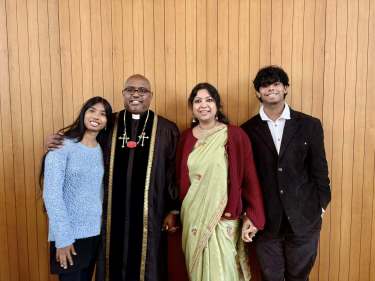
Addressing the gathering, Pillay characterised the new leader’s approach: “Philip reflects a rare combination of scholarship, faith, and action,” noting how his academic work and advocacy have energised Reformed communities globally.
The World Council of Churches head also praised Peacock’s administrative capabilities and his track record managing responses to contemporary crises, from environmental degradation to forced migration and gender violence.
“His extraordinary ability to network and cultivate relationships, alongside his commitment to justice and sustainability, will help build a solid foundation for the WCRC’s future,” Pillay remarked.
The Lutheran World Federation’s leader, Rev Dr Anne Burghardt, also spoke at the event, reflecting on cooperation between the two traditions. She cited the Wittenberg Witness as an example of their joint commitment to reconciliation.
“While the Reformed tradition continually calls the church to justice, the Lutheran tradition reminds us of the centrality of grace,” Burghardt noted, urging continued defence of religious freedom amid mounting challenges facing Christian communities worldwide.
In a lighter moment, Pillay shared two stories that he suggested revealed Peacock’s character. The first involved confidently navigating chaotic Indian traffic together; the second, Peacock’s strict adherence to German traffic signals even when no vehicles were visible.
“It told me something about Philip, he can navigate his way through chaos and yet chooses to respect structure and order,” Pillay observed. “No doubt, two good qualities that are needed in a leader today in a world where both chaos and the need for peace and order prevail.”
Among Peacock’s first tasks will be developing the organisation’s strategic direction through its next General Council meeting.
Representing over 100 million Christians through 230 member denominations across 107 nations, the body works towards unity and transformation within the Reformed tradition worldwide.
Church leaders present expressed optimism that the new leadership would foster stronger partnerships, richer theological dialogue, and more effective witness in coming years.
Article image from here.