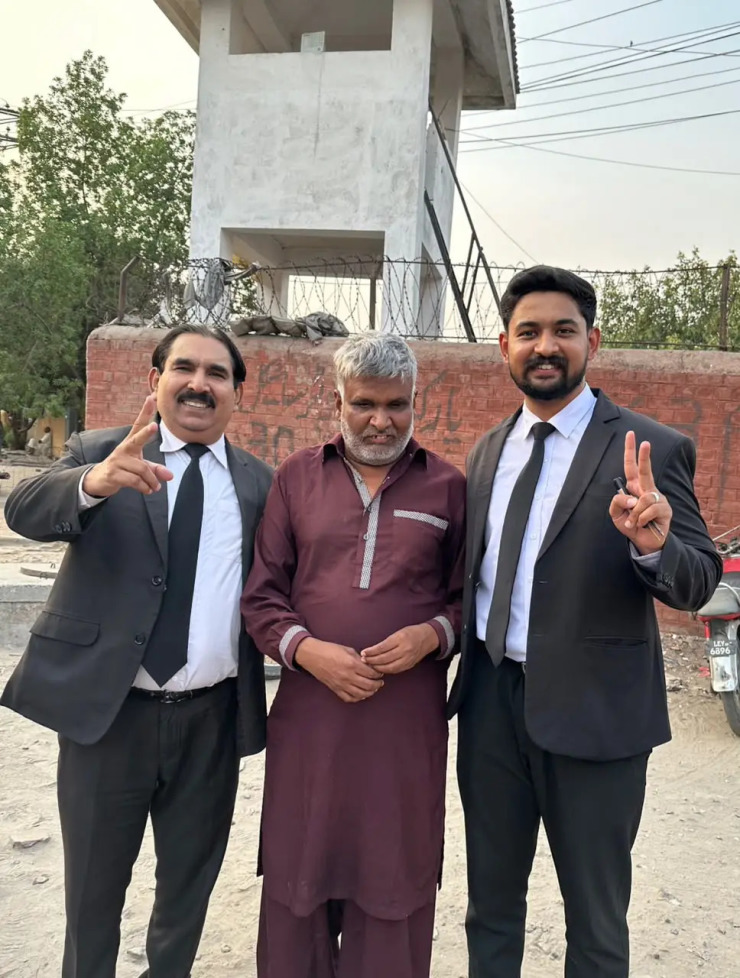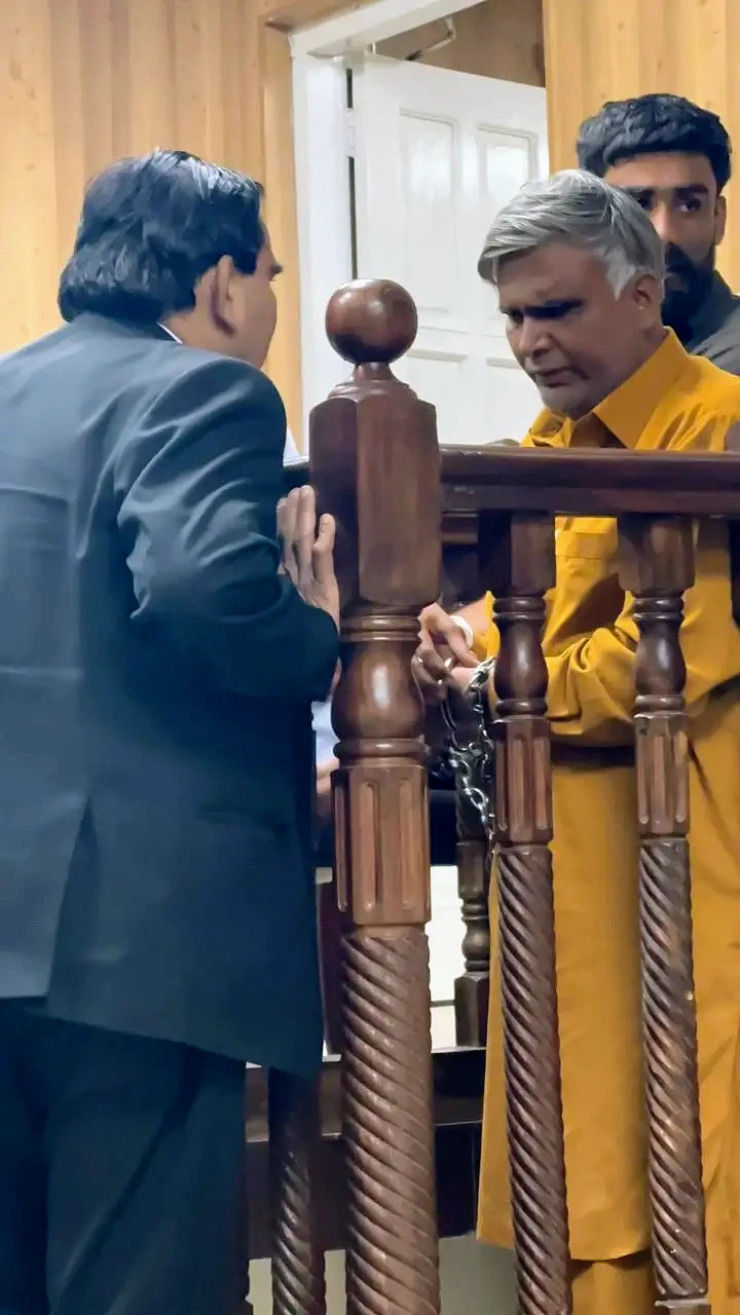
An Additional Sessions Court in Lahore has acquitted a blind Christian man, Nadeem Masih, of a blasphemy charge that carried a mandatory death sentence, ending nearly ten months of imprisonment that began with a dispute over his livelihood at a public park.
Judge Saad Salman Khan passed the acquittal order on June 22, ruling that prosecutors had failed to prove the allegation registered under Section 295-C of Pakistan’s blasphemy law, which criminalises alleged insults against the Prophet Muhammad. Masih, whose age has been given variously as 49, 50 and 51 in different reports, was released from Lahore’s District Camp Jail the next day, June 23.
His lawyer, Javed Sahotra, who represented Masih along with Shawaiz Javed and Hafiz Zahid Islam, told Christian Daily International-Morning Star News that the defence had exposed serious gaps in the prosecution’s case. “During the trial and final arguments, the defense team identified numerous deficiencies, inconsistencies and procedural shortcomings within the prosecution’s case,” Sahotra said. The defence argued that the FIR never spelt out the words Masih was alleged to have used, that all six prosecution witnesses had given their statements only after unexplained delay, weakening the weight their testimony could carry, and that the case lacked any independent witness, call records, location data or digital evidence such as CCTV footage.
A further inconsistency concerned timing. Police records placed officers on patrol near the park at around 11 pm, the hour at which they said they were informed of the alleged remarks, yet the park’s gates close to the public at 9 pm.
The investigation itself came in for criticism. Superintendent of Police Dr Ayyaz Hussain, who led the inquiry, told FactFocus, an independent news website, that the case rested on the statements of the complainant and witnesses alone. “There is no digital evidence, CCTV footage of a video recording,” he said. Asked why no one in the crowd gathered, including the police party, had filmed the incident, he said people from lower-income groups were generally unaware of how to use mobile phones for such purposes, and admitted he had not examined whether the complainants had a personal or business dispute with Masih before the charge sheet was filed. The court separately found that Hussain had misled it by claiming he had personally recorded witness statements at midnight on the day of the incident, when a subordinate had in fact done so, a discrepancy the judge said left the complainant’s evidence without value.
The judgment went further, examining the substance of the allegation itself, which concerned remarks attributed to Masih about the Prophet’s marriages and personal life. The court held that even taking the alleged words at face value, questions about the Prophet’s wives and matrimonial life were a legitimate subject for discussion within Islam, and found that the prosecution witnesses and police had dealt with a capital case in an extremely careless and unserious manner.
According to Masih’s family, the case grew out of a long-running dispute with contractors at Nawaz Sharif Park in Model Town, Lahore, where Masih, blind since birth, made a living weighing visitors on a scale he owned. His mother, 80-year-old Martha Yousaf, said her son had faced repeated harassment from men at the park, who took money from him and never returned what they borrowed. When he tried to set up his scale on August 21, 2025, she said, contractor Waqas Mazhar and others physically stopped him, beat him and handed him over to officers at Model Town Police Station, where the blasphemy complaint was lodged. Masih, Yousaf has alleged, was struck while in custody and pressured to admit to something he had not done.
“God has heard the prayers of a desperate mother and delivered my son from the shadow of death,” Yousaf was quoted as saying after the verdict. “Nadeem is innocent.”
Masih, who completed his university education despite his disability, had struggled to find steady employment and had been the family’s sole breadwinner following the deaths of his father and a brother. One of his sisters, who is divorced, works as domestic help to support the household.
Aftab Alexander Mughal, director of the UK-based Minority Concern Pakistan, told Crux Now the acquittal was encouraging but that misuse of the law continues. “Since the blasphemy laws were strengthened under the military rule of General Zia-ul-Haq in the 1980s,” he said, “they have been widely misused to settle personal disputes and enmities.” Commenting separately on the case, Pakistani rights advocate Lazar Allah Rakha said it should never have progressed to formal charges in the first place, and argued that cases of this kind demand thorough investigation by experienced officers, with all evidence weighed, before any charge sheet is filed.
Rights groups have long criticised Pakistan’s blasphemy statutes, arguing that their loosely worded provisions allow a case to proceed on little more than an accuser’s word, and that the law is frequently turned to personal or commercial ends, including land and property disputes. The Human Rights Commission of Pakistan recorded 812 people imprisoned on blasphemy-related charges in Punjab in 2025. Open Doors ranked Pakistan eighth among fifty countries on its 2026 World Watch List of nations where Christians face the severest persecution.