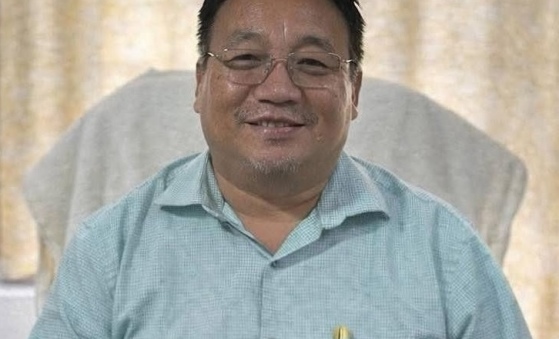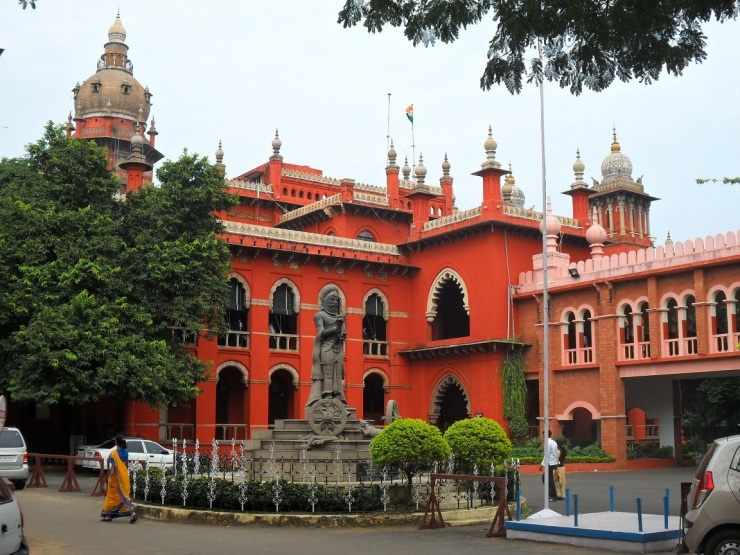
The Madras High Court has refused to restore the Overseas Citizen of India (OCI) card of John Daniel, a US citizen. The Court held that a foreign national who preaches his religion in India needs official permission first, whether or not anyone is converted.
Justice D. Bharatha Chakravarthy dismissed Daniel’s petition on October 26. The OCI card is a lifelong, multiple-entry visa for foreign citizens of Indian origin and their spouses. It is not Indian citizenship. Daniel registered as a cardholder on February 6, 2015. His petition says his mother, about 92, and his sister live in Chennai, and that he went to school in Ooty, a hill town in Tamil Nadu.
On September 8, 2025, the government issued him a show-cause notice, a formal demand to explain why action should not be taken. It said he was misusing the card to preach in India without special permission. It alleged that he preached in remote villages in Andhra Pradesh and Tamil Nadu, brainwashed people who were “not sufficiently literate” and converted them to Christianity, and led the Laymen’s Evangelical Fellowship International (LEFI), which it said functioned like a cult.
Daniel replied on September 20. He said he had never done missionary work in India, had neither carried out nor promoted conversions, held no position in LEFI, and came only to see his ailing mother, family and friends. The Foreigners Regional Registration Officer in Chennai rejected the reply and cancelled his registration on September 4, 2026. Daniel then challenged the order in the High Court.
His senior counsel, R. Shanmuga Sundaram, argued that the government had named no date, place or convert and had never given Daniel the material it relied on, so he had no real chance to contest it. Daniel also argued that the government had itself directed him to obtain permission by February 3, 2025, which he said showed no violation. He cited a 2025 Delhi High Court ruling involving the academic Ashok Swain, which says such a hearing must be effective and real.
The Centre had not filed a counter affidavit, its formal reply, despite two opportunities. Its counsel argued anyway and produced papers from the government’s files. They included a poster headlined “Good News for All” advertising speeches by Daniel at the LEF Church in Tenali, Andhra Pradesh, on January 15, 16 and 17, 2017. Other papers covered meetings in Andhra Pradesh in January 2018 and at Stuartpuram village in January 2019, complaints that he came solely for missionary work, and LEFI’s own Sunday service messages describing him as leading missionaries and Christian workers worldwide.
A government notification of March 4, 2021, grants the lifelong visa but requires special permission from the registration officer or the Indian Mission before any “missionary, public, mountaineering, or journalistic activities”. The judge held that missionary work without that permission breaches Section 7B of the Citizenship Act and makes the card liable to cancellation. “If the petitioner preaches and undertakes activities to spread the word of ‘God’, such activities would fall within the meaning of missionary activity,” he wrote.
The judgment does not say whether Daniel received the Centre’s papers before his card was cancelled, and it records no sworn evidence on them. The only dated meetings it mentions took place in January 2017, 2018 and 2019, before the 2021 notification on which the Court relied. It gives no later date, though it cites undated complaints and online service messages. It does not address the February 2025 direction.
Nor does it mention Article 25 of the Constitution, which gives “all persons”, not only citizens, the right to “profess, practise and propagate” religion, subject to public order, morality and health. The Supreme Court held in 1977 that this does not include a right to convert others. The arguments the judgment records do not rely on Article 25.
India’s rules for foreign visitors are already strict. Visa guidance from India’s embassy in Bucharest says visitors may attend religious discourses but may not preach religious ideologies or make speeches in religious places, and it describes missionary visas as being for work “not involving proselytization”. Other democracies also regulate visiting preachers, but they provide routes. The United States requires a sponsored R-1 visa for foreign religious workers. The United Kingdom lets overseas religious workers preach unpaid for up to six months on a religious visit visa. Canada lets clergy work without a work permit. Russia and China restrict foreign missionaries far more heavily, and Kazakhstan requires every missionary to register each year. Its 2021 register included members of the Krishna Consciousness Society.
The judge accepted that natural justice, the right to a fair hearing, can require disclosure of documents. But it is “not a straight-jacket formula”, he said, and the Delhi approach could apply if Daniel had disputed particular incidents and the Centre had relied on only one or two. Daniel instead made a wholesale denial. The judge found the Centre’s material could not be regarded as “fabricated or concocted” and called Daniel a “professional missionary”. He wrote: “it is not only for conversion, but even to be a missionary preaching his religion, it is only a prior permission that is mandated.” Daniel’s claim that he never did such work and came only for family, the judge wrote, “on its face is a lie”.
The judgment does not decide whether Daniel converted anyone or ran a cult. The Court’s stated ground is the absence of permission. It refused a further hearing, ordered no costs and said Daniel may apply for a regular visa to see his mother, or seek official permission before holding meetings. It does not say a visa will be granted. No appeal had been reported by October 30.
Courts have handled OCI cancellations differently, mostly on procedure. In 2019 the Delhi High Court quashed the cancellation of the card of Christo Thomas Philip, a US-based doctor accused of missionary work in Bihar, and held that all persons, not only citizens, may profess, practise and propagate their religion. That ruling predated the 2021 notification.
In March 2025 the same court found that the blacklisting and deportation of John Robert Roughton III, a US citizen in Nagaland accused of missionary work without permission, did not meet the hearing requirement of the Citizenship Act. It ordered a show-cause notice and expressed no view on the allegations. That month it also set aside the cancellation of the card of Swain, a Sweden-based academic accused of anti-India activities, holding that the order denied him a reasonable opportunity to be heard.
Other challenges were still pending in the latest reports. The government told the Delhi High Court that US journalist Raphael Satter worked without permission and that the information against him is secret. In November 2025 the judge, opening a sealed cover, said, “Your officers have completely distorted it.” In February 2026 another judge, reading a sealed report in the case of the British-Indian writer Amrit Wilson, said the country should not be so tolerant as to let itself be criticised on international platforms. No outcome has been reported in either case.
The government has told courts that OCI holders are foreign nationals. Figures The Hindu obtained under the Right to Information Act show 122 cancellations under Section 7D of the Citizenship Act between 2014 and 2023, 57 in 2024 and 15 in 2025 up to May. The figures do not show how many involved missionary work.