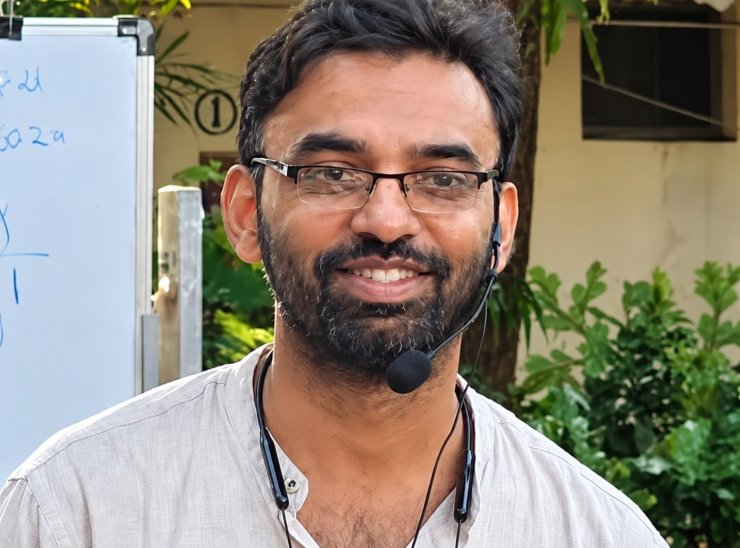
Dr Randall Sequeira, who grew up in Mumbai, moved to Odisha, in eastern India, in 2017 to treat tribal patients. On the night of October 16, police took him from his home. Eight days on, the 39-year-old physician remains in jail, charged with attempt to murder, while colleagues, friends and rights groups say he is being punished for standing with the communities he treated.
Officers reached his house in Bhawanipatna, in Odisha’s Kalahandi district, between 10.45 pm and 11 pm. They took him away with Laxman Naik, a Dalit activist. The term Dalit is a self-designation of communities who have historically been subjected to discrimination and violence and find themselves at the bottom of India’s caste system.
Kalahandi police handed the pair to officers in neighbouring Rayagada district, and both now sit in Rayagada sub-jail in judicial custody, meaning a magistrate has ordered them held. Besides attempt to murder, they face charges of rioting while armed with a deadly weapon, dacoity (armed robbery) and offences under the Arms Act. Sasikanth Senthil, a lawmaker from the Congress party, one of India’s major political parties, says that bail has been refused and courts are on vacation until October 27.
The charges trace back to April 7, when police entered Kantamal village in Rayagada before dawn. Residents there had been resisting construction of an approach road to the Sijimali bauxite reserve. Villagers say officers arrived at 3 am and broke down doors, after the village’s electricity had been disconnected. Police say they came to arrest one man against whom a non-bailable warrant had been issued. The raid turned into a clash, with tear gas and baton charges. Nearly 58 people were hurt, officers among them, and 23 villagers and activists were arrested.
Neither Sequeira nor Naik appears in the First Information Report, the police document that formally opens a criminal case. Officers say the investigation later established their roles. “They instigated tribal residents of Kantamal to attack the police force,” one officer said.
Naik is a leading Dalit figure in the Maa Mati Mali Surakhya Manch, the local group that spearheads the protests, and is also an activist with the Samajwadi Jan Parishad.
Akhileshvar Singh, who oversees policing in the south-western range, has defended the arrests bluntly. At least four to five serious cases were pending against Sequeira, he said, and two tribal women had complained that the doctor instigated them. Naik, he said, was also misleading people. “The arrested persons were not innocent,” he told the Press Trust of India. “The people who claim that he is innocent should see whether the doctor was providing medical services to the people or instigating them.” Many doctors work in the two districts, Singh noted, and none other has been arrested. Asked about alleged torture by police, he said the men had made no such complaint before the magistrate.
Those who know Sequeira describe his work differently. The family is originally from Mangaluru in Karnataka, and his parents still live in Mumbai. He studied medicine at St John’s Medical College in Bengaluru and took a postgraduate degree in internal medicine at Sawai Man Singh Medical College in Jaipur. In 2017 he settled in Kalahandi and began working with non-governmental organisations in its tribal areas. Later he worked independently, travelling to remote villages.
Dr Dewal Sawarkar, who worked with him for years, says he treated malaria and tuberculosis while trying to understand the social, economic and environmental conditions that fed them. He held camps for pregnant women and malnourished children, she says. Friends say he helped tribal students prepare for medical entrance examinations. Close friend Nilesh Mohite says Sequeira eventually stopped practising and became a full-time movement worker.
That movement opposes bauxite mining in the Sijimali and Kutrumali hills of the Eastern Ghats. Bauxite is the ore from which aluminium is made. Sijimali covers 1,500 hectares and holds an estimated 311 million tonnes, while Kutrumali covers 702 hectares and an estimated 127.737 million tonnes. Vedanta, a mining company owned by a London-based parent, won mining rights in the Sijimali block in February 2023. Around the same time, Kalinga Alumina Limited, owned by the Adani Group, a conglomerate widely reported to have close ties to Prime Minister Narendra Modi, became preferred bidder for Kutrumali.
Some tribal residents say mining would endanger their lives and livelihoods and damage the region’s ecology. The Sijimali project would need more than 700 hectares of forest land, which a federal forest advisory committee has flagged as elephant habitat, and villagers dispute official claims that their village assemblies agreed to its clearing.
Police had taken note of Sequeira before. In September 2023, Kashipur police in Rayagada made an entry in their general diary, the station’s daily log, saying he was distributing leaflets and maps opposing mining in villages near the Sijimali hills. In July 2025, the Orissa High Court quashed an order barring him from entering Rayagada. It had been issued under a section of the Bharatiya Nagarik Suraksha Sanhita, a law on criminal procedure, that lets a magistrate issue short-term orders when public order is thought to be at risk.
His supporters see a pattern of intimidation. Activists count 43 police cases and more than a hundred Dalit and Adivasi people jailed since the resistance began in 2023. Adivasi is the term for India’s indigenous communities. Cyriac Abby Philips, a doctor who studied at St John’s and is popular online as the LiverDoc, says a leader who wins bail in one case is arrested in another. He alleges that officers showed neither a warrant nor an arrest memo, gave no reason, and denied Sequeira and Naik contact with lawyers and relatives.
Senthil, a former civil servant representing Tamil Nadu in Parliament, adds that police seized the men’s phones. The hills fall under the Fifth Schedule of the Constitution, which gives special protection to tribal land, he notes, and the Supreme Court in 2013 upheld the consent of village assemblies, known as gram sabhas, in a mining dispute over Niyamgiri hill. “Defending jal-jangal-jameen is not a crime,” he wrote, using the movement’s slogan for water, forest and land.
Prafulla Samantara, who won the Goldman Environmental Prize in 2017 for leading the Niyamgiri campaign, wrote to the police chiefs of both districts. “Is it a crime for a doctor like Randall to be sympathetic for the tribal cause within constitutional right,” he asked. The Human Rights Forum and the Concerned Citizens Committee, Odisha, have condemned the arrests, and the Right to Food campaign has demanded justice in these cases.
On October 23, Sequeira’s mother, Nancy, published a statement saying the family believes the charges are false. Her son had phoned that day and said “Sorry”. She wrote that he had nothing to apologise for. “We seek no revenge. We harbour no hatred,” she wrote. “We ask only for truth, justice, and our son’s release.”