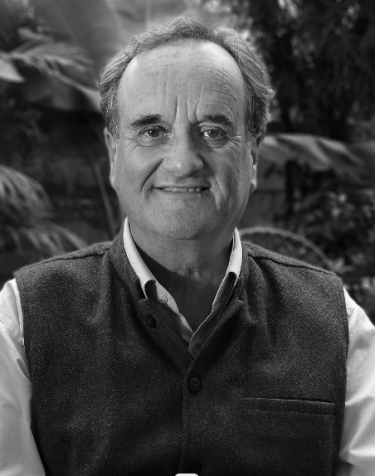
Sir William Mark Tully, known as Mark Tully, the British journalist who became one of the most recognisable foreign voices interpreting India to the world, died in New Delhi on 25 January 2026. He was 90 and passed away at Max Super Speciality Hospital, Saket, after a brief illness.
Born in 1935 in Tollygunge, Calcutta, to British parents, Mark Tully spent most of his adult life in India. He served as the BBC’s India correspondent and later as its bureau chief in New Delhi, a position that placed him at the centre of some of the most significant moments in modern Indian history.
Tully reported on the 1971 war and the creation of Bangladesh, the Emergency, the Indian Army’s operation at the Golden Temple in 1984, the assassination of Prime Minister Rajiv Gandhi in 1991, and the demolition of the Babri Masjid in 1992. His measured voice on BBC radio became familiar to Indian listeners over several decades. For many, he was simply known as the “BBC voice of India”.
Unlike many foreign correspondents of his time, Tully chose to live in India long-term rather than work on short postings. He continued to remain based in New Delhi even after leaving the BBC in 1994. Obituaries and tributes noted that he was widely recognised in public spaces and often approached by ordinary citizens.
Colleagues remembered him for his insistence on reporting from the ground. Tributes described how he travelled extensively, stayed in modest conditions, and spent long hours listening to people before filing stories. Several accounts recalled his preference for rural reporting and his discomfort with journalism conducted at a distance from everyday life.
Beyond news reporting, Tully was also known in Britain for his engagement with faith and spirituality. He presented the BBC Radio 4 programme ‘Something Understood’, which explored belief, doubt, and meaning through music and reflection. His interest in religion had early roots. He studied theology at Cambridge University and briefly trained for Anglican ministry before turning to journalism.
In interviews over the years, Tully described himself as a Christian and an Anglican. He also spoke openly about how life in India reshaped his understanding of faith. He acknowledged that prolonged exposure to India’s religious diversity challenged his earlier convictions. In one widely quoted interview, he said that while he continued to identify as Christian, he no longer believed Christianity to be the only way to God.
Political leaders and institutions paid tribute following news of his death. Prime Minister Narendra Modi said, “His connect with India and the people of our nation was reflected in his works. His reporting and insights have left an enduring mark on public discourse.” The BBC remembered him as a correspondent who helped audiences understand India in all its complexity.
BBC Radio 4 controller Mohit Bakaya said Tully’s broadcasts “were never about certainty or instruction; they were about curiosity, compassion and making space for complexity”. Congress leader Pawan Khera recalled that many in India grew up listening to his voice and reading his books, adding that he later came to live in the same locality where Tully had spent many years.
In New Delhi, hundreds attended his final rites. Reports noted that he was cremated in the city he had long called home.
Tully authored several books on Indian society, politics, and religion. Tributes described him as a journalist known for long-term reporting and close engagement with Indian society.
Article image from here.