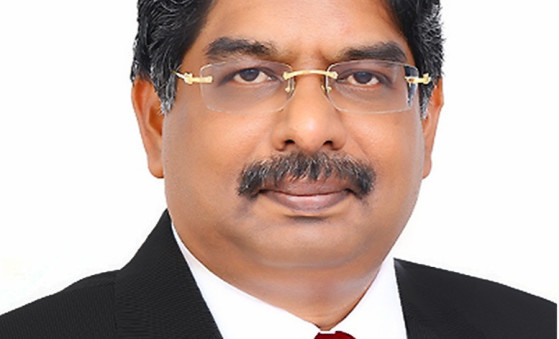
Tarique Rahman was sworn in as Bangladesh’s Prime Minister on Tuesday, completing a remarkable journey from 17 years of exile in London to the highest office in the land, just five days after his Bangladesh Nationalist Party swept the country’s 13th parliamentary election in what leaders have described as a “new dawn” for the country.
President Mohammed Shahabuddin administered the oath at the South Plaza of the Jatiya Sangsad in Dhaka, departing from the long-standing tradition of holding such ceremonies at Bangabhaban, the presidential palace. “I will faithfully discharge the duties of the office of prime minister of the government in accordance with the law,” Rahman said at the televised ceremony, held at 4 pm. Chief Election Commissioner AMM Nasir Uddin had earlier administered the oath to new members of Parliament at 10 am. Cabinet members were also sworn in later in the day.
Rahman, 60, becomes the first male Prime Minister of Bangladesh in more than 35 years, since Kazi Zafar Ahmed left office on December 6, 1990. His mother, Khaleda Zia, Bangladesh’s first female Prime Minister, died on December 30, 2025. His father, General Ziaur Rahman, took power in 1975, became the country’s President, and was assassinated in 1981. Rahman fled Bangladesh in 2008 and returned on December 25, 2025, aboard a Biman Bangladesh Airlines flight from London. He addressed a large public gathering that day before visiting his ailing mother at Evercare Hospital. After she died five days later, he assumed full leadership of the BNP and led the party into the February 12 election.
Foreign dignitaries from at least 12 countries attended the swearing-in. Lok Sabha Speaker Om Birla represented India, with Bangladesh Foreign Ministry Secretary Nazrul Islam receiving him at Hazrat Shahjalal International Airport and officials from the Indian High Commission also in attendance. Foreign Secretary Vikram Misri accompanied Birla. Bhutan Prime Minister Tshering Tobgay attended in person and was received by Foreign Adviser Mohammad Touhid Hossain. Prime Minister Narendra Modi declined Bangladesh’s invitation, citing French President Emmanuel Macron’s visit to India that day and an AI Summit in Delhi, though he and Rahman had spoken by telephone the previous Saturday. The Ministry of External Affairs said Birla’s participation “underscores the deep and enduring friendship between the peoples of India and Bangladesh, reaffirming India’s steadfast commitment to the democratic values that bind the two nations.”
Muhammad Yunus, who led the interim government for 18 months following Sheikh Hasina’s ouster in August 2024, stepped down on Sunday, February 16. He congratulated Rahman for “the landslide victory of his party” and said he “would help guide the country toward stability, inclusiveness, and development.” Pakistan’s Planning Minister Ahsan Iqbal Chaudhary paid a separate courtesy call on Yunus at the State Guest House Jamuna.
The Election Commission’s results, published in the official gazette, confirmed that the BNP alone won 209 seats. Three allied parties, Ganosamhati Andolan, Bangladesh Jatiya Party and Gono Odhikar Parishad, won one seat each, bringing the BNP-led alliance total to 212. Jamaat-e-Islami alone secured 68 seats, while its allies, the National Citizen Party with six seats and two smaller religious parties, Bangladesh Khelafat Majlis and Khelafat Majlis, with two and one seat respectively, brought the Jamaat-led alliance total to 77. Islami Andolan Bangladesh won one seat and independents seven. Courts ordered the withholding of results in Chattogram-2 and Chattogram-4. Polling took place in 299 of the 300 parliamentary constituencies, with Sherpur-3 cancelled following the death of a candidate. Voter turnout stood at 59.44 per cent.
The election was accompanied by a referendum on the July National Charter, an 84-point constitutional reform package. The Election Commission confirmed that 60.26 per cent of voters backed the Charter, which introduces term limits for the Prime Minister, proposes a bicameral parliament, increases women’s political representation and limits the governing party’s ability to make unilateral constitutional amendments. A procedural dispute also emerged at the swearing-in: BNP MPs and independents took oath only as members of parliament, while Jamaat and 11 other opposition groups took an additional oath as members of the Constitution Reform Council, citing a referendum-based directive. BNP lawmakers countered that the constitution does not mandate such an oath.
In his first speech after the election, Rahman called for national unity, dedicating his win to those who had “sacrificed for democracy.” “I firmly believe that national unity is a collective strength, while division is a weakness. Our paths and opinions may differ, but in the interest of the country, we must remain united,” he said. Jamaat chief Shafiqur Rahman, who had initially alleged “inconsistencies and fabrications” in the vote count, formally conceded and said he would “serve as a vigilant, principled and peaceful opposition.”
Bangladesh’s Christian minority voiced cautious hopes for the new government. Rev. Martha Das, General Secretary of the National Christian Fellowship of Bangladesh, the country’s national evangelical alliance, told Christian Today India that Bangladesh’s Christians had “a lot of expectation of justice, equity, peace and reconciliation” from the new government. “Pray for a peaceful, nonviolent, reconciliatory and progressive mind and heart to the newly elected govt,” she urged.
Congratulations came from across the world. Prime Minister Modi said India would continue to stand in support of “a democratic, progressive and inclusive Bangladesh.” Pakistan’s Prime Minister Shehbaz Sharif said he looked forward to strengthening bilateral ties with the new leadership. US Secretary of State Marco Rubio congratulated the BNP and “the people of Bangladesh,” saying Washington looked forward to “working with the newly elected government to advance prosperity and the security of the region.” Sheikh Hasina, in self-imposed exile in India, had called the election a “carefully planned farce” and demanded its cancellation. Her Awami League, which governed Bangladesh for more than 15 years, remained banned and fielded no candidates. For the first time in 30 years, its boat symbol did not appear on any ballot paper.