Tribal communities in Odisha, including many Christians, have voiced disappointment after receiving no response from President Droupadi Murmu regarding their appeal to safeguard ancestral lands from industrial expansion.
Community leaders in Sundargarh district say they had hoped for intervention from the President, who herself belongs to the Santal tribal community of Odisha. However, months after submitting a formal request, they say no action has been taken.
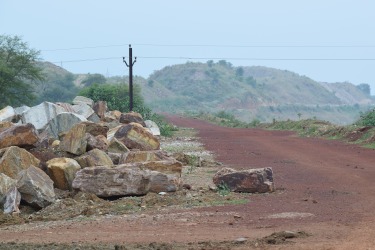
The concerns centre on the proposed expansion of limestone mining operations linked to Dalmia Cement Bharat Ltd. in the Rajgangpur area. According to local representatives, the project involves land traditionally owned and cultivated by tribal families across several villages. Community leaders estimate that hundreds of families could be affected.
In January, protestors staged a 12-hour blockade of a major highway connecting Rourkela and Sambalpur, temporarily disrupting traffic and work linked to the project. The demonstration was organised by the Forum for Gram Sabha Committee, a body representing village councils in the region.
Tribal representatives argue that proper consent has not been obtained from the Gram Sabha, the village assembly that must approve development projects in Scheduled Areas under Indian law. Large parts of Sundargarh district fall under the Fifth Schedule of India’s Constitution, which provides special safeguards for tribal communities and gives village councils a key role in decisions concerning land use.
Church leaders have expressed support for the tribal communities’ concerns. Father Nicholas Barla, former secretary of the Indian Catholic Bishops’ Commission for Tribal Affairs, said the constitutional protections are intended to prevent the displacement of indigenous people and to preserve their livelihoods.
He noted that many tribal families depend on farming and forest produce for survival. The transfer of land to corporate entities, he said, can lead to economic hardship and the erosion of traditional ways of life.
In addition to constitutional protections, tribal land in the area is covered by provisions of the Odisha Land Reforms Act, which restricts the transfer of tribal-owned land to non-tribal parties without official approval.
Local residents say the issue is not only economic but also cultural. For many tribal Christians and other indigenous families, land is closely tied to identity, heritage and community life.
Odisha has one of India’s largest tribal populations, with indigenous communities making up nearly a quarter of the state’s 46 million residents. As mining and industrial projects expand across mineral-rich regions, debates over land rights and lawful consent continue to raise tensions.
Community leaders say they intend to pursue lawful and peaceful efforts to ensure that constitutional safeguards for tribal people are upheld.
Original reporting by UCA News, rewritten for this publication.