The National Assembly of Nepal on Monday, February 9, 2026, unanimously approved the withdrawal of the contentious Social Media Bill, bringing an end to months of controversy that had sparked widespread youth-led protests last year.
National Assembly Chairman Narayan Dahal announced the decision after presenting the bill for consideration in the day’s session. The unanimous vote came after Tulasa Kumari Dahal, chairperson of the Legislative Management Committee, submitted the committee’s report on the bill.
The Social Media Operation, Use and Regulation Bill 2025 had been registered in the National Assembly on January 28, 2025, by the then-minister for communications and information Prithvi Subba Gurung under the KP Sharma Oli-led government. The bill was introduced with the stated aim of controlling social media platforms.
During the committee review process, which began after the bill’s introduction in August 2025, a total of 155 amendment proposals were submitted by 35 members of the Assembly. Committee chairperson Dahal confirmed that informal consultations were held with the minister of communications and information technology, the ministry’s secretary, and other stakeholders at various stages.
The Ministry of Communications and Information Technology formally requested the government to withdraw the bill on February 3, with official instructions issued on February 4. The Council of Ministers approved the withdrawal request on the same day, and the proposal was moved in the National Assembly on February 6 by Prime Minister and Minister for Communication and Information Technology Sushila Karki.
The bill had attracted sharp criticism from multiple quarters over provisions that critics viewed as draconian attempts to control online speech. Under its terms, social media platforms would have been required to obtain government approval to operate and could face fines of up to Rs 10 million for non-compliance with government conditions.
Individual users faced severe penalties under the proposed legislation. Those found transmitting false or misleading information through fake identities could be imprisoned for up to five years and fined up to Rs 1.5 million. The bill also prescribed imprisonment of up to five years or fines up to Rs 500,000 for posting content deemed to disturb “the sovereignty, territorial integrity, national unity and security of Nepal”.
Other provisions included three months’ imprisonment or Rs 50,000 in fines for creating fake pages and groups, two years in prison or Rs 300,000 in fines for harassment or rumour-spreading, and similar penalties for creating deepfake videos using artificial intelligence.
The Oli government’s decision to ban 26 social media sites, including Facebook, YouTube, WhatsApp, Instagram and X, even before parliamentary approval of the bill triggered massive Gen Z protests on September 8 and 9, 2025. The ban was seen as a direct assault on freedom of expression and digital connectivity by young Nepalis already frustrated with widespread corruption, nepotism and limited job opportunities in a country where youth unemployment stood at 20.8 per cent.
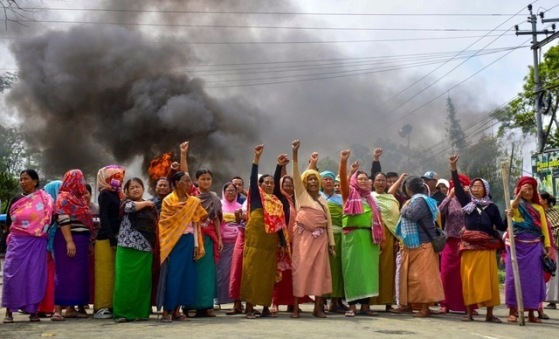
What began as peaceful demonstrations by thousands of young people, many in school uniforms, quickly escalated when police opened fire on protesters. At least 19 people, including a 12-year-old child, were killed on September 8 alone, with the death toll eventually rising to 72 as protests spread nationwide. Hundreds more were injured when police used rubber bullets and live ammunition against the crowds.
The violent crackdown sparked widespread outrage both within Nepal and internationally. Enraged protesters set fire to multiple government buildings, including the Parliament, the Supreme Court, and the residences of the Prime Minister and several ministers. Home Minister Ramesh Lekhak resigned on September 9 following the violence, and Prime Minister Oli submitted his resignation the same day, citing “the extraordinary situation” in the country. Several other ministers resigned in the days that followed.
Sushila Karki, a former Supreme Court chief justice, was appointed interim prime minister on September 12, 2025, to oversee the transition to fresh elections. The youth-led demonstrations, which called for lifting the social media ban and addressing corruption, had successfully toppled the government within just two days of protests.
Home Minister Om Prakash Aryal, who serves as government spokesperson, confirmed the cabinet’s decision to withdraw the bill. “The government has decided to withdraw the Social Media Bill-2025 from the federal parliament,” Aryal told media persons following the February 3 cabinet meeting.
With the National Assembly’s unanimous approval, the bill has been formally returned to the government, effectively ending the legislative process for the controversial measure that had cost dozens of lives and brought down a government.