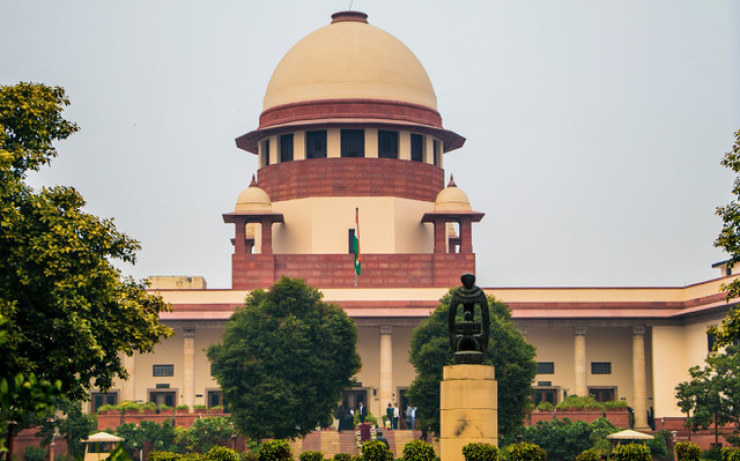
The Supreme Court on Tuesday, March 24, ruled that only Hindus, Sikhs and Buddhists can claim Scheduled Caste status, holding that conversion to any other religion results in the immediate and complete loss of such membership.
A bench of Justices Prashant Kumar Mishra and Manmohan upheld an Andhra Pradesh High Court order involving a Christian pastor who had challenged his loss of Scheduled Caste status following conversion.
The court invoked Clause 3 of the Constitution (Scheduled Castes) Order, 1950, which states that no person professing a religion other than Hinduism shall be deemed a member of a Scheduled Caste. “No statutory benefit, protection or reservation or entitlement under the Constitution or enactment of Parliament or State legislature can be claimed by or extended to any person who by operation of Clause 3 is not deemed to be a member of the Scheduled Caste. This bar is absolute and admits no exception,” the bench said.
The case arose from a complaint filed by Chinthada Anand, a pastor conducting Sunday prayers in Pittalavanipalem village in Andhra Pradesh. Anand alleged that one Akkala Ramireddy and others had repeatedly assaulted him, issued death threats to him and his family, and subjected him to caste-based abuse. He registered a case under the SC/ST Act, following which a chargesheet was filed.
The accused challenged the FIR, arguing that Anand had converted to Christianity and was actively serving as a pastor, and therefore could not claim protections available exclusively to Scheduled Caste members. The Andhra Pradesh High Court, in an order dated April 30, 2025, accepted this argument. Justice N. Harinath quashed the charges, holding that the caste system does not exist within Christianity and that Anand was consequently barred from invoking the SC/ST Act. The High Court further held that his possession of an SC certificate would not assist his case, since a person who converts to a religion where caste is not recognised loses SC status, whatever the certificate may state.
Anand challenged this before the Supreme Court through a Special Leave Petition in the matter of *Chinthada Anand v State of Andhra Pradesh and Ors.* (SLP(Crl) No. 9231/2025). His counsel argued that he held a valid Scheduled Caste certificate issued by the Tahsildar of Pittalavanipalem Mandal, and that a witness had confirmed his community membership. The Supreme Court upheld the High Court’s position on this point, holding that the mere non-cancellation of a caste certificate does not entitle a person to SC protections after conversion, and that the certificate’s validity was a matter to be addressed under the relevant Andhra Pradesh legislation by the appropriate authority.
On the facts of the case, the bench observed, “In the present case, it is not the case of the petitioner that he re-converted from Christianity to his original religion or has been accepted back in the folds of the Madiga community. On the contrary, the evidence establishes that the appellant continued to profess Christianity and has been functioning as a pastor for more than a decade, conducting regular Sunday prayers at the houses of the village.”
The court added that at the time of the incident, Anand had been conducting prayer meetings, leaving “no room for doubt that he continued to remain a Christian on the date of the occurrence.”
Dismissing the appeal, the bench stated: “A person cannot simultaneously profess and practice a religion other than the one specified in Clause 3 and claim membership of the Scheduled Caste.”