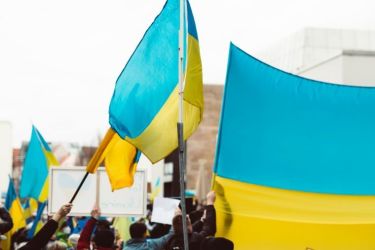
As Russia’s war against Ukraine enters its fifth year, church leaders and human rights groups report increasing pressure on religious communities in territories under Russian control.
Since the full-scale invasion ordered by President Vladimir Putin in February 2022, occupying authorities have tightened restrictions on churches they consider disloyal. Protestant congregations in particular are said to have faced raids, forced closures and intimidation.
In several occupied regions, Protestant churches have been ordered either to shut down or to re-register under Russian religious regulations. Many congregations have declined to comply, saying the requirements compromise their independence. Pastors and church members have reported detentions, questioning and the seizure of church property.
One widely cited case concerns Baptist pastor Sergey Ivanov, who led a congregation in southern Ukraine under occupation. According to church networks and human rights monitors, Russian forces detained him after accusing him of cooperating with Ukrainian authorities and refusing to register his church under Russian law. Members of his congregation said worship services were disrupted and the church building was effectively closed during his interrogation. Observers say the case reflects broader pressure on Baptist and evangelical communities that resist oversight imposed by occupation officials.
Orthodox clergy have also faced difficulties when they have not aligned with Moscow. In Crimea, priest Serhii Mykhalchuk of the Orthodox Church of Ukraine reported repeated legal and administrative pressure after Russia’s annexation of the peninsula. Courts ordered his parish to leave its cathedral in Simferopol, and church property was seized after the community declined to re-register under Russian religious structures linked to Moscow.
Advocates for religious freedom argue that these developments form part of a wider effort to limit independent civil society in occupied areas. Protestant churches, which have long been active in humanitarian support and community outreach, have reportedly drawn suspicion from occupation authorities, who sometimes accuse them of links to Western governments.
At the same time, analysts say structures connected to the Ukrainian Orthodox Church, historically associated with the Russian Orthodox Church, have in some areas been drawn more closely into administrative frameworks backed by Moscow. Critics contend that religious institutions are being used to reinforce political authority, blurring the boundary between church life and state policy.
Human rights monitors warn that religious freedom in occupied parts of Ukraine is steadily narrowing. Congregations unwilling to cooperate with occupation authorities risk harassment, closure or expulsion, while religious bodies perceived as supportive of Russian governance appear to receive more favourable treatment.
As the conflict continues, Christian leaders say the treatment of churches offers an important measure of the broader human rights situation in the region. Observers note that the future of religious communities in occupied territories will remain closely linked to developments in the war itself.
Since the full-scale invasion ordered by President Vladimir Putin in February 2022, occupying authorities have tightened restrictions on churches they consider disloyal. Protestant congregations in particular are said to have faced raids, forced closures and intimidation.
In several occupied regions, Protestant churches have been ordered either to shut down or to re-register under Russian religious regulations. Many congregations have declined to comply, saying the requirements compromise their independence. Pastors and church members have reported detentions, questioning and the seizure of church property.
One widely cited case concerns Baptist pastor Sergey Ivanov, who led a congregation in southern Ukraine under occupation. According to church networks and human rights monitors, Russian forces detained him after accusing him of cooperating with Ukrainian authorities and refusing to register his church under Russian law. Members of his congregation said worship services were disrupted and the church building was effectively closed during his interrogation. Observers say the case reflects broader pressure on Baptist and evangelical communities that resist oversight imposed by occupation officials.
Orthodox clergy have also faced difficulties when they have not aligned with Moscow. In Crimea, priest Serhii Mykhalchuk of the Orthodox Church of Ukraine reported repeated legal and administrative pressure after Russia’s annexation of the peninsula. Courts ordered his parish to leave its cathedral in Simferopol, and church property was seized after the community declined to re-register under Russian religious structures linked to Moscow.
Advocates for religious freedom argue that these developments form part of a wider effort to limit independent civil society in occupied areas. Protestant churches, which have long been active in humanitarian support and community outreach, have reportedly drawn suspicion from occupation authorities, who sometimes accuse them of links to Western governments.
At the same time, analysts say structures connected to the Ukrainian Orthodox Church, historically associated with the Russian Orthodox Church, have in some areas been drawn more closely into administrative frameworks backed by Moscow. Critics contend that religious institutions are being used to reinforce political authority, blurring the boundary between church life and state policy.
Human rights monitors warn that religious freedom in occupied parts of Ukraine is steadily narrowing. Congregations unwilling to cooperate with occupation authorities risk harassment, closure or expulsion, while religious bodies perceived as supportive of Russian governance appear to receive more favourable treatment.
As the conflict continues, Christian leaders say the treatment of churches offers an important measure of the broader human rights situation in the region. Observers note that the future of religious communities in occupied territories will remain closely linked to developments in the war itself.
This is a rewritten version of the original article from ICC.