More than 35 Christian families have reportedly fled their homes in Punjab Province, Pakistan, after a Christian man was accused of blasphemy and a mob set fire to his house and shop.
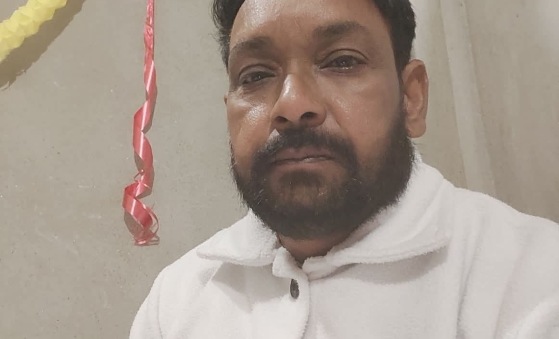
Kamran Masih, a 40-year-old father of three who ran a small pharmacy in Gharial Kalan village, Narang Mandi, Sheikhupura District, was arrested by police at about 9.30pm on Thursday, 8 October. Local Muslims had accused him of sharing a video alleged to be blasphemous in WhatsApp groups, according to sources cited by Christian Daily International-Morning Star News.
As news of his arrest spread, Masih’s family and other Christian residents began leaving the village, fearing a possible attack. Dozens of Muslims gathered outside his shop and nearby home on Friday, 9 October, and some members of the crowd reportedly set both buildings on fire.
A source said police intervention prevented damage to other Christian properties. The exact provisions of Pakistan’s blasphemy laws being applied to Masih remained unclear.
An official from the Sheikhupura district police chief’s office said a large police contingent had been deployed to protect Christian residents and their homes while an investigation continued. The official said the situation was under control and those responsible for violence would face legal action.
Ejaz Alam Augustine, a Christian member of the Punjab Assembly, said he and other Christian lawmakers had remained in contact with police and district authorities to help protect residents.
Augustine said Masih’s arrest had helped contain the situation and that senior police officers had promised a fair investigation. He added that police had arrested more than 15 people suspected of taking part in the arson attack.
A relative of Masih described the incident as unprecedented in the village, where Christians and Muslims had generally lived peacefully alongside one another. He said the family was struggling to understand the allegations against Masih, whom he described as well regarded in the community.
The latest incident adds to concerns about the consequences of blasphemy accusations in Pakistan, where rights organisations and legal experts have warned that the laws can be misused in personal disputes and have disproportionately affected religious minorities.
Although Pakistan has not carried out a state execution for blasphemy, accusations have repeatedly led to mob attacks, extrajudicial killings and lengthy detention while suspects await trial.
In a separate incident on 9 July, protests erupted in Karachi, Sindh Province, after an envelope containing a burnt page of the Quran and photographs of a Christian man and his mother was reportedly sent to a Muslim shopkeeper.
Asif Bastian, a Karachi-based activist, said the envelope was delivered to Waleed General Store in Qazafi Colony, Baldia Town. It reportedly contained the burnt page, photographs of 40-year-old Catholic Azeem Javaid and his mother, as well as an image of her national identity card.
Hundreds of Muslims, including members of religious parties, gathered near Javaid’s home after news of the alleged desecration spread. Bastian said around 10 to 15 Christian families lived on the street and were effectively trapped inside their homes during the protests.
Protesters reportedly threw stones at police vehicles, forcing officers to withdraw initially. The Sindh provincial government later deployed paramilitary Rangers alongside additional police to restore order.
Another episode occurred in early July in Jhulan village, in Gujranwala Division, Punjab Province, after a pastor living in the United States was accused of posting social media videos considered offensive to Islam and the Prophet Muhammad.
Human rights advocate Joseph Nayyar, based in Hafizabad, said mosque loudspeaker announcements on 3 July accused Pastor Sajeel Robin, originally from the village, of sharing the videos. More than two dozen Christian families reportedly left their homes amid fears of violence after police advised residents to leave temporarily as a precaution.
Police also took the pastor’s father, Robin Masih, and maternal uncle, Shamaun Masih, into protective custody, while his brother, Nabeel Robin, went into hiding to avoid arrest, Nayyar said.
He credited local police and some Muslim residents with helping prevent further violence by negotiating with clerics and urging them not to target Christians who had not been shown to be responsible for any offence.
Open Doors ranked Pakistan eighth on its 2026 World Watch List, which identifies countries where Christians face severe persecution. The organisation cited discrimination, mob violence, forced conversions, bonded labour and gender-based violence, and warned that weak law enforcement and impunity can allow perpetrators of anti-Christian violence to escape accountability.
Based on reporting by Christian Daily International - Morning Star News.