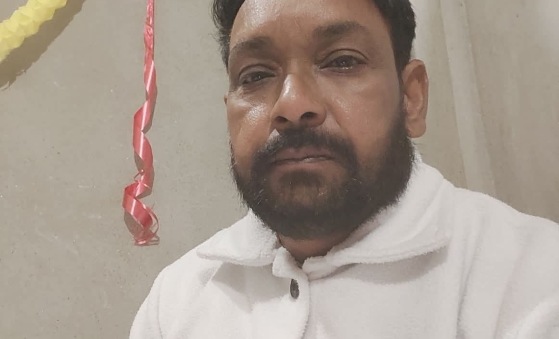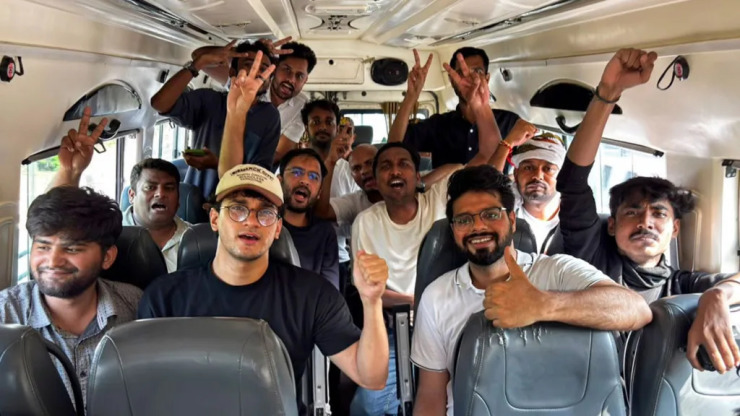
Police on Tuesday, 13 October, detained a group of Cockroach Janta Party (CJP) activists, among them leaders Saurav Das and Ashutosh Ranka, after they climbed over barricades and a gate to get into Jantar Mantar, the New Delhi site the force removed from its list of designated protest grounds this week.
Das, the party's chief spokesperson, and Ranka, its national spokesperson, who were also held on Saturday, carried the national flag as they went in, according to a video posted by CJP founder Abhijeet Dipke. Ajinkya Shinde and 11 others were also taken in, 14 people in all, their lawyer Pushp Sharma told media, and the group was driven to Jaffarpur Kalan Police Station.
The CJP, a Gen Z-led group that began as an online satire, is demanding the resignation of Gyanesh Kumar, the Chief Election Commissioner (CEC) who heads the three-member Election Commission of India, over irregularities in the Commission's Special Intensive Revision (SIR) of the electoral rolls. Opposition parties and activists say the exercise has struck eligible voters off the lists, while the Commission and the ruling Bharatiya Janata Party (BJP) reject the charge. Christian Today's earlier report covered the movement's origins, the objections two Election Commissioners put on record and the police notices served on activists in Maharashtra.
Dipke asked on X: "Is waving Indian flag violation of law now?" Delhi Police declared Section 163 of the Bharatiya Nagarik Suraksha Sanhita (BNSS), India's code of criminal procedure, in force around the site and told protesters to clear the area. The provision lets a magistrate bar people from assembling. The CJP's 24-hour ultimatum to police to name a date for a peaceful protest there expired the same day.
CJP legal head Ratna Singh alleged that the station house officer refused to let their lawyer meet the detainees and that police had confiscated their phones. Police later registered a case against Das, Ranka and others for trespass. It was not immediately clear whether they had been released.
The detentions came on the day Prime Minister Narendra Modi told the Bloomberg New Economy Forum in New Delhi that India is "the mother of democracy", a country where people openly debate different issues and perspectives, The Telegraph reported. The media described it as his first public appearance since the police action in the capital. Congress president Mallikarjun Kharge had accused the government on Saturday of turning India into a "muzzled democracy".
The crackdown and its aftermath
The first detentions came on Saturday, 10 October, when Delhi Police detained Dipke, Das and Ranka minutes after their Air India flight from Mumbai landed in Delhi. Police said the CJP's call for a protest at Jantar Mantar had no permission, citing security concerns and too little notice. Das had written to Parliament Street Police Station beforehand to inform it of the plan.
Across the capital, police sealed Jantar Mantar before the demonstration could begin, manned roadblocks at the main entry points and searched buses for protesters. Over 250 trains that were inbound to Delhi were cancelled and over 45 Metro stations were closed, crippling transport in Delhi, especially for people who wanted to reach Jantar Mantar.
Mobile data was cut in the central business district, and dozens of Metro stations and markets closed. Media reported that stones were pelted at a bus carrying detainees in the Jhandewalan area, and police said some protesters clashed with officers near Akashwani Bhavan after breaking barricades.
Counts of the detained varied widely, from about 2,000 (Reuters, citing a Ministry of Home Affairs official) to more than 7,000 (PTI). Police said the detainees were released later in the evening. Those held included YouTuber Dhruv Rathee, lawyer Prashant Bhushan, and at least three former chief ministers: Mamata Banerjee, Arvind Kejriwal and Pinarayi Vijayan. Representatives of two digital outlets said police briefly held four of their reporters.
BJP spokesperson Sambit Patra dismissed the demonstrators as "anarchic elements" and said India was calm and well governed.
An executive magistrate at Delhi Cantonment released the three CJP leaders on Sunday morning, roughly 24 hours after they were picked up, on condition that they not breach the peace for a year. Police had cited Sections 126 and 170 of the BNSS, which let a magistrate require a bond to keep the peace for up to a year and let police arrest without a warrant, generally for no more than 24 hours, to prevent a cognisable offence, meaning one for which no warrant is needed.
On Sunday, police detained more than 100 more people as they marched towards Jantar Mantar. The same day, the Supreme Court held a special hearing and told authorities to ensure free movement, normal Metro and rail services, uninterrupted internet and no illegal detentions, subject to law and order considerations. In Goa, the Bombay High Court ordered the release of six CJP activists detained in Panaji, and Goa Police defended the detentions in an affidavit.
On Monday, police made public an order dated 11 October that took Jantar Mantar, a protest venue since 1993, off the list of designated protest sites. Signed by Commissioner Anurag Kumar, it partly modifies a standing order of 28 April 2022 and names three replacements: Ramlila Ground in central Delhi, CBD Ground in East Delhi and Burari Ground in north Delhi, which Outlook reported lie about 3 km, 13.5 km and 44 km from Jantar Mantar. The order says a committee set up by the Ministry of Home Affairs recommended the change, and a revised standard operating procedure for protests at the three grounds will follow. It is not clear when the committee was formed. Das called the decision "unacceptable".
On Monday too, leaders of the INDIA bloc, the alliance of opposition parties, marched from Connaught Place towards the Supreme Court led by Rahul Gandhi, the Leader of the Opposition in the Lok Sabha, the lower house of Parliament. Police halted them at Bhagwan Das Road, but Gandhi and others still reached the court, where Congress lawyers filed a petition contesting the Commission's handling of the SIR and seeking an independent audit of the deletions. An attempt to meet the Chief Justice was declined. Delhi Police later registered four First Information Reports, the documents that start a criminal case, over the march, again citing Section 163. At a press conference on Tuesday, Gandhi said the opposition's protests were one and would continue.
The courts
The Supreme Court agreed on Tuesday to hear together a cluster of pleas from journalists, lawyers and students who allege illegal detention, assault and abuse by police. Justice V Mohana's illness forced a deferral, and the Chief Justice said democratic activity must proceed smoothly without obstructing the court's work.
A separate case concerns the Commission itself. On 5 October a bench led by Chief Justice Surya Kant declined to suspend Kumar but issued notice to the Commission, Kumar and Election Commissioners Sukhbir Singh Sandhu and Vivek Joshi. "Any modified Form 6 has not been approved by us. Let's be clear," the Chief Justice said, days after the Commission's press note of 29 September claimed the court had upheld the declaration added to Form 6, the form new voters use to register.
On Monday the court said it has not ruled on the revised form, which makes new applicants declare whether they or their parents were included or mapped in the previous SIR. Justice Joymalya Bagchi pointed out that the form did not exist when the court gave its May judgment on the revision in Bihar state. The bench issued notice on a fresh petition and listed it with the pleas against Kumar.
India Today reported that the Commission's defence is that it never altered the statutory Form 6 and merely added a supplementary declaration. According to The Indian Express, Joshi had objected in May that the change could not be made without amending the Registration of Electors Rules, 1960.
Reactions and next steps
The United Nations human rights office voiced concern over the mass detentions and called on authorities to uphold the right to peaceful assembly. India's mission in Geneva described the concerns as misplaced and as interference in India's internal affairs, adding that citizens exercise the right to assemble subject to reasonable restrictions for public order.
The All India Catholic Union (AICU), a national Catholic organisation, said on Tuesday that it viewed the crackdown on what it called peaceful youth protests with "grave alarm". In a statement issued by spokesperson Dr John Dayal, it demanded the release of all detainees, an independent judicial inquiry into police excesses and the restoration of Jantar Mantar. "India's democracy must not become a fortress," the statement said.
The Supreme Court takes up the detention pleas on Thursday, 15 October. The Bombay High Court hears a petition over the Mumbai detentions on 19 October, and the Form 6 and CEC cases come up on 27 October. Dipke said on Tuesday that the agitation will continue until Kumar resigns and that "the entire country will turn Jantar Mantar" if protests are barred there. A series of state elections begins in early 2027.