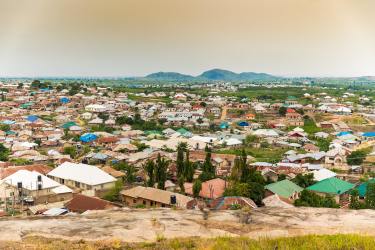
More than 30 Christians have reportedly been killed in a series of attacks in Mangu County, Plateau State, Nigeria, over the past month, with residents and community leaders blaming suspected Fulani militants for much of the violence.
The latest attacks took place on 5 September, when three Christians were reportedly killed in two villages, according to local resident Leo Lawrence.
Lawrence said one Christian was killed in Fungtim community, and two others were killed in Kinat community. He attributed the deaths to suspected Fulani attackers.
Two days earlier, on 3 September, two more Christians were reportedly killed in separate attacks in the predominantly Christian villages of Kinat and Kop-Naanle.
Community leader Tubwot Sunday identified the victims as 78-year-old Bulus Danladi, who was killed in Kop-Naanle, and 33-year-old Kwopnaan Lot Yunana, who was killed in Kinat.
The violence followed a much larger attack on 18 August in Bin-Per, where residents said 25 Christians were killed during an overnight assault.
Nelson Dogara, a resident of the area, said the attack began at about 3am and described the village as suffering a major loss of life. Jeremiah Dakahap, spokesman for the Mangu Local Government Council, confirmed that 25 people had been killed and said local authorities were still grieving the deaths.
Daniel Musa, another resident, said several other people were seriously injured during the attack, while homes were burned and crops destroyed. He said most of those killed were women and children.
The victims were buried together in a single grave on the same day, while those injured were taken to public health facilities in Jos for treatment, according to Musa.
The violence has also involved allegations concerning the actions of security personnel. On 18 August in Sabon Layi, Mangu County, soldiers deployed to the area allegedly shot and killed a Christian who, together with others, was protesting against the killings, according to community leader Jonathan Yusuf.
Yusuf also said that Fwangshak Dawuk was killed by soldiers while helping to guard his community against suspected attacks by herdsmen. At his funeral, Yusuf rejected reports that Dawuk had been a member of a militia and said he had been carrying out community vigilance duties.
He called for an independent and impartial investigation into the circumstances of Dawuk’s death, saying the public should be given a clear account whenever a civilian is alleged to have been unlawfully killed.
The community leader also reported the killing of 20-year-old Moses Emmanuel Panse in Murish village on 12 August. On the same day, he said, 38 houses were burned in Jwak Maitumbi and farmland was damaged and crops destroyed.
Yusuf said the repeated attacks and destruction could not be dismissed as isolated incidents and called for those responsible for the killings and property damage to be identified, arrested and prosecuted.
Alfred Alabo, a spokesman for the Plateau State police command, said some suspects connected with attacks in the Mangu area had been arrested.
Plateau Governor Caleb Mutfwang also visited some of the affected communities and condemned the attacks. He told residents that the government would work to protect their right to remain on their land.
The violence in Mangu comes amid wider concerns about deadly attacks affecting Christian communities in Nigeria. Open Doors recorded 3,490 Christians killed in Nigeria during the reporting period for its 2026 World Watch List, out of 4,849 Christians killed worldwide for their faith. The organisation says the Nigerian figure rose from 3,100 in the previous reporting period. Nigeria is seventh on the 2026 World Watch List.
Open Doors says violence against Christians in Nigeria is driven by several factors, including Islamic militancy, ethno-religious hostility, organised crime and weak governance. Its 2026 research also identifies attacks by militant Fulani groups among the violence affecting Christian communities, particularly in parts of northern and central Nigeria.
The Fulani are a large and diverse ethnic group spread across Nigeria and other parts of the Sahel, and not all Fulani support or participate in extremist violence. A 2020 report by the United Kingdom’s All-Party Parliamentary Group for International Freedom of Religion or Belief noted that some Fulani militants have adopted radical Islamist ideologies and have targeted Christian communities.
Christian leaders have argued that attacks by armed herders in Nigeria’s Middle Belt are connected to disputes over land and resources as well as religious extremism. However, the causes of the wider violence are complex, involving ethnic, religious, economic, environmental and security factors.
Nigeria continues to face attacks from a number of armed groups, including Boko Haram and Islamic State West Africa Province (ISWAP), while newer militant networks have also emerged in different parts of the country. Open Doors has reported that Christians remain particularly vulnerable to killings, abductions, sexual violence and the destruction of homes and churches in areas affected by extremist violence.
For communities in Mangu, the immediate concern remains the continuing loss of life and destruction of homes and farmland. Local leaders are calling for investigations into the killings, prosecution of those responsible and stronger protection for residents as the attacks continue.
Based on reporting by Christian Daily International-Morning Star News.